10 Types of Branding and How They Help Businesses Grow
Introduction
Have you ever wondered why some businesses become instantly recognisable while others struggle to stand out in a competitive market?
The answer often comes down to branding.
Branding is more than a logo, colour palette, or business name. It is the way people recognise your business, understand what you offer, and develop trust in your products or services.
Every business has a different audience, goal, and identity. That is why understanding the different types of branding is important for building a strong brand.
There are several types of branding strategies that businesses can use to create a distinctive identity and connect with their target audience. Some businesses focus on corporate branding, while others use personal branding to build professional credibility and establish trust.
Understanding the types of branding in marketing can also help businesses communicate their value, improve brand recognition, and create stronger relationships with customers.
Choosing the right branding strategy depends on your business goals, target audience, and what makes your brand different from competitors.
In this article, I will explain the different types of branding, how they work, and how businesses can use them to support long-term growth.
What You’ll Learn
- What branding means and why it matters.
- 10 different types of branding and their benefits.
- How branding helps businesses build trust and recognition.
- How to choose the right branding strategy for your business.
- Common branding mistakes businesses should avoid.
What Is Branding?
Branding is the process of creating a distinctive identity for a business, product, service, or individual. It helps people recognise a brand, understand what it offers, and develop trust in it.
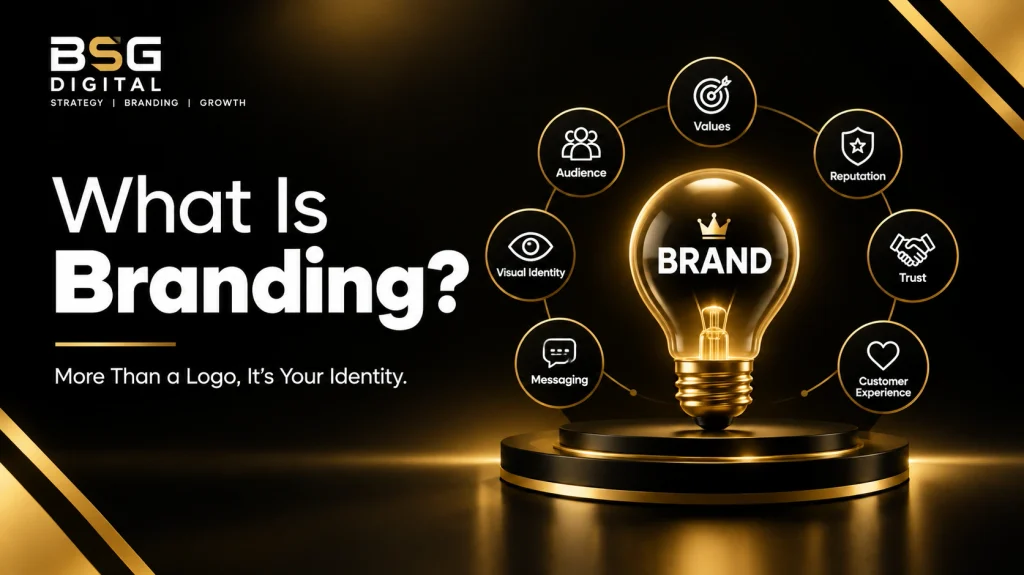
When exploring the types of branding, it is important to understand that branding involves more than a logo or colour palette. It includes the name, visual identity, messaging, values, reputation, and customer experience that shape how people perceive a brand.
For example, when customers visit your website, see your social media posts, or interact with your business, they form an impression of your brand. That impression can influence whether they trust your business, remember your name, or choose your products and services.
A strong brand communicates what a business stands for and why customers should consider it.
Understanding the different types of branding can help businesses choose the right approach to build recognition, communicate their value, and connect with their target audience.
These types of branding strategies may focus on an individual, a company, a product, or a particular customer experience. The right approach depends on the business’s goals and audience.
For example, personal branding helps individuals establish a professional identity through their expertise, values, and reputation. Other branding approaches help businesses create a consistent identity across their products, services, and marketing channels.
Branding also helps businesses maintain a consistent experience across different platforms.
However, branding and marketing are not the same.
Branding defines who you are, what you represent, and how people perceive your business. Marketing helps communicate that value to your target audience and encourages them to take action.
Understanding the types of branding in marketing can help businesses develop a more consistent approach to communicating their brand and supporting long-term growth.
Both branding and marketing work together to help businesses build stronger customer relationships and achieve their business goals.
What Are the Different Types of Branding?
There are several types of branding, and each serves a different purpose.
Some focus on individuals, while others help companies establish a recognisable identity for their products, services, or customer experiences.
Understanding the different types of branding can help businesses choose an approach that aligns with their goals, target audience, and market position.
The right branding strategy can help businesses build recognition, communicate their value, and develop stronger relationships with customers.
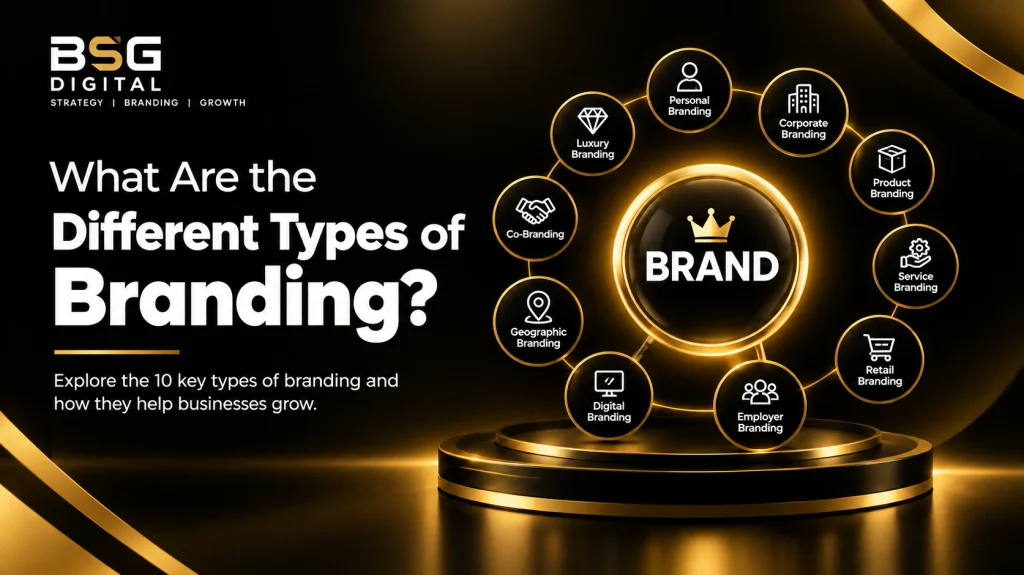
Let’s explore 10 important types of branding and how they can help businesses grow.
1. Personal Branding
Personal branding is the process of building a recognisable professional identity around an individual.
It focuses on a person’s expertise, values, personality, achievements, and reputation.
This type of branding is especially useful for entrepreneurs, consultants, freelancers, creators, and professionals who want to establish credibility in their industry.
For example, a digital marketing consultant may share SEO insights, practical marketing advice, and professional experiences through LinkedIn, a personal website, or other platforms.
Over time, people may begin to recognise that individual for their knowledge and expertise.
How Personal Branding Helps Businesses Grow

Personal branding can help professionals build trust with potential clients before they even begin a conversation.
When people understand your expertise and the value you provide, they have a clearer reason to consider working with you.
It can also help businesses establish stronger relationships with their audience.
For example, a business owner who regularly shares useful industry knowledge may attract people who are interested in their products or services.
Personal branding is particularly valuable when customers want to understand who they are working with before making a decision.
2. Corporate Branding
Corporate branding focuses on building the identity and reputation of an entire company.
It represents what a business stands for, what it offers, and how it wants customers, employees, and other stakeholders to perceive it.
Corporate branding includes the company’s name, visual identity, values, messaging, communication style, and overall customer experience.
For example, a company may position itself around reliability, innovation, customer service, or affordability.
These qualities should be reflected consistently across its website, marketing materials, customer support, and business operations.
How Corporate Branding Helps Businesses Grow
Corporate branding helps businesses create a clear and consistent identity.
When customers understand what a company represents, they can develop a stronger connection with the business.
A consistent corporate brand can also improve credibility and make a company easier to recognise.
This is particularly important for businesses that offer multiple products or services under one company name.
Instead of building a completely separate reputation for every offering, the company can use its corporate identity to communicate its overall values and standards.
A strong corporate brand can also support recruitment, partnerships, and long-term customer relationships.
3. Product Branding
Product branding focuses on creating a distinctive identity for an individual product.
It helps customers recognise a product and understand what makes it different from competing options.
Product branding can include the product name, packaging, design, messaging, positioning, and the experience customers associate with it.
For example, a skincare business may develop a unique identity for a moisturiser by highlighting its ingredients, packaging, benefits, and intended audience.
The product should communicate a clear reason for customers to consider choosing it.
How Product Branding Helps Businesses Grow
Product branding helps businesses differentiate their products in competitive markets.
When customers can easily recognise a product and understand its value, it becomes easier for them to compare it with alternatives.
A strong product brand can also encourage repeat purchases.
If customers have a positive experience with a product, they may begin to associate its name with quality and reliability.
Over time, this recognition can help a business build customer loyalty and introduce new products more effectively.
However, product branding should always reflect the actual product experience. Attractive packaging alone cannot maintain customer trust if the product fails to meet expectations.
4. Service Branding
Service branding focuses on creating a distinctive identity for a service-based business or a particular service.
Unlike physical products, services are often difficult for customers to evaluate before purchasing.
Customers may not know exactly what they will receive until they experience the service.
That makes trust, communication, reliability, and customer experience especially important.
For example, an SEO agency may build its service brand around transparent reporting, clear communication, strategic planning, and measurable business objectives.
These qualities help potential clients understand what working with the agency may involve.
How Service Branding Helps Businesses Grow
Service branding helps businesses communicate the value of something customers cannot physically examine before buying.
A clear service brand can reduce uncertainty by explaining what the business offers, how it works, and what customers can expect.
It can also help a service provider stand out in a crowded market.
For example, two agencies may offer similar SEO services, but one may differentiate itself through specialised expertise, transparent communication, or a particular industry focus.
A consistent service experience can also encourage satisfied customers to return and recommend the business to others.
For service-based businesses, the experience itself becomes an important part of the brand.
5. Retail Branding
Retail branding focuses on creating a distinctive identity for a retail business and its shopping experience.
It includes the store’s appearance, product presentation, customer service, pricing approach, communication, and overall shopping environment.
Retail branding applies to both physical stores and online retailers.
For example, an online clothing store may use consistent product photography, a recognisable website design, clear product descriptions, and helpful customer support to create a reliable shopping experience.
Every interaction contributes to how customers perceive the business.
How Retail Branding Helps Businesses Grow
Retail branding helps businesses create a memorable shopping experience.
When customers recognise a store and understand what it offers, they may be more likely to consider it when they need similar products.
A consistent retail brand can also help communicate product quality, pricing, and customer service expectations.
For example, a retailer that focuses on affordable everyday products should communicate that positioning clearly across its website, promotions, and customer experience.
Strong retail branding can encourage repeat purchases and help businesses develop long-term customer relationships.
6. Employer Branding
Employer branding focuses on how a company is perceived as a place to work.
It communicates the company’s workplace culture, values, employee experience, and professional opportunities.
This type of branding is important because businesses need more than customers to grow. They also need skilled people who can contribute to their success.
Employer branding can appear through job descriptions, career pages, employee stories, workplace communication, and recruitment campaigns.
For example, a company may communicate its commitment to professional development, teamwork, or a supportive working environment.
These messages should reflect the actual employee experience.
How Employer Branding Helps Businesses Grow
Employer branding can help businesses attract people who are interested in their workplace culture and professional opportunities.
A clear employer brand may also help candidates understand whether the company is a suitable place for them to work.
When employees have a positive experience, they may become more willing to recommend the organisation to others.
This can support recruitment and employee retention.
A strong employer brand can also help businesses communicate their values internally, creating a more consistent experience for employees and customers.
However, employer branding must be supported by real workplace practices. A company cannot build a credible employer brand through attractive recruitment messages alone.
7. Digital Branding
Digital branding focuses on building and communicating a brand’s identity across online platforms.
It includes websites, search engines, social media, email communication, online advertising, and other digital touchpoints.
For many businesses, digital branding is one of the most important types of branding in marketing because customers often discover and evaluate companies online.
For example, a business may use a consistent logo, colour palette, messaging style, and visual identity across its website and social media profiles.
Its website content and customer communication should also reflect the same brand values.
How Digital Branding Helps Businesses Grow20
Digital branding helps businesses establish a recognisable presence across online channels.
When customers encounter consistent branding, they can more easily identify the business and understand what it offers.
Digital branding can also support SEO and digital marketing.
For example, a well-organised website with clear messaging can help visitors understand the business and find relevant information.
A consistent brand experience across search results, landing pages, and social media can also make it easier for potential customers to move from discovering a business to considering its products or services.
However, digital branding is not simply about posting regularly or making a website look attractive.
The goal is to create a consistent online experience that communicates value and supports business objectives.
8. Geographic Branding
Geographic branding focuses on building a distinctive identity for a particular location.
It can apply to cities, regions, countries, and tourist destinations.
The purpose is to communicate what makes a place unique and why people may want to visit, live, work, or invest there.
Geographic branding can include local culture, history, attractions, economic opportunities, and the experiences associated with a destination.
For example, a city may promote its cultural attractions, local food, natural environment, or business opportunities to attract visitors and investment.
How Geographic Branding Helps Businesses Grow
Geographic branding can support local tourism, business activity, and investment.
When a location develops a recognisable identity, it can become easier for visitors and businesses to understand what makes the area attractive.
This can create opportunities for hotels, restaurants, local shops, tour operators, and other businesses.
Geographic branding can also help local businesses connect their products or services with the identity of their region.
For example, a local food business may highlight its connection to a particular place as part of its brand story.
The strength of geographic branding depends on the actual experiences and opportunities available in that location.
9. Co-Branding
Co-branding is a branding strategy in which two or more brands collaborate on a product, service, or marketing initiative.
Each brand brings its own identity, reputation, and audience to the partnership.
For example, a clothing brand and a sportswear company may collaborate to create a limited-edition collection.
Both brands can contribute to the product’s design, positioning, and promotion.
Co-branding is different from simply mentioning another company in an advertisement. It involves a more direct partnership between the brands.
How Co-Branding Helps Businesses Grow
Co-branding can help businesses reach new audiences and create additional value for customers.
When two brands have compatible values and target audiences, their partnership may introduce each business to potential customers who are unfamiliar with it.
It can also create opportunities for product innovation and shared marketing activities.
For example, a small business may collaborate with an established brand to increase awareness of a new product.
However, businesses should choose partners carefully.
A partnership that does not align with the brand’s values or customer expectations may create confusion or damage trust.
The goal should be to create a partnership that benefits both brands and provides genuine value to customers.
10. Luxury Branding
Luxury branding focuses on creating a premium brand identity associated with qualities such as exclusivity, craftsmanship, quality, heritage, and distinctive experiences.
It is commonly used by businesses that position their products or services at the premium end of the market.
Luxury branding involves more than setting a high price.
The brand must communicate why its products or services offer a distinctive experience or value.
This may include product quality, attention to detail, customer service, design, and the reputation of the brand.
How Luxury Branding Helps Businesses Grow
Luxury branding helps businesses establish a distinctive position in the market. Among the different types of branding, luxury branding focuses on creating a premium identity that communicates quality, exclusivity, and value.
Instead of competing only on price, a luxury brand communicates the qualities that make its products or services desirable to its target audience.
A strong luxury brand can also create an emotional connection with customers who value craftsmanship, exclusivity, or a particular lifestyle. This is one reason why types of branding strategies play an important role in how businesses differentiate themselves in competitive markets.
Consistent branding helps maintain that positioning across product design, communication, packaging, and customer experience. When these elements work together, businesses can create a recognisable identity that customers understand and remember.
However, luxury branding requires credibility.
If a business promises exceptional quality but fails to deliver it, customers may question the value of the brand. This applies to all types of branding in marketing, where the brand experience should match the message communicated to customers.
Understanding the types of branding available can help businesses choose an approach that matches their goals and target audience. While luxury branding focuses on premium value, other approaches, such as personal branding, may help professionals build credibility through their expertise and reputation.
How Do Different Types of Branding Help Businesses Grow?
Understanding the types of branding is useful, but the real value comes from knowing how branding supports business growth.
Different types of branding help businesses communicate their identity, build customer relationships, and establish a strong position in the market.
Choosing the right branding strategy can help businesses improve recognition, build trust, and connect with their target audience.
Let’s explore how different branding approaches can help businesses grow.
1. Builds Customer Trust
Customer trust is an important part of building a successful brand.
When customers understand what a business offers and what they can expect, they have more reasons to consider its products or services.
Consistent branding helps communicate reliability and professionalism. When a business delivers on its promises, customers have more reasons to trust it.
For example, personal branding allows professionals to demonstrate their expertise and share valuable insights with their audience. This can help potential clients understand their knowledge and develop confidence in their services.
2. Improves Brand Recognition
A distinctive and consistent brand identity makes it easier for customers to recognise and remember a business.
This includes its name, visual identity, messaging, and overall customer experience.
The more consistently a business communicates its identity, the easier it may become for customers to remember it.
Different types of branding can support recognition in different ways. Product branding helps customers identify individual products, while corporate branding builds recognition for the company as a whole.
3. Creates a Competitive Advantage
Many businesses offer similar products or services. Branding helps communicate what makes one business different from another.
That difference may come from specialised expertise, customer experience, product quality, values, or market positioning.
Understanding the types of branding strategies available can help businesses identify the most suitable way to communicate their unique value.
A clear brand gives customers a reason to consider your business instead of choosing an alternative based only on price.
4. Encourages Customer Loyalty
A positive brand experience can encourage customers to return.
When customers consistently receive the value they expect, they may develop a stronger relationship with the business.
This can support repeat purchases, recommendations, and long-term customer relationships.
For example, businesses that maintain consistent branding across their products, services, and customer interactions can create a more familiar and reliable experience.
Over time, this familiarity can help strengthen customer loyalty.
5. Supports Marketing Performance
Branding and marketing work together to support business growth.
The types of branding in marketing help businesses communicate their identity and value across different channels, including websites, social media, advertising, and email campaigns.
A clear brand identity makes marketing messages easier for customers to recognise and understand.
For example, digital branding can help businesses maintain a consistent online presence, while personal branding can help professionals build credibility through their expertise and content.
However, branding does not automatically guarantee more leads or sales. Businesses still need relevant offers, effective marketing, and a positive customer experience.
The goal is to create a strong brand that supports your marketing efforts and helps your business connect with the right audience.
How to Choose the Right Type of Branding for Your Business
Not every business needs to focus on all 10 types of branding. The right approach depends on your business model, target audience, and long-term objectives.
Understanding the different types of branding can help you identify which approach is most suitable for your business.
Here are some important factors to consider when choosing the right branding strategy.
Understand Your Business Goals
Start by identifying what you want your branding to achieve.
Do you want to improve brand recognition, attract more customers, build professional credibility, or introduce a new product?
Your goals will help determine which of the types of branding strategies deserves the most attention.
For example, a freelancer may focus on personal branding to establish professional credibility, while a product-based business may prioritise product branding to differentiate its products from competitors.
Identify Your Target Audience
Understand who your customers are, what they need, and what influences their decisions.
A branding strategy that works for a luxury product may not be suitable for a business focused on affordable everyday products.
Your brand should communicate value in a way that makes sense to your audience.
When you understand your target audience, you can choose from the different types of branding that best match their expectations and buying behaviour.
Define Your Brand Positioning
Your brand positioning explains how you want customers to perceive your business compared with competitors.
Identify what makes your business different and why that difference matters.
This will help you create clearer messaging and a more distinctive identity.
A strong brand positioning strategy also helps you decide how to communicate your value across different marketing channels.
Maintain Consistent Branding
Consistency is important across your website, social media, advertising, packaging, and customer communication.
Your business should communicate a recognisable identity wherever customers interact with it.
This does not mean every platform must look identical. It means your brand should maintain the same core identity and values.
Consistent branding is particularly important when using different types of branding in marketing because customers should be able to recognise your business across different platforms and campaigns.
Measure Branding Performance
Branding should support real business objectives.
Depending on your goals, you can monitor brand awareness, branded search activity, customer feedback, repeat purchases, and customer retention.
For digital campaigns, you can also examine relevant website traffic, qualified leads, and conversions.
These indicators can help you understand whether your branding is supporting your business goals and which types of branding strategies are delivering value.
For example, if your goal is to build professional credibility, you can monitor the growth of your professional audience, relevant enquiries, and customer feedback.
Common Branding Mistakes Businesses Should Avoid
Even a well-planned branding strategy can become less effective when businesses make avoidable mistakes.
Understanding these mistakes can help you choose the right types of branding and create a more consistent brand identity.
Here are some common problems to watch for.
Focusing Only on the Logo
A logo is an important part of brand identity, but it does not represent the entire brand.
Businesses should also consider messaging, positioning, values, and customer experience.
A strong brand requires more than an attractive visual identity. It needs a clear message and a consistent experience that customers can recognise and trust.
Trying to Appeal to Everyone
A brand that tries to communicate with every possible customer may struggle to establish a clear identity.
Understanding your target audience helps you create more relevant messaging.
For example, a business targeting professional clients may use a different communication style from a brand targeting young consumers.
Choosing the right audience makes it easier to develop a branding strategy that communicates value effectively.
Copying Competitors
Studying competitors can help you understand the market, but copying their branding can make your business less distinctive.
Focus on what makes your business valuable and different.
Your brand should communicate your own strengths, values, and customer benefits rather than simply following what other businesses are doing.
Using Inconsistent Messaging
When your website, social media, and advertisements communicate different messages, customers may struggle to understand what your business represents.
Maintain a consistent brand voice and core message.
This is especially important when combining different types of branding in marketing, as every platform should support the same overall brand identity.
Making Promises You Cannot Deliver
Branding should reflect the actual quality of your products, services, and customer experience.
Overpromising may attract attention temporarily, but it can damage trust over time.
For example, personal branding should reflect your actual expertise and professional experience. Similarly, a business should ensure that its marketing messages accurately represent the products or services it provides.
A credible brand is built through consistent communication and reliable experiences, not just attractive promises.
Frequently Asked Questions About Types of Branding
What are the 10 types of branding?
The 10 types of branding discussed in this article are personal branding, corporate branding, product branding, service branding, retail branding, employer branding, digital branding, geographic branding, co-branding, and luxury branding.
Each type serves a different purpose and can support different business objectives.
What is the most common type of branding?
Corporate branding, product branding, and digital branding are common approaches used by many businesses.
However, the most suitable type depends on what the business offers and how it wants to reach its audience.
What is the difference between corporate branding and product branding?
Corporate branding focuses on the identity and reputation of an entire company.
Product branding focuses on creating a distinctive identity for an individual product.
A company may use corporate branding to communicate its overall values while using product branding to differentiate its individual offerings.
Which type of branding is best for small businesses?
The best approach depends on the business.
A freelancer may benefit from personal branding, while a product-based business may focus on product branding.
A local service provider may prioritise service branding and digital branding to communicate its expertise and reach potential customers online.
Can a business use multiple types of branding?
Yes. Businesses can combine several branding approaches.
For example, a digital marketing agency may use corporate branding to establish its company identity, service branding to communicate its expertise, and digital branding to maintain a consistent online presence.
The important thing is to make sure the different approaches support the same overall brand strategy.
Why is branding important for business growth?
Branding helps businesses communicate their identity, establish recognition, and build customer trust.
A clear and consistent brand can also help businesses differentiate themselves from competitors and develop stronger customer relationships.
However, branding works best when supported by reliable products, quality services, and effective marketing.
Final Thoughts
The types of branding available to businesses serve different purposes, but they all contribute to how people recognise and perceive a brand. Understanding the different types of branding can help you choose the right approach for your business goals.
Personal branding helps individuals establish professional credibility. Corporate branding builds a company’s identity, while product and service branding help businesses communicate the value of what they offer.
Digital branding, employer branding, retail branding, geographic branding, co-branding, and luxury branding provide additional ways to connect with audiences and establish a distinctive position in the market.
The right types of branding strategies can help businesses build recognition, establish customer trust, and create a competitive advantage. Choosing the right approach depends on your business goals, target audience, and the value you provide.
The goal is not simply to make your business look professional.
The goal is to create a brand that people recognise, trust, and understand.
When you choose the right branding strategy and maintain consistency across your business, you can build stronger customer relationships and support long-term growth.
At BSG Digital, we help businesses build powerful brand identities through strategic branding, creative design, SEO, and digital marketing solutions. We focus on helping businesses strengthen their brand presence and connect with the right audience.
If you want to strengthen your brand, improve your online visibility, and reach the right audience, visit BSG Digital to explore how we can help your business grow.


