What is On-Page SEO for Beginners? A Complete Guide
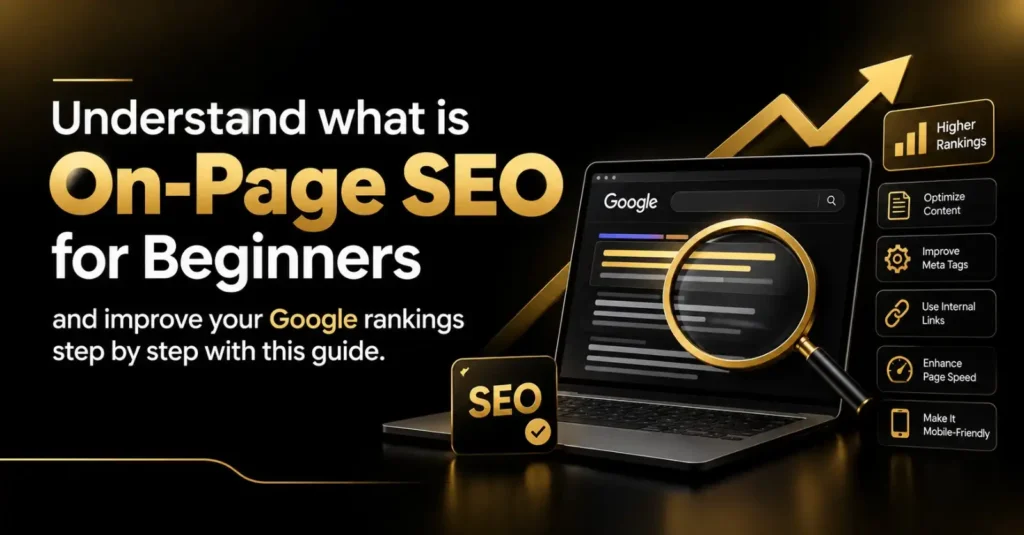
If you have just started learning digital marketing, you have probably asked yourself: what is on-page SEO for beginners and why does every SEO blog talk about it so much? The truth is, on-page SEO is the foundation of any successful website. Without it, even the best content can stay buried on page 10 of Google, invisible to the people who need it most.
In simple words, on-page SEO means optimizing the individual elements of your webpage — things like your title tag, meta description, headings, content, images, and internal links — so that search engines like Google can understand what your page is about and rank it higher. Unlike off-page SEO (backlinks, social signals, brand mentions), on-page SEO is 100% in your control. That’s exactly why beginners should master it first.
What is On-Page SEO for Beginners? Understanding the Basics
Before diving into techniques, let’s clear up the confusion. Many new bloggers mix up on-page SEO with technical SEO. Technical SEO deals with site speed, indexing, and crawlability. On-page SEO, on the other hand, focuses on content-level optimization — the words, structure, and user experience on a single page.
Here are the core ranking factors search engines look at on every page:
- Title Tag – This is the clickable headline shown in search results. Your main keyword should appear naturally near the beginning.
- Meta Description – A short summary (150–160 characters) that convinces users to click. It doesn’t directly boost rankings but improves click-through rate (CTR).
- URL Structure – Short, clean, and keyword-rich URLs perform better than long, messy ones.
- Header Tags (H1, H2, H3) – These organize your content and help both readers and search engines understand the hierarchy of information.
- Keyword Placement – Using your target keyword and related LSI keywords (like “SEO optimization,” “search engine ranking,” “keyword research,” “content optimization”) naturally throughout the text.
- Image Alt Text – Descriptive alt tags help search engines understand images and improve accessibility.
- Internal Linking – Connecting related pages on your own website to guide users and distribute page authority.
Once you understand these building blocks, on-page SEO stops feeling like a mystery and starts feeling like a checklist you can follow every time you publish content.
What is On-Page SEO for Beginners? A Step-by-Step Checklist
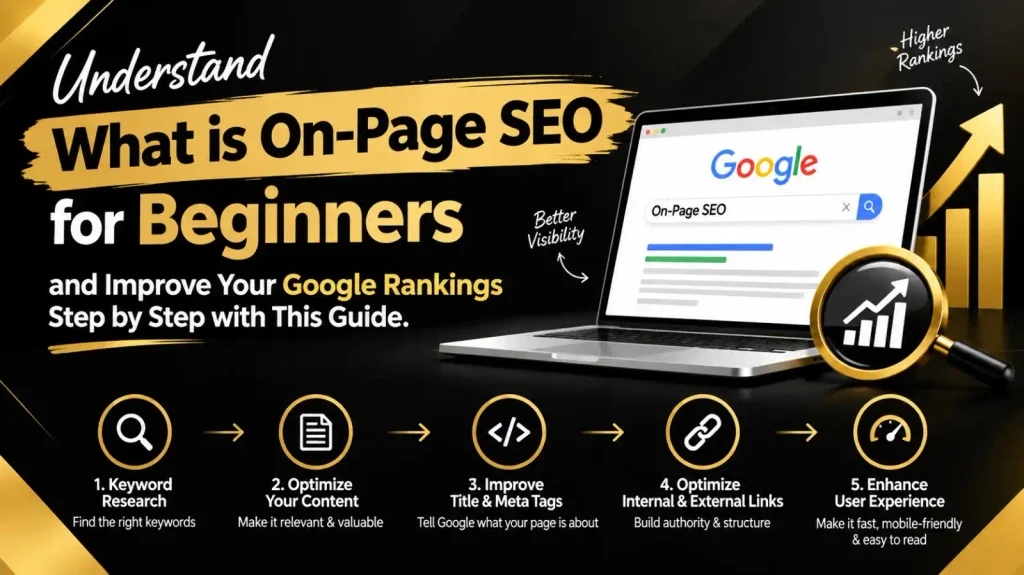
Now let’s turn theory into action. Here’s a beginner-friendly, practical checklist you can use on every single blog post or webpage:
1. Do Proper Keyword Research First
Before writing a single word, know exactly what your audience is searching for. Tools like Google Keyword Planner, Ubersuggest, or even Google’s “People Also Ask” section can help you find your primary keyword and supporting LSI keywords. If you want a deeper dive into finding profitable keywords, check out our complete keyword research guide — it pairs perfectly with this article.
2. Optimize Your Title and Meta Description
Your title tag should be under 60 characters and include the main keyword close to the start. Your meta description should be compelling, include the keyword once, and clearly explain what the reader will gain.
3. Structure Content With Header Tags
Use only one H1 per page (your main title), and break the rest of the content into H2 and H3 subheadings. This not only improves readability but also helps Google understand the topic flow of your page — something increasingly important now that AI-generated search summaries (like Google’s AI Overview) scan structured content first.
4. Write for Humans First, Search Engines Second
Google’s algorithm today rewards content that sounds natural and genuinely helpful — not robotic keyword stuffing. Write like you’re explaining the topic to a friend. Mention your keyword naturally, use synonyms and related terms, and keep sentences easy to read.
5. Add Internal and External Links
Internal links keep users on your site longer and help search engines crawl your content structure. For example, if you’re discussing on-page SEO, you might link to a related post like our guide on technical SEO basics. External links to trusted, high-authority resources also add credibility to your content.
6. Optimize Images
Compress images for faster loading, use descriptive file names, and always add alt text containing relevant keywords where natural.
7. Improve Readability and User Experience
Short paragraphs, bullet points, and simple language reduce bounce rate. A page that keeps users engaged sends positive signals to Google.
8. Make Content Mobile-Friendly
Over 60% of searches happen on mobile devices. If your page isn’t mobile-optimized, both users and rankings will suffer.
Why On-Page SEO Matters More Than Ever
With Google’s AI Overview and other AI-driven search features becoming more common, well-structured, clearly written, and genuinely helpful content has a better chance of being featured. Search engines are getting smarter at understanding context, intent, and expertise — which means beginners who focus on quality on-page SEO today will have a real advantage tomorrow.
Mastering on-page SEO isn’t a one-time task; it’s an ongoing habit. Every time you publish new content, run through this checklist. Over time, you’ll notice better rankings, more organic traffic, and stronger engagement — all without spending a single dollar on ads.
Final Thoughts
So, to sum it up simply: on-page SEO for beginners means optimizing everything visible and readable on your webpage — titles, headers, content, images, and links — so both users and search engines love what they find. Start small, stay consistent, and your rankings will follow.
Want more SEO tips and real examples? Follow our updates on Facebook for daily SEO tips, or subscribe to our YouTube channel for step-by-step SEO tutorials made for beginners.
1: What is on page SEO for beginners?
On page SEO for beginners means optimizing titles, headers, content, images and links on your own webpage so search engines understand and rank it higher on Google.
2: Why is on page SEO important for beginners?
On page SEO helps beginners control how search engines read their content, improving rankings, click-through rate, and overall visibility without spending money on ads.
3: How is on page SEO different from off page SEO?
On page SEO focuses on optimizing elements within your own website, while off page SEO involves backlinks, social signals, and mentions from other external websites.
4: Does on page SEO help with Google rankings?
Yes, proper on page SEO directly helps Google understand your content’s relevance, improving rankings, organic traffic, and visibility in search results over time.


