Best SEO Tools for Beginners | A Simple Guide to Get You Started
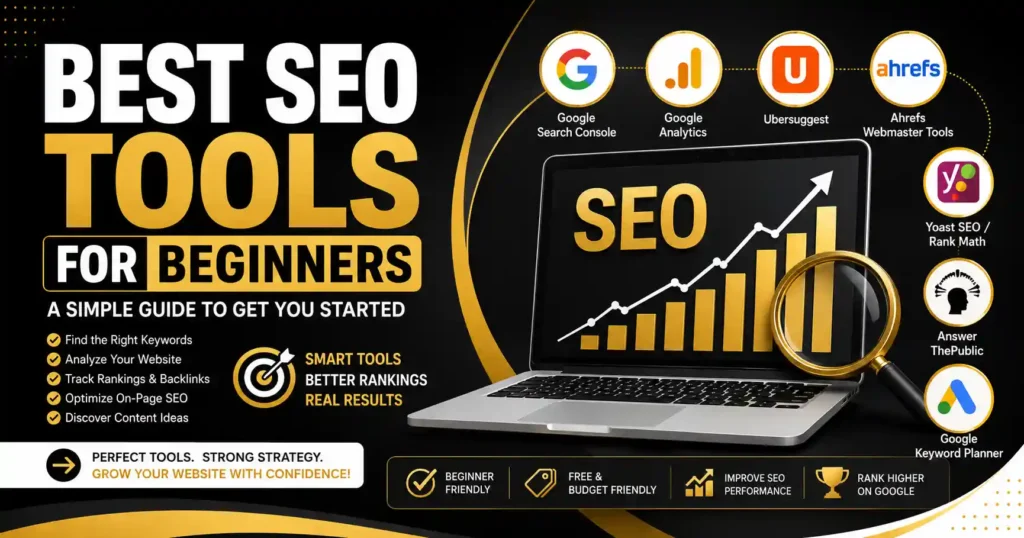
If you’re just stepping into the world of search engine optimization, you’ve probably noticed one thing pretty quickly — there are hundreds of tools out there, and it’s easy to feel overwhelmed. Which ones actually matter? Which ones are a waste of time and money? And more importantly, which ones will actually help you rank higher on Google without needing a computer science degree to understand them?
That’s exactly what we’re going to break down today. Whether you’re running a small blog, managing a local business website, or just starting your journey as a freelance SEO, this guide will walk you through the tools that genuinely make a difference when you’re starting out.
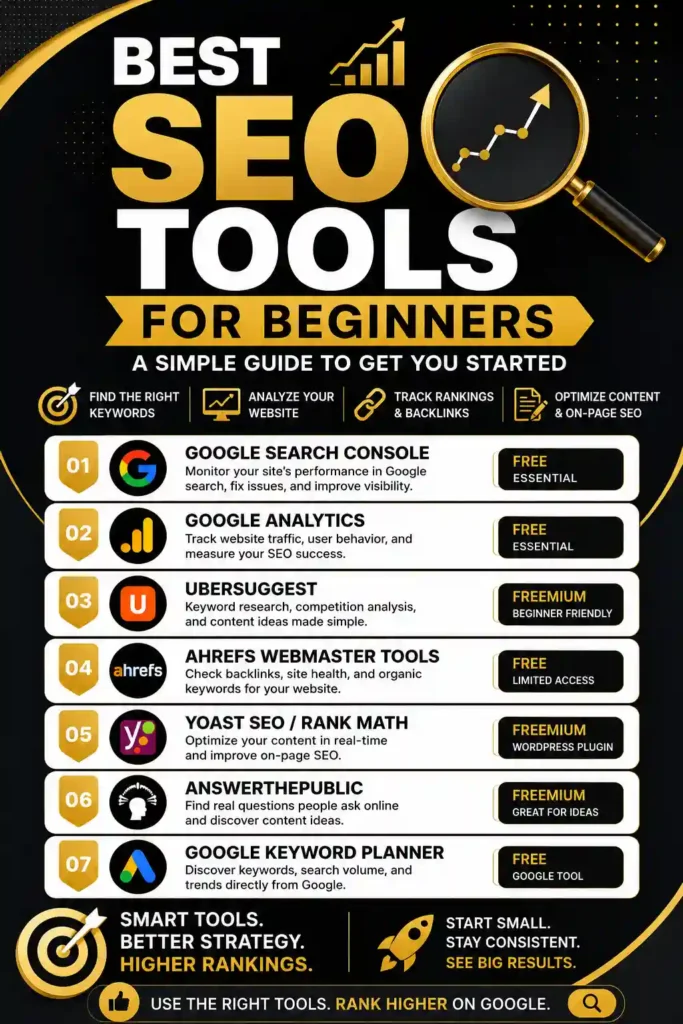
Best SEO Tools for Beginners
Let’s get straight to it. Below are some of the most beginner-friendly, budget-conscious, and genuinely useful SEO tools available right now. Each one plays a different role in your SEO journey, so you don’t need to use all of them at once — start with what solves your biggest problem first.
1. Google Search Console This one is non-negotiable, and the best part is it’s completely free. Google Search Console tells you exactly how your website is performing in search results — which keywords are bringing in traffic, which pages are indexed, and if there are any technical errors hurting your visibility. If you’re serious about learning SEO, this should be the very first tool you set up. It’s also a great way to double-check your progress after you’ve optimized a page — something we cover in more detail in our Benefits of SEO for Business .
2. Google Analytics While Search Console shows you how people find your site, Google Analytics shows you what they do once they get there. Bounce rate, time on page, traffic sources — all of this data helps you understand whether your content is actually working. For beginners, even just checking your top-performing pages once a week can reveal a lot about what your audience wants.
3. Ubersuggest Created by Neil Patel, Ubersuggest is one of the friendliest tools for people who are new to keyword research. You type in a keyword, and it shows you search volume, competition level, and even content ideas based on what’s already ranking. The free version gives you enough to get started, and the interface is simple enough that you won’t feel lost.
4. Ahrefs Webmaster Tools (Free Version) Ahrefs is usually known as a premium, expensive tool — but their free Webmaster Tools version is a hidden gem for beginners. It lets you check backlinks, site health, and organic keywords for your own website at no cost. This is especially useful once you start building backlinks and want to track your progress over time.
5. Yoast SEO / Rank Math If your website runs on WordPress, these plugins are practically essential. They guide you through on-page SEO in real time — checking your keyword usage, meta description length, readability, and internal linking as you write. For someone just starting out, having this kind of instant feedback is incredibly valuable because it teaches good habits from day one.
6. AnswerThePublic Content ideas are often the hardest part of SEO, especially when you’re new. AnswerThePublic pulls real questions people are typing into search engines around your topic, giving you a visual map of content ideas. It’s a great way to find long-tail keywords that are easier to rank for as a beginner.
7. Google Keyword Planner Originally built for Google Ads, this tool is still widely used for organic keyword research because the data comes directly from Google itself. It’s a little less beginner-friendly in terms of interface, but once you get comfortable with it, it becomes one of the most reliable sources of keyword data available.
How to Choose the Right Tool When You’re Just Starting Out
With so many options, it’s tempting to try and use everything at once — but that usually leads to burnout before you even see results. Instead, here’s a simple approach:
- Start with free tools. Google Search Console and Google Analytics should be installed on day one. They’re free, official, and give you the most accurate data about your own site.
- Add one keyword research tool. Pick either Ubersuggest or Google Keyword Planner and stick with it for a few months. Switching tools too often just creates confusion.
- Use an on-page plugin if you’re on WordPress. Yoast or Rank Math will save you hours of manual checking and help you build consistent SEO habits.
- Track backlinks once you start outreach. Ahrefs Webmaster Tools is more than enough for a beginner who isn’t running large-scale link building campaigns yet.
One more thing worth mentioning: tools are only as good as the strategy behind them. A keyword tool won’t magically rank your page — you still need quality content, proper structure, and patience. If you haven’t already, it’s worth reading our beginner’s roadmap to learning SEO step by step before diving too deep into tool comparisons.
Final Thoughts
SEO can feel like a maze when you’re just getting started, but the right tools make the path a lot clearer. You don’t need an expensive toolkit to see real progress — Google’s own free tools, paired with one or two beginner-friendly platforms like Ubersuggest or Rank Math, are more than enough to get you moving in the right direction.
The key is consistency. Check your data regularly, adjust your content based on what’s actually working, and don’t be afraid to experiment. SEO rewards patience far more than perfection.
If you found this guide helpful and want more beginner-friendly SEO tips, feel free to follow and connect with us on our Facebook Page — we regularly share updates, tool recommendations, and simple SEO tips for people just starting out.
Got questions about any of these tools? Drop a comment below and let us know which one you’re planning to try first.


