What is Website Development | A Simple Guide for Beginners
Have you ever visited a website and wondered how it actually works behind the scenes? Or maybe you are thinking about building your own website and keep coming across the term “web development” everywhere, but nobody explains it in simple words.
If that sounds like you, don’t worry. In this guide, I will answer the question what is website development in plain, everyday language, so you understand exactly what it means, what it involves, and why it matters for anyone running a business or blog online today.
What is Website Development?
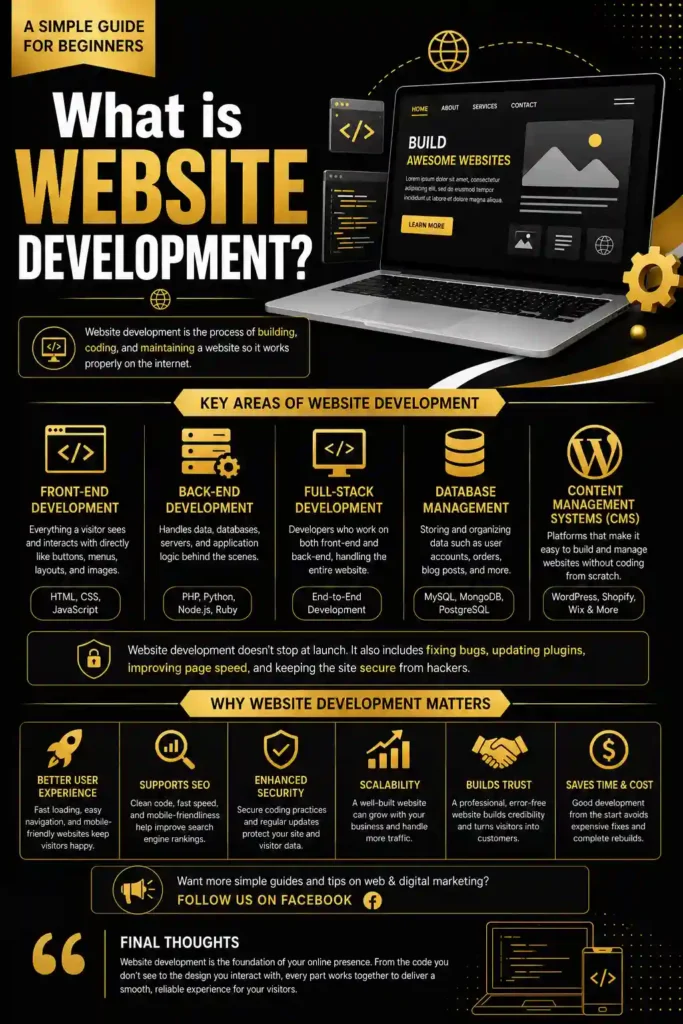
In simple terms, website development is the process of building, coding, and maintaining a website so it works properly on the internet. It covers everything that happens after a website’s design is finalized — turning that design into a fully functional, interactive site that people can actually use.
Think of it this way: if website design is like drawing the blueprint of a house, website development is the actual construction work — laying the foundation, wiring the electricity, installing plumbing, and making sure every door and window opens the way it should. Without development, a design is just a picture. Development is what brings it to life.
Website development is usually divided into a few key areas:
- Front-end development – This is everything a visitor sees and interacts with directly, like buttons, menus, layouts, and images. It is built using languages like HTML, CSS, and JavaScript.
- Back-end development – This is the “behind the scenes” part that handles data, databases, servers, and application logic. Languages like PHP, Python, Node.js, and Ruby are commonly used here.
- Full-stack development – This refers to developers who work on both the front-end and back-end, handling the entire website from start to finish.
- Database management – Storing and organizing data such as user accounts, orders, blog posts, and more.
- Content Management Systems (CMS) – Platforms like WordPress, Shopify, or Wix that make it easier to build and manage websites without writing code from scratch.
Website development also includes ongoing tasks after launch, such as fixing bugs, updating plugins, improving page speed, and keeping the site secure from hackers.
If you are also curious about how search engines find and rank these websites once they are built, it helps to understand what is technical SEO as well, since development and SEO often go hand in hand.
Why Understanding Website Development Matters Today
You might be asking, “Why should I care about website development if I am just running a small business or blog?” That is a fair question, and the answer is simple: your website is often the first impression people get of your brand.
A slow, broken, or outdated website can drive potential customers away within seconds. On the other hand, a well-developed website builds trust, keeps visitors engaged, and helps convert them into paying customers or loyal readers.
Here is why website development plays such a big role in your online success:
The Role of Website Development in User Experience
When people talk about what is website development, they often forget how closely it is tied to user experience. A properly developed website loads quickly, works smoothly on mobile devices, and lets visitors find what they need without frustration.
For example, if a visitor clicks a button and nothing happens, or a page takes ten seconds to load, they are likely to leave immediately. This is where solid development practices come in — clean code, optimized images, proper server configuration, and efficient databases all work together to create a smooth experience.
Good development also ensures your website is accessible across different browsers and devices. A site that looks perfect on a desktop but breaks on mobile phones can hurt both user experience and search rankings, since most traffic today comes from mobile users.
Website development also directly supports your SEO efforts. Search engines favor sites that load fast, have clean code structure, and are mobile-friendly, all of which come from proper development practices. This is why businesses that invest in quality development often see better visibility in search results over time.
Another important piece is security. Poorly developed websites are more vulnerable to hacking attempts, data breaches, and malware injections. Proper development includes setting up HTTPS, regularly updating software, and following secure coding practices to protect both the business and its visitors.
Website development also plays a role in scalability. As your business grows, your website needs to handle more traffic, more content, and more features. A website built with good development practices from the start can scale smoothly, while a poorly built one might require a complete rebuild down the road, costing more time and money.
If you are planning to build a website for your business, it also helps to understand how a strong content strategy works alongside development. You can check out our guide on What Is Branding in Marketing to see how great content and solid development work together to grow your online presence.
Whether you hire a professional developer, use a website builder, or learn to code yourself, understanding the basics of website development helps you make smarter decisions and ask the right questions when working with a team.
If you enjoyed this guide and want more simple explanations of web and digital marketing topics, follow our page on Facebook where we share regular tips and updates.
Final Thoughts
Website development might sound technical at first, but at its core, it is simply the process of turning a design into a working, functional website that people can use every day. From front-end elements you see and click, to back-end systems working quietly behind the scenes, every part plays a role in creating a smooth, reliable online experience.
Whether you are building your first website or trying to understand how your existing site works, knowing the basics of website development gives you more confidence and control over your online presence. Start by learning the difference between front-end and back-end work, explore a few content management systems, and don’t be afraid to ask developers questions — a good website is built on clear communication just as much as good code.


