What Is SEO and How It Works | Simple Explained
If you have ever searched for something on Google and clicked one of the first results, then you have already experienced SEO in action. But many people still ask the same question: what is SEO and how it works? Understanding this concept is important for anyone who wants to grow a website, attract visitors, or build an online business.
SEO stands for Search Engine Optimization. It is the process of improving a website so search engines can understand its content and show it to the right audience. The main goal is simple—help users find useful information while increasing a website’s visibility in organic search results.
Understanding SEO and Why It Matters
Search engines want to deliver the most relevant and helpful content for every search. To do that, they evaluate millions of pages and decide which ones deserve higher rankings.
SEO helps websites become more competitive by improving content quality, structure, user experience, and authority.
There are several areas involved in SEO:
- On-page SEO focuses on content, headings, keyword placement, and page optimization.
- Technical SEO improves website speed, mobile usability, indexing, and performance.
- Off-page SEO strengthens authority through quality backlinks and online reputation.
Good SEO is not about forcing keywords into content. Modern optimization focuses more on solving user problems and creating pages people actually want to read.
A website that follows SEO best practices usually receives more targeted visitors over time without depending entirely on paid advertising.
How SEO Works Behind the Scenes
Search engines follow a structured process before showing results.
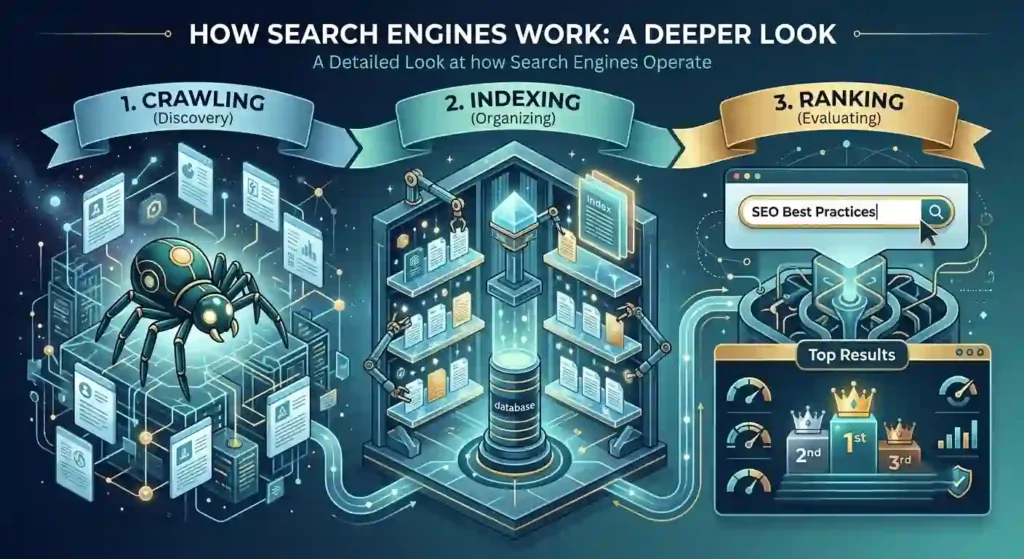
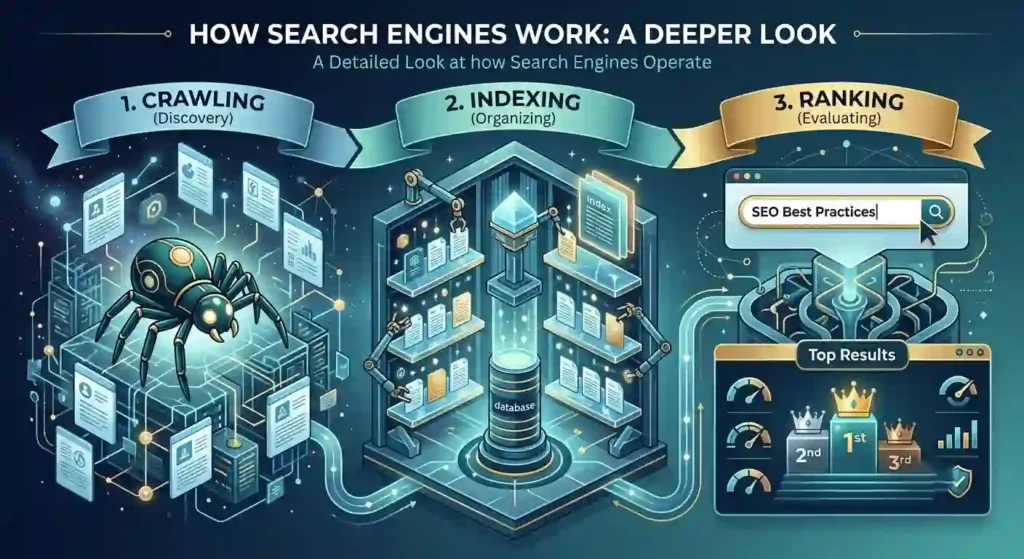
First, search engine bots discover pages across the internet. This process is called crawling.
After that, pages are stored and organized in a massive database through indexing.
Finally, when users perform a search, algorithms compare available pages and rank them based on multiple factors.
Some of the most important ranking signals include:
- Relevance to the search query
- Content quality and usefulness
- Website speed
- Mobile responsiveness
- Internal website structure
- Authority and backlinks
- User engagement signals
For example, when someone searches for information about SEO, search engines try to show pages that explain the topic clearly and provide genuine value.
Creating strong content is only one part of the process. Websites also need clean navigation, logical page connections, and technical improvements that help search engines understand relationships between topics.
If you publish content regularly, you can also support users by connecting related articles naturally—for example through pages such as Digital Marketing Services or a detailed Website SEO Checklist, helping visitors continue exploring relevant information.
Building authority outside your website matters as well. Maintaining an active presence on platforms like Facebook page can support brand visibility and make it easier for users to engage with your content.
In the long run, SEO becomes one of the most sustainable digital marketing approaches because it focuses on attracting people who are already searching for what you offer.
When done correctly, SEO creates steady traffic, stronger credibility, and long-term business growth—making it an essential strategy for websites of every size.
You have not enough Humanizer words left. Upgrade your Surfer plan.


