Why Is Design Important in Marketing? A Complete Guide to Growing Your Business in 2026
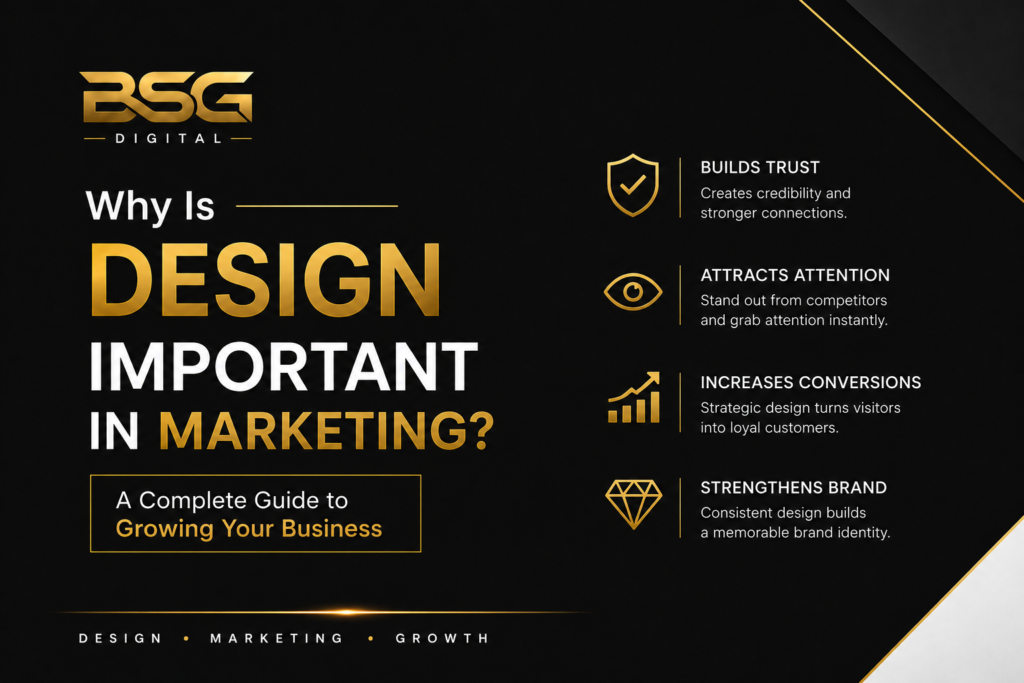
Why Is Design Important in Marketing? In today’s digital world, people often decide whether they trust a business in just a few seconds. Before they read your content, check your prices, or contact your team, they notice one thing first your design.
A professional design can make your business look trustworthy, while a poor design can drive potential customers away. That’s why design is no longer just about making things look attractive. It has become one of the most powerful tools in modern marketing.
Whether you’re running a small business, an online store, or a large company, investing in good design can help you attract more customers, strengthen your brand, and increase sales.
In this guide, you’ll learn why design is important in marketing, how it influences customer decisions, and how your business can use design to achieve better results
Table of Contents
- What Is Marketing Design?
- Why Design Matters in Marketing
- Benefits of Good Marketing Design
- How Design Influences Customer Decisions
- Design and Brand Identity
- Common Marketing Design Mistakes
- Best Practices for Effective Marketing Design
- Frequently Asked Questions
- Conclusion
What Is Marketing Design?
Marketing design is the process of creating visual content that helps businesses communicate with their audience.
It includes everything customers see, including:
- Website design
- Landing pages
- Social media posts
- Online advertisements
- Logos
- Brand identity
- Email newsletters
- Business cards
- Brochures
- Product packaging
- Presentation slides
Marketing design combines creativity with strategy. Its purpose is not only to make something look good but also to encourage people to take action.
Why Design Is Important in Marketing
1. Design Creates a Strong First Impression
First impressions matter.
Studies show that people form opinions about a website within seconds. If your website looks outdated or difficult to use, visitors may leave before learning anything about your business.
A clean and professional design immediately communicates quality and professionalism.
When people trust what they see, they are more likely to continue exploring your website.
2. Design Builds Brand Trust
Customers prefer businesses that look reliable.
Professional branding with consistent colors, fonts, and graphics creates confidence.
When every part of your business looks consistent, customers feel they are dealing with an established company rather than an unreliable one.
Trust is one of the biggest reasons people choose one business over another.
3. Design Makes Your Brand Memorable
Think about famous companies.
You probably recognize them by their logo, colors, or visual style before you even read their name.
That’s the power of branding.
Consistent marketing design helps customers remember your business, making it easier for them to return when they need your products or services.
4. Design Improves User Experience
Good marketing isn’t only about attracting visitors.
It’s also about helping them find information quickly.
Good design improves navigation by making your website:
- Easy to read
- Easy to navigate
- Mobile-friendly
- Fast-loading
- Organized
When visitors have a positive experience, they stay longer and are more likely to become customers.
5. Design Increases Conversion Rates
Marketing success isn’t measured by traffic alone.
It depends on how many visitors become paying customers.
Professional design helps guide users toward important actions such as:
- Contacting your business
- Booking a consultation
- Purchasing a product
- Filling out a form
- Downloading a guide
Clear layouts, readable typography, and strong call-to-action buttons can significantly improve conversion rates.
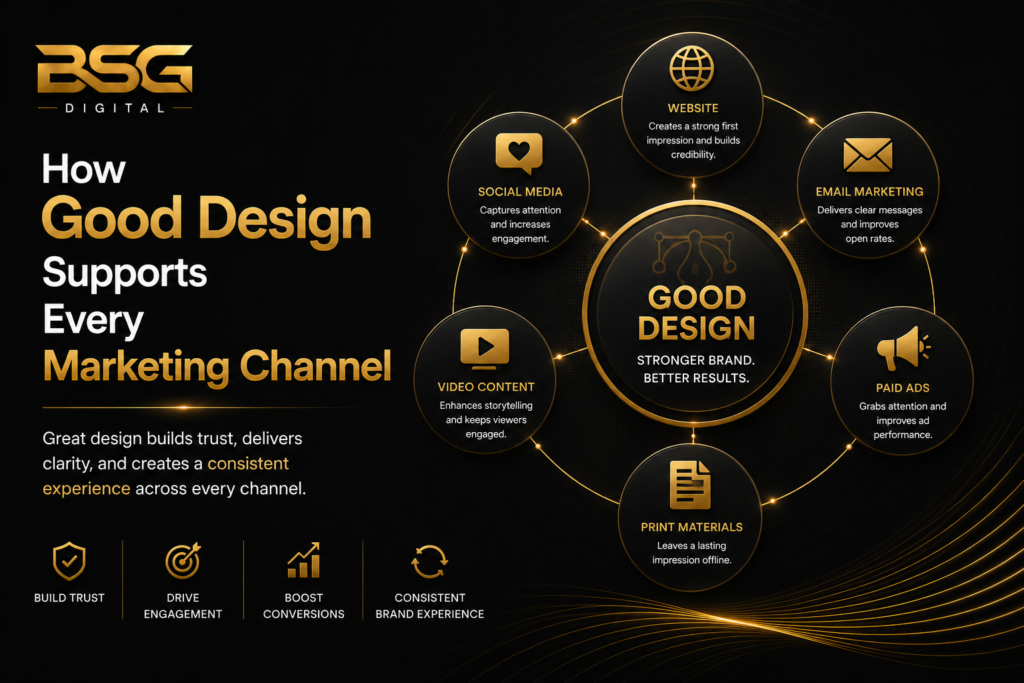
How Good Design Supports Every Marketing Channel
Website Marketing
Your website acts as your digital storefront.
A modern website creates confidence and encourages visitors to explore your services.
Social Media Marketing
Attractive social media graphics receive more attention.
Well-designed posts often generate:
- More likes
- More comments
- More shares
- Better engagement
Content Marketing
Even great articles can be ignored if they look difficult to read.
Using proper headings, images, white space, and formatting makes your content easier to consume.
Readers spend more time on pages that are visually organized.
Email Marketing
Professionally designed email campaigns improve:
- Open rates
- Click-through rates
- Customer engagement
- Brand recognition
Paid Advertising
Good ad design grabs attention instantly.
Clear headlines, attractive visuals, and strong call-to-action buttons help improve advertising performance.
Design and Brand Identity
Many people believe branding is only about creating a logo.
Actually, branding is the complete visual identity of your business.
It includes:
- Logo
- Color palette
- Typography
- Graphic style
- Photography
- Icons
- Layout consistency
A strong brand identity helps customers recognize your business everywhere.
This consistency builds familiarity, and familiarity builds trust.
How Design Influences Customer Decisions
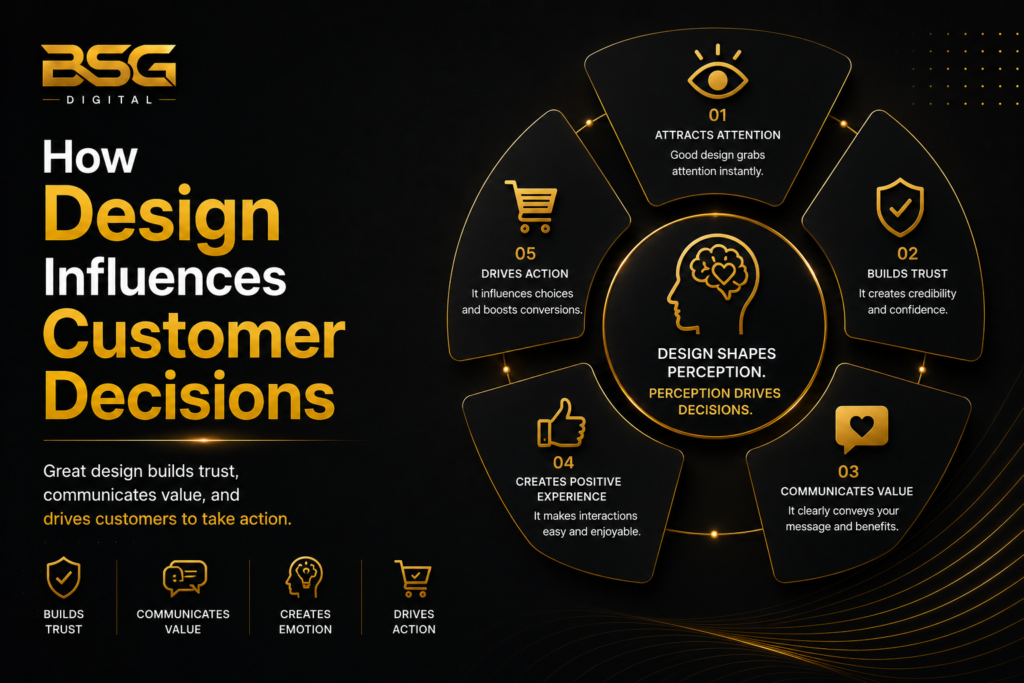
Every buying decision involves emotion.
People naturally feel more confident purchasing from businesses that appear professional.
Good design communicates:
- Quality
- Expertise
- Reliability
- Attention to detail
Poor design creates uncertainty.
If customers don’t trust your presentation, they may not trust your products or services either.
Common Marketing Design Mistakes
Many businesses unknowingly lose customers because of poor design choices.
Avoid these common mistakes:
- Using too many fonts
- Inconsistent colors
- Low-quality images
- Cluttered layouts
- Weak branding
- Small text
- Poor mobile responsiveness
- Slow-loading graphics
- Confusing navigation
- Unclear call-to-action buttons
Improving even a few of these areas can have a noticeable impact on your marketing performance.
Best Practices for Effective Marketing Design
To create better marketing materials:
- Keep layouts simple and clean.
- Maintain consistent branding.
- Use professional typography.
- Choose high-quality images.
- Optimize every design for mobile devices.
- Add enough white space.
- Highlight important information.
- Make call-to-action buttons easy to find.
- Focus on readability before decoration.
- Test and improve your designs regularly.
Remember, good design is about solving problems not adding unnecessary visual effects.
Why Every Business Should Invest in Professional Design
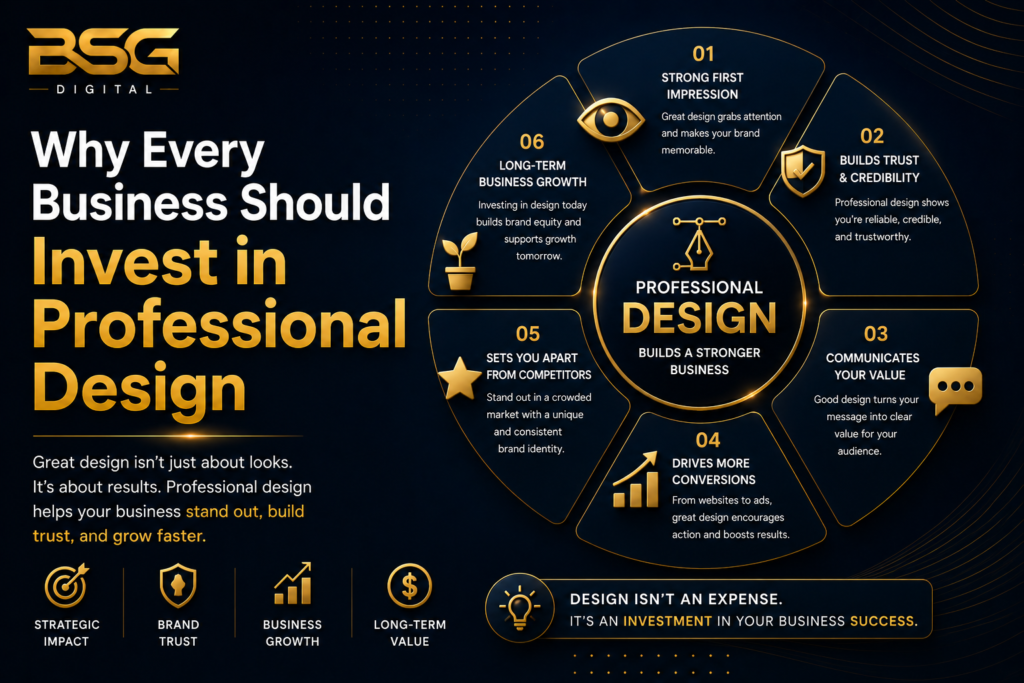
Professional design is an investment rather than an expense.
It helps businesses:
- Build trust
- Improve customer experience
- Increase website engagement
- Generate more leads
- Boost sales
- Strengthen brand awareness
- Improve long-term business growth
Companies that consistently invest in quality design often see better marketing performance over time.
Conclusion
Design plays a critical role in every successful marketing strategy.
It shapes first impressions, strengthens your brand, builds trust, improves user experience, and increases conversions.
No matter the size of your business, investing in professional marketing design can help you stand out in a competitive market.
Remember, customers don’t just buy products or services they buy confidence, trust, and experience. Great design helps you deliver all three.
If you want your marketing efforts to produce better results, start by improving your design.
FAQ
Why is design important in marketing?
Design helps businesses create a strong first impression, build trust, improve user experience, and increase conversions.
Does design affect SEO?
Yes. A well-designed website improves user experience, reduces bounce rates, increases engagement, and supports better SEO performance.
How does design influence customer behavior?
Professional design creates confidence and encourages visitors to stay longer, interact with your content, and make purchasing decisions.
What is marketing design?
Marketing design is the creation of visual materials that support branding, communication, and marketing goals across websites, social media, advertisements, emails, and print materials.
Why is branding important in marketing?
Branding helps customers recognize and remember your business, creating trust and long-term loyalty.


