What is Search Engine Optimization? A Simple Guide for Beginners
If you’ve ever wondered why some websites always show up first on Google while others sit buried on page three, the answer usually comes down to one thing: search engine optimization. It’s a term thrown around constantly in marketing conversations, but very few people explain it in plain, simple language.
In this guide, I’ll answer the question what is search engine optimization in a way that actually makes sense, and show you why it matters for anyone trying to grow a website, blog, or online business.
Quick answer: Search engine optimization (SEO) is the practice of improving a website so it ranks higher in search engine results pages, using strategies like keyword research, content quality, site structure, and backlinks to increase organic (unpaid) visibility and traffic.
What is Search Engine Optimization?
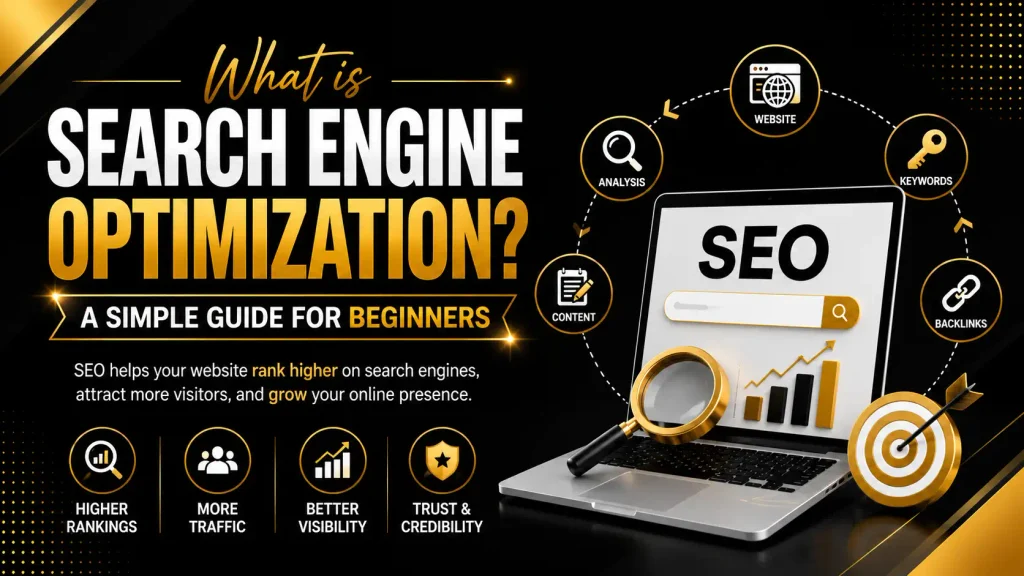
At its core, search engine optimization is about making your website more understandable and appealing to search engines like Google, so they show it to the right people at the right time. When someone types a question or phrase into a search bar, search engines scan billions of pages and decide which ones deserve to appear near the top of the results. SEO is the set of practices that helps your content earn that spot.
Think of search engines as librarians managing an enormous library. Every website is like a book on the shelf, and SEO is how you make your book easy to find, properly labeled, and worth recommending to someone asking a related question. Without it, even a fantastic book might sit unnoticed, never reaching the readers who actually need it.
Search engine optimization typically falls into three broad categories:
- On-page SEO Optimizing individual pages through keywords, headings, meta descriptions, and content quality.
- Off-page SEO : Building authority through backlinks, brand mentions, and external signals of trust.
- Technical SEO : Improving the backend of your website, including site speed, mobile-friendliness, crawlability, and indexing.
Related concepts like search intent, domain authority, and organic traffic also play a major role in how well SEO strategies perform. Understanding these terms helps you see SEO not as a single trick, but as strategies working together toward the same goal: getting found by the right audience.
If you want a deeper look at one of these pillars, our guide on what is technical SEO breaks down the backend elements that support everything else in your SEO strategy.
Why Search Engine Optimization Matters for Every Website
You might be wondering whether SEO is really worth the effort, especially with paid ads offering instant visibility. Here’s the thing: paid ads stop working the moment you stop paying, but content optimized through search engine optimization can keep attracting visitors for months or even years after it’s published.
How Search Engine Optimization Impacts Visibility and Trust
Search engine optimization affects more than just where your website appears on Google. It also shapes how much people trust your brand once they land on your site. Websites that rank highly are often perceived as more credible and authoritative, simply because search engines have already evaluated and favored them over competitors.
Here’s how solid SEO practices typically benefit a website over time:
- Increased organic traffic : Ranking well for relevant keywords brings a steady stream of visitors without ongoing ad spend.
- Better user experience : Practices like fast loading speed and mobile responsiveness also improve usability for visitors.
- Higher credibility : Appearing near the top of search results builds trust, since users often associate high rankings with quality.
- Long-term cost efficiency : Unlike pay-per-click advertising, SEO doesn’t require continuous payment once you rank well.
- Better conversion potential : Visitors arriving through organic search are often actively looking for a solution, making them more likely to convert.
Search engine optimization also connects closely with content marketing and keyword research, since ranking well typically requires understanding what your audience is searching for and creating content that directly answers those queries. This is why SEO rarely works in isolation — it usually performs best paired with a broader content strategy.
Common Beginner Mistakes in Search Engine Optimization
Many beginners approach SEO with the wrong mindset, either stuffing keywords unnaturally into content or expecting overnight results. In reality, search engine optimization is a long-term strategy that often takes weeks or months to show meaningful ranking improvements, especially for competitive keywords.
Another common mistake is ignoring the technical side of a website. You could write incredibly well-optimized content, but if your site is slow, not mobile-friendly, or hard for search engines to crawl, none of that content quality will matter much. A complete SEO strategy always considers content, backlinks, and technical health together, rather than focusing on just one piece.
If you’re building your content strategy alongside your SEO efforts, it’s worth reading our guide on Digital Marketing Service, since strong content is often what fuels successful SEO campaigns in the first place.
For those who prefer learning through video, our YouTube channel covers practical SEO tutorials that walk through keyword research, on-page optimization, and other core concepts in more visual detail.
If you’d like more SEO tips and updates delivered regularly, follow our page on Facebook where we share practical strategies and case studies.
Final Thoughts
Search engine optimization isn’t a one-time task or a quick trick it’s an ongoing process that combines quality content, technical health, and authority-building to help your website earn visibility over time. Whether you’re running a small blog or managing a growing business website, understanding SEO fundamentals gives you the tools to compete for attention in an increasingly crowded online space.
If you’re just getting started, focus on the basics first: understand your audience’s search intent, create genuinely helpful content, and make sure your website is technically sound. The rest of your SEO strategy can build from that solid foundation.
1. What is search engine optimization?
Search engine optimization (SEO) is the practice of improving a website so it ranks higher in search results, using keywords, content quality, site structure, and backlinks to boost organic visibility.
2. Why is search engine optimization important?
SEO helps websites attract free, ongoing traffic instead of relying only on paid ads. It also builds credibility, since users tend to trust websites that rank highly in search results.
3. What are the main types of SEO?
The three main types are on-page SEO (content and keywords), off-page SEO (backlinks and authority), and technical SEO (site speed, crawlability, and mobile-friendliness).
4. What is on-page SEO?
On-page SEO involves optimizing individual web pages using keywords, headings, meta descriptions, and quality content so search engines understand and rank the page properly.
5. What is technical SEO?
Technical SEO focuses on a website’s backend, including site speed, mobile-friendliness, crawlability, and indexing, ensuring search engines can properly access and rank your pages.


