What Is Product Branding? Definition, Elements & Strategy Guide Meta
Introduction
In today’s crowded marketplace, having a great product isn’t enough the invisible thread that connects your product’s design, messaging, and customer experience into something people recognize, trust, and remember.
In this guide, we’ll break down what product branding really means, why it’s essential for business growth, and the core steps to build a brand strategy that works.
What Is Product Branding?
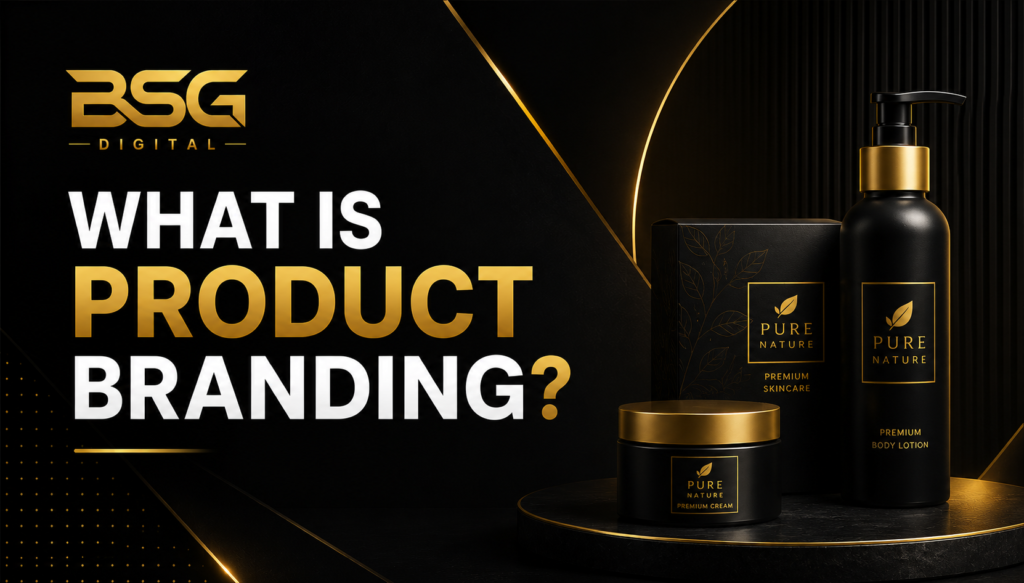
Product branding is the process of creating a distinct identity for a specific product separate from (or alongside) the overall company brand through elements like name, logo, packaging, messaging, and customer experience. It’s how a product is perceived, not just what it does.
Think of it this way: features tell people what a product does; branding tells people why it matters and why they should care.
Why Product Branding Matters
- Builds recognition – A strong brand helps customers instantly identify your product on a shelf or in search results.
- Creates trust – Consistent branding signals reliability and quality.
- Justifies premium pricing – Customers often pay more for a brand they trust.
- Drives loyalty – Good branding turns first-time buyers into repeat customers.
- Differentiates from competitors – In saturated markets, branding is often the deciding factor.
Key Elements of Product Branding
- Brand Name – Simple, memorable, and relevant to the product’s promise.
- Logo & Visual Identity – Colors, typography, and design that reflect the brand’s personality.
- Packaging Design – Especially critical for physical products; it’s often the first touchpoint.
- Brand Voice & Messaging – The tone and language used across marketing and product copy.
- Positioning – How the product is placed relative to competitors (e.g., premium, budget-friendly, eco-conscious).
- Customer Experience – Every interaction, from website to support, shapes brand perception.
How to Build a Strong Product Branding Strategy
1. Define Your Target Audience
Understand who you’re selling to their needs, pain points, and values before designing anything.
2. Clarify Your Brand’s Core Value Proposition
What makes your product different, and why should someone care?
3. Develop a Consistent Visual Identity
Create a logo, color palette, and design system, and apply them consistently across all platforms.
4. Craft Your Brand Voice
Decide whether your brand sounds playful, professional, bold, or minimalist and stay consistent.
5. Optimize for Every Touchpoint
Apply your branding consistently across your website, packaging, social media, and customer service.
6. Gather Feedback and Iterate
Branding isn’t static. Monitor customer perception and refine your approach over time.
Product Branding vs. Corporate Branding
| Product Branding | Corporate Branding |
|---|---|
| Focuses on a single product | Focuses on the entire company |
| Can have its own name/identity | Represents overall company values |
| Example: iPhone | Example: Apple |
Real-World Examples of Great Product Branding
- Apple’s iPhone – Minimalist design, premium positioning, consistent messaging around innovation.
- Coca-Cola – Iconic red-and-white identity and a consistent emotional brand voice for decades.
- Nike’s Air Jordan – A distinct sub-brand with its own logo, story, and loyal community.
Conclusion
Product branding isn’t just a logo or a tagline it’s the complete perception customers form about your product. By defining your audience, crafting a consistent identity, and delivering on your brand promise at every touchpoint, you can turn your product into something people don’t just buy, but believe in.
Ready to build your product’s brand? Start with a clear positioning statement, and let every design and messaging decision flow from there.
Want a Bangla version of this content, or a version tailored to a specific product/industry? Just let me know.


