Web Development Services | That Actually Grow Your Business
Let’s be honest—your website is often the very first impression people get of your business. Before someone calls you, visits your store, or sends an email, they Google you. And what they find in those first three seconds decides whether they trust you or click away to a competitor instead.
That’s exactly why choosing the right web development services isn’t just a “nice to have” anymore. It’s the backbone of how modern businesses survive, compete, and grow online.
In this article, I’ll walk you through what good web development really means today, why so many businesses get it wrong, and how to pick a team that won’t just build you a website—but build you a digital asset that actually works for your business.
Why Web Development Services Matter More Than Ever
A lot of business owners still think of a website as a digital business card—something you put up once and forget about. That mindset is outdated, and honestly, it’s costing businesses real money.
Here’s the truth: your website is a 24/7 salesperson. It works while you sleep, answers questions before customers even ask them, and either builds trust or destroys it within seconds. A slow, outdated, or confusing website pushes people straight into your competitor’s hands.
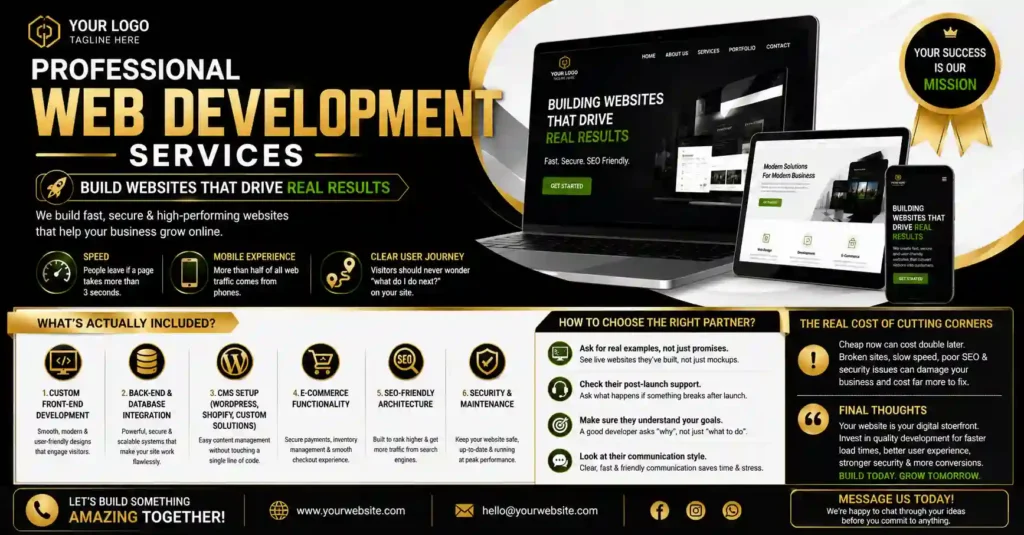
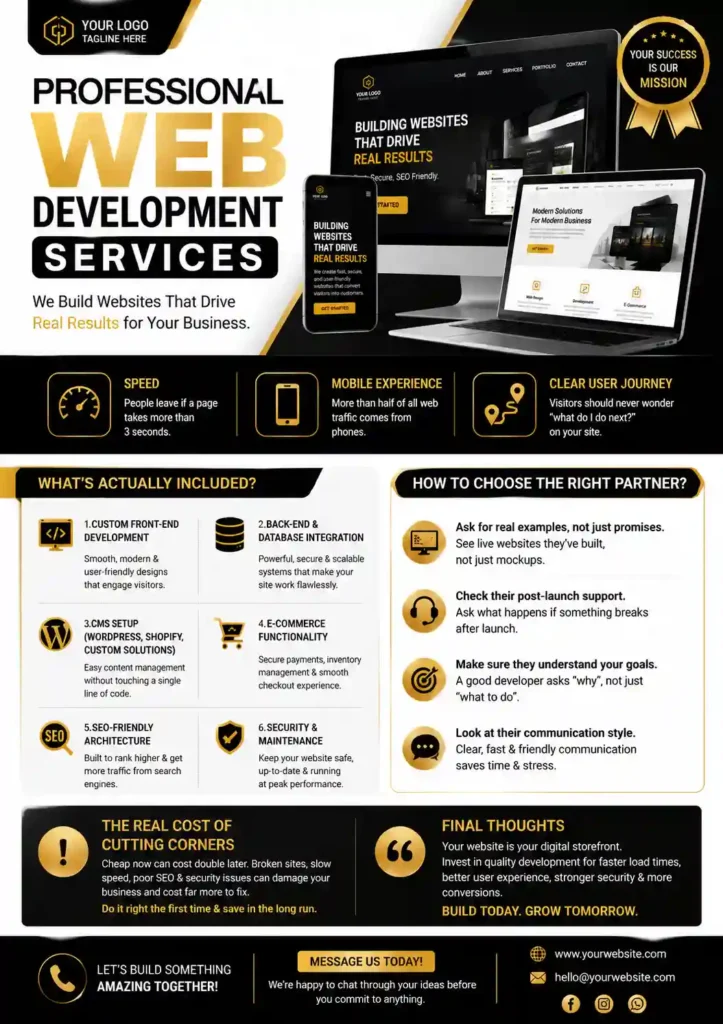
Good web development services solve this by focusing on three things that actually matter:
- Speed – People leave if a page takes more than 3 seconds to load. No exceptions.
- Mobile experience – More than half of all web traffic comes from phones. If your site isn’t built mobile-first, you’re losing customers daily.
- Clear user journey – Visitors should never wonder “what do I do next?” on your site.
When these three pillars are handled properly, your website stops being a static page and starts becoming a real growth engine.
Web Development Services: What’s Actually Included
This is where a lot of confusion happens. People hear “web development” and assume it just means “making a website look nice.” But that’s only design. Development is the engine underneath the hood—the part that makes everything actually function smoothly.
A complete web development service typically covers:
1. Custom Front-End Development
This is everything the user sees and interacts with—buttons, menus, animations, layouts. It needs to feel smooth and intuitive, not clunky or confusing.
2. Back-End & Database Integration
This is the invisible part that makes your site actually work—storing data, processing forms, managing logins, handling payments. Without solid back-end work, even a beautiful website breaks down fast.
3. CMS Setup (WordPress, Shopify, Custom Solutions)
Most businesses need to update content themselves—new blog posts, new products, new offers. A good developer sets up a system that lets you do this without touching a single line of code.
4. E-commerce Functionality
If you’re selling products or services online, this includes secure payment gateways, inventory management, and a checkout process that doesn’t scare customers away halfway through.
5. SEO-Friendly Architecture
This is huge and often overlooked. A site can look stunning but be invisible on Google because of poor technical structure. Proper URL structures, fast loading speed, clean code, and mobile responsiveness all directly affect your search rankings. If you want to understand how this connects with content strategy, check out our guide on SEO best practices for a deeper breakdown.
6. Security & Maintenance
Hacked websites, broken links, expired SSL certificates—these aren’t rare problems. They happen constantly to neglected sites. Ongoing maintenance keeps your business protected and your visitors safe.
How to Choose the Right Web Development Partner
Not all developers are created equal, and price alone shouldn’t be your deciding factor (a cheap website that breaks in six months isn’t actually cheap).
Here’s what to actually look for:
Ask for real examples, not just promises. Any decent agency or freelancer should be able to show you live websites they’ve built—not just mockups or screenshots.
Check their post-launch support. Websites aren’t “set and forget.” Ask directly: what happens if something breaks two months after launch? If the answer is vague, that’s a red flag.
Make sure they understand your business goals. A good developer doesn’t just take instructions—they ask why. Why do you want a contact form there? Why this color scheme? What’s the actual goal of this page? If they’re not asking these questions, they’re just executing tasks, not building a strategy.
Look at their communication style. You’ll be working closely with this person or team for weeks, sometimes months. If communication feels slow or confusing now, it won’t magically improve after you’ve signed the contract.
If you’re still comparing options, our website development pricing guide breaks down what you should realistically expect to pay based on project complexity.
The Real Cost of Cutting Corners
I’ve seen this story play out too many times: a business goes with the cheapest option to “save money,” and six months later they’re paying double to fix what was done wrong the first time—broken mobile layouts, security vulnerabilities, slow load times that tank their SEO rankings.
Web development is one of those areas where doing it right the first time genuinely saves you money long-term. Think of it like building a house. You can cut corners on the foundation, sure—but eventually, cracks show up, and fixing them later costs far more than building it properly from day one.
Final Thoughts
Your website isn’t just a digital brochure anymore—it’s often the deciding factor between a customer choosing you or your competitor. Investing in proper web development services means investing in faster load times, better user experience, stronger security, and ultimately, more conversions.
Whether you’re starting from scratch or rebuilding an outdated site, focus on finding a development partner who treats your website as a long-term business asset—not just a one-time project to finish and forget.
Got questions, or want to see examples of real projects? Feel free to message us directly on our Facebook page—we’re always happy to chat through ideas before you commit to anything.


