Search Engine Optimization Marketing | A Complete Beginner’s Guide
If you’ve ever wondered how some businesses seem to show up everywhere online without spending a fortune on ads, the answer usually involves search engine optimization marketing. It’s one of the most cost-effective, long-term strategies for building visibility, yet many business owners still don’t fully understand how it works.
In this guide, I’ll break down what search engine optimization marketing means, how it works, and how you can start using it to grow your own website or business.
Quick answer: Search engine optimization marketing (SEO marketing) is the practice of using SEO strategies like keyword research, content creation, and technical optimization as part of a broader marketing plan to increase organic visibility, attract targeted traffic, and generate leads or sales without relying solely on paid advertising.
What is Search Engine Optimization Marketing?
Search engine optimization marketing combines two closely related disciplines: SEO, which focuses on ranking well in search engines, and marketing, which focuses on reaching and converting the right audience. Together, they form a strategy built around getting found by people actively searching for what your business offers, rather than interrupting them with ads they didn’t ask for.
Unlike traditional advertising, which stops generating results the moment you stop paying, search engine optimization marketing builds long-term assets. A well-optimized blog post or product page can keep attracting visitors for months or years after publishing, making it one of the more sustainable approaches to digital growth.
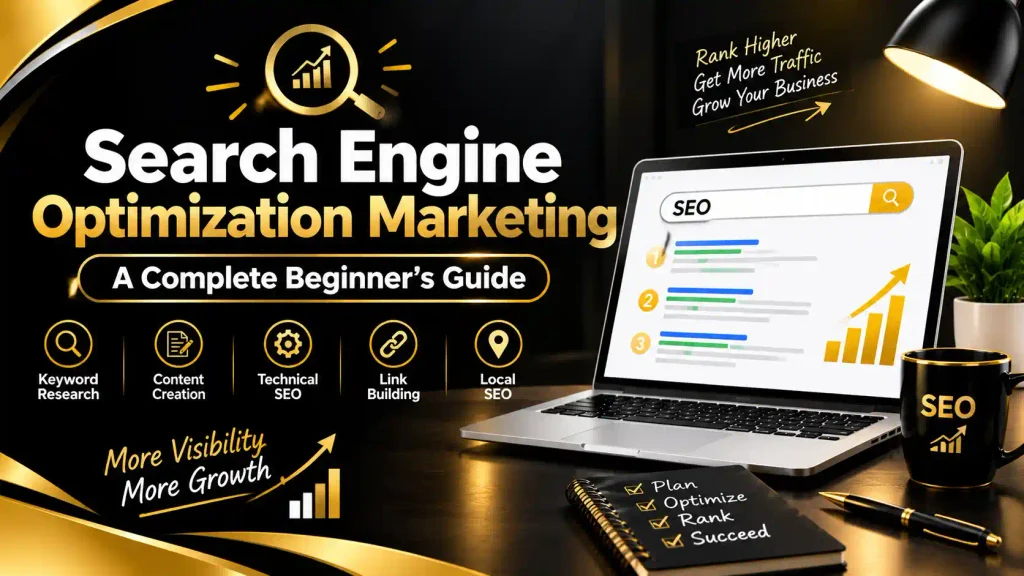
This type of marketing typically includes a mix of the following components:
- Keyword research : Identifying the exact terms and phrases your target audience searches for.
- On-page optimization : Structuring content with proper headings, keywords, and meta tags so search engines understand its relevance.
- Content marketing : Creating blog posts, guides, and resources that attract visitors and answer their questions.
- Technical SEO : Ensuring your website is fast, mobile-friendly, and easily crawlable by search engines.
- Link building : Earning backlinks from reputable sites to build authority and trust.
- Local SEO : Optimizing for location-based searches, especially important for businesses serving specific geographic areas.
Each of these pieces works together rather than in isolation. Strong content without technical SEO often struggles to rank, and great technical SEO without relevant content has nothing valuable to show search engines. If you want to understand how content plays into this strategy, our guide on What is Content Marketing | A Simple Guide for Beginners explains how valuable content fuels effective SEO marketing campaigns.
Why Search Engine Optimization Marketing Matters for Growth
Many businesses default to paid advertising because it delivers quick, visible results. But search engine optimization marketing offers something ads can’t: compounding, long-term value that grows stronger the longer you invest in it.
How Search Engine Optimization Marketing Builds Sustainable Traffic
When you rely purely on paid ads, your visibility disappears the moment your budget runs out. Search engine optimization marketing works differently once a page ranks well, it can continue generating traffic without ongoing spend, making it significantly more cost-effective over time.
Here’s how a solid SEO marketing strategy typically benefits a business:
- Builds long-term organic traffic : Ranking well for relevant keywords creates a steady, ongoing source of visitors.
- Increases brand credibility : Websites that rank highly are often perceived as more trustworthy and authoritative.
- Improves cost efficiency : Unlike PPC campaigns, SEO doesn’t require continuous payment once rankings are established.
- Targets high-intent audiences : People searching for specific terms are often further along in their decision-making process.
- Supports other marketing channels : Strong SEO content can be repurposed for email campaigns, social media, and ad copy.
Search engine optimization marketing also works hand in hand with data analysis. Tracking which keywords, pages, and content types perform best allows businesses to refine their strategy over time, focusing more energy on what’s actually driving results.
Common Mistakes in Search Engine Optimization Marketing
One of the biggest mistakes businesses make is treating SEO as a one-time project rather than an ongoing strategy. Search engines regularly update their algorithms, competitors publish new content, and search behavior shifts over time, meaning a page ranking well today might slip without continued attention.
Another common mistake is focusing exclusively on rankings while ignoring conversion. Ranking first for a keyword means little if the page doesn’t guide visitors toward taking action, whether that’s making a purchase, filling out a form, or signing up for a newsletter. Effective search engine optimization marketing always considers the full customer journey, not just visibility.
Neglecting technical health is another frequent issue. Even the best-written content can underperform if your website loads slowly, isn’t mobile-friendly, or has crawl errors preventing search engines from properly indexing your pages. If you’re unsure where your website stands, our guide on What is Technical SEO | A Complete Beginner’s Guide walks through the technical foundations that support every successful SEO marketing effort.
For a more visual breakdown of how these strategies work together in practice, check out our YouTube channel, where we walk through real SEO marketing campaigns step by step.
If you found this guide helpful and want more practical marketing insights, follow our page on Facebook where we share regular strategies and case studies.
Final Thoughts
Search engine optimization marketing isn’t a quick fix, but it’s one of the most reliable ways to build sustainable, long-term visibility for a business. By combining keyword research, quality content, technical optimization, and authority building, businesses can attract the right audience without relying entirely on paid advertising.
If you’re just getting started, focus on understanding your audience’s search intent, creating genuinely helpful content, and making sure your website’s technical foundation supports everything else. The results won’t be instant, but with consistency, search engine optimization marketing tends to pay off in ways paid ads simply can’t match over time.
1. What is search engine optimization marketing?
Search engine optimization marketing uses SEO strategies like keyword research, content creation, and technical optimization as part of a broader plan to increase organic visibility and generate leads.
2. How is SEO marketing different from regular SEO?
SEO marketing combines technical SEO practices with a broader marketing strategy, focusing not just on rankings but on attracting and converting the right audience into leads or customers.
3. Why is search engine optimization marketing important?
It builds long-term, cost-effective traffic that continues working after publishing, unlike paid ads which stop generating visibility the moment you stop spending money.
4. What are the main components of SEO marketing?
Key components include keyword research, on-page optimization, content marketing, technical SEO, link building, and local SEO, all working together toward better visibility.
5. What role does content play in SEO marketing?
Content fuels SEO marketing by answering audience questions and targeting relevant keywords, making it easier for search engines to understand and rank your pages.
6. Can small businesses benefit from SEO marketing?
Yes, SEO marketing is especially valuable for small businesses, since it builds visibility and credibility without requiring the large budgets needed for continuous paid advertising.


