Elements of Branding: 10 Key Components of a Strong Brand

Introduction
What makes a brand memorable?
Is it the logo? The colors? The tagline? Or the way a business communicates with its customers?
The truth is, a strong brand is built from several connected parts. Your logo may be the first thing people notice, but it is not the entire brand. Your message, personality, visual style, positioning, and customer experience all influence how people recognize and remember your business.
So, what are the elements of branding, and why do they matter for a growing business? From your brand identity and visual style to your messaging and customer experience, each component plays an important role in shaping how people perceive your company.
Understanding what are the key elements of branding can help you create a clear and consistent identity that connects with your target audience. These essential elements of a strong brand work together to make your business more recognizable, trustworthy, and memorable.
In this guide, I’ll explain the 10 key components of elements of brand identity and show you how they work together to create a strong and consistent brand that supports long-term business growth.
What Are the Elements of Branding?
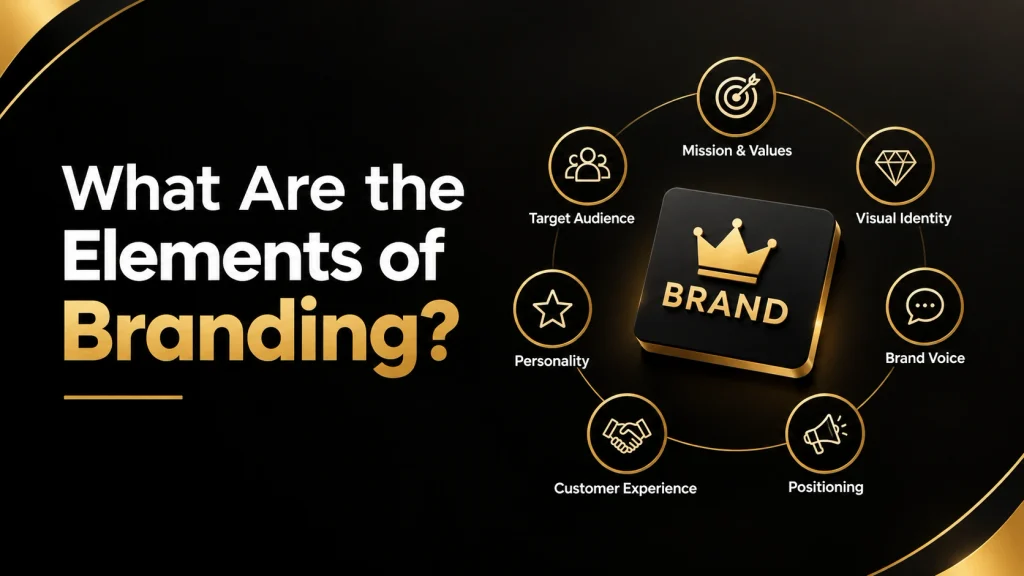
The elements of branding are the different components that shape how a business looks, sounds, communicates, and connects with its audience. From your brand name and logo to your colors, typography, messaging, and customer experience, every part contributes to how people recognize and remember your business.
So, what are the elements of branding that make a brand strong and memorable? They can include your brand identity, visual style, brand voice, personality, positioning, imagery, and overall customer experience. These components work together to create a clear and consistent image in the minds of your customers.
But what are the key elements of branding that businesses should focus on? A successful brand does not choose these elements randomly. Each element should support the same idea of who the business is, what it offers, and what it wants customers to remember.
The essential elements of a strong brand should also reflect the needs and expectations of your target audience. For example, if your business wants to appear premium, your visual identity, language, website design, packaging, and customer communication should all support that premium positioning.
This is also why understanding the elements of brand identity is important. When your visual and verbal elements work together consistently, your business becomes easier to recognize, trust, and remember.
That is where effective branding becomes powerful.
Why Are Branding Elements Important?

Strong branding helps customers recognize your business and understand what makes it different from competitors. The elements of branding work together to create a clear and memorable identity that customers can easily connect with.
If you understand what are the elements of branding, you can make better decisions about your brand identity, messaging, visual style, and customer experience.
Consistent branding can help you:
- Build brand recognition
- Create customer trust
- Stand out from competitors
- Communicate your business values
- Build an emotional connection with your audience
- Improve customer loyalty
- Create a professional brand image
- Support long-term business growth
The essential elements of a strong brand also help your business communicate a consistent message across different platforms. From your logo and colors to your brand voice and customer experience, every detail can influence how people perceive your business.
Understanding what are the key elements of branding is especially important when creating a consistent brand identity. These elements of brand identity help make your business recognizable across your website, social media, advertisements, packaging, and other marketing channels.
Branding also gives your marketing activities a clear direction. When your identity and message are consistent, your website, social media, advertisements, and other marketing channels can feel like connected parts of the same brand.
Now, let’s look at the 10 key elements that can help you build a stronger, more recognizable, and consistent brand.
10 Key Elements of Branding
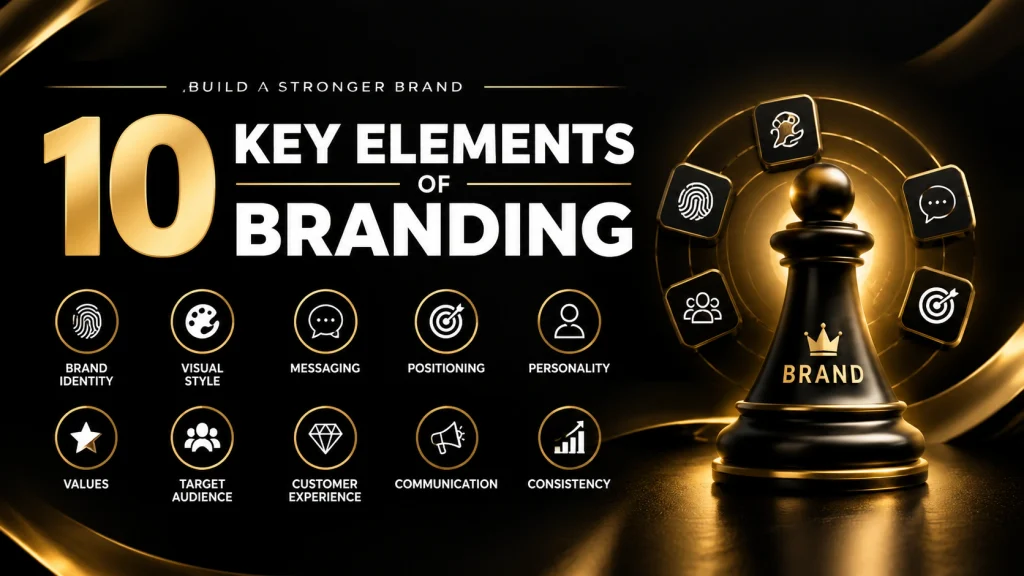
Building a strong brand takes more than creating a beautiful logo or choosing attractive colors. A successful brand is made up of several connected components that influence how customers recognize, understand, and remember a business.
So, what are the elements of branding that can help a business create a strong and memorable identity?
From your brand name and visual identity to your messaging, positioning, and customer experience, each element plays an important role. When these components work together consistently, they can help your business build trust and stand out from competitors.
Let’s look at the 10 key elements of branding and understand how each one contributes to a strong brand.
1. Brand Name
Your brand name is one of the first things customers learn about your business.
A good name should be easy to remember, relevant to your business, and suitable for your target audience. It should also give you room to grow if your products or services expand in the future.
Think about some of the world’s most recognizable brands. Their names are not just labels. Over time, marketing, customer experiences, and consistent communication give those names meaning.
When choosing a brand name, consider:
- Is it easy to pronounce?
- Is it easy to remember?
- Does it fit your industry?
- Does it appeal to your target audience?
- Can you build a strong identity around it?
A strong name gives your branding a solid foundation.
2. Logo
Your logo is one of the most recognizable parts of your visual identity.
It gives customers a visual symbol they can associate with your business. Your logo may appear on your website, social media profiles, business cards, advertisements, packaging, products, and more.
But a good logo is not simply about making something attractive. It should communicate your brand in a simple and recognizable way.
A strong logo should be:
- Simple
- Recognizable
- Relevant
- Scalable
- Easy to use across different platforms
Your logo should also work well in different sizes and formats. A design that looks great on a large banner should still remain clear when used as a small social media icon.
Remember: your logo represents your brand, but your logo is not your entire brand.
3. Brand Color Palette
Colors can strongly influence how people perceive a brand.
Different colors can create different feelings. For example, blue is often associated with trust and professionalism, while green may communicate nature, growth, or sustainability. Black can create a premium or sophisticated feeling, while brighter colors can feel energetic and playful.
The important thing is not simply choosing your favorite colors. Your color palette should support the personality and positioning of your brand.
Your colors should match:
- Your brand personality
- Your target audience
- Your industry
- Your market positioning
- The emotions you want to create
Once you choose your colors, use them consistently across your website, social media, advertisements, graphics, packaging, and other brand materials.
Consistency makes your business easier to recognize and helps create a stronger visual identity.
4. Typography
Typography is another important part of visual branding and one of the essential elements of a strong brand.
The fonts you choose can influence how customers perceive your business. A modern sans-serif font can feel clean and contemporary, while a traditional serif font can create a more classic or established impression.
Your brand should have a clear typography system instead of using random fonts everywhere.
For example, you can define:
- Heading font
- Subheading font
- Body font
- Accent font
Most importantly, your text should remain easy to read.
Beautiful typography is useful only when customers can actually read your message. A consistent typography system also makes your brand materials look more professional.
5. Brand Voice
How does your brand sound when it communicates with customers?
That is your brand voice.
Your voice should reflect your personality and remain recognizable across your communication channels. It is one of the key elements that helps make your brand feel consistent and human.
For example, a financial company may use a professional and trustworthy voice, while a lifestyle brand may use a friendly and conversational style.
Your brand voice can be:
- Professional
- Friendly
- Helpful
- Confident
- Educational
- Playful
- Inspirational
The key is consistency.
Your website should not sound highly formal while your social media suddenly sounds completely different unless there is a strategic reason for the change.
6. Brand Messaging
Your brand messaging explains what you offer, who you serve, and why customers should care.
If someone asks, “What are the key elements of branding that help customers understand a business?”, clear and consistent messaging should be part of the answer.
Good messaging answers important questions such as:
What do you do?
Who do you help?
What makes you different?
Why should customers choose you?
Your messaging can include your value proposition, tagline, key benefits, marketing messages, and other communication used throughout the customer journey.
Instead of simply telling customers what your product does, focus on the value it creates for them.
For example, instead of saying:
“We provide digital marketing services.”
You could communicate a stronger benefit:
“We help businesses improve their online visibility and turn digital marketing into measurable growth.”
Clear messaging makes your brand easier to understand and gives customers a reason to pay attention.
7. Brand Personality
If your brand were a person, what would it be like?
Would it be professional? Friendly? Bold? Creative? Serious? Energetic?
These characteristics make up your brand personality.
A clear personality helps your business feel more human and memorable. It also makes it easier to decide how your brand should communicate visually and verbally.
For example:
A luxury brand may be elegant, confident, and sophisticated.
A children’s brand may be playful, colorful, and friendly.
A technology brand may be innovative, intelligent, and forward-thinking.
Your personality should match your audience and your market position. When customers can associate certain characteristics with your business, your brand becomes easier to recognize and remember.
8. Brand Imagery and Visual Style
Branding goes beyond your logo and colors.
The images, graphics, icons, illustrations, photography, shapes, and layouts you use also contribute to your visual identity. Together, these components are important elements of brand identity.
Imagine visiting a company’s website and seeing professional, consistent visuals. Then you visit its social media page and everything looks completely different.
It feels confusing, right?
A consistent visual style can help customers recognize your brand across different touchpoints.
Your visual style can define:
- Photography style
- Illustration style
- Graphic elements
- Icons
- Shapes
- Image treatment
- Layout style
- Social media design
When these elements work together, your brand becomes more recognizable and visually consistent.
9. Brand Positioning
Brand positioning is about the place you want your business to occupy in the minds of your target customers.
It answers an important question:
Why should customers choose your brand instead of another option?
Strong positioning requires you to understand:
- Your target audience
- Their needs
- Your competitors
- Your unique strengths
- Your value proposition
For example, two businesses may sell similar products but position themselves differently.
One might focus on affordability.
Another might focus on premium quality.
Another might focus on sustainability.
The product may be similar, but the perception can be completely different.
That is the power of positioning.
A clear position helps customers understand what makes your business different and why your brand is relevant to them.
10. Brand Consistency and Customer Experience
The final element brings everything together.
Your branding should remain consistent wherever customers interact with your business.
That includes:
- Website
- Social media
- Advertising
- Packaging
- Customer service
- Business cards
- Presentations
- Physical locations
- Product experience
But consistency is not only about visual design.
The actual customer experience must also match what your brand promises.
If your brand presents itself as premium but provides poor customer service, there is a disconnect.
If you position yourself as a helpful company but ignore customer questions, the branding will not feel authentic.
A strong brand delivers a consistent experience from the first interaction to the final purchase and beyond.
When all these components work together, they create a complete and recognizable brand experience.
How These Elements of Branding Work Together

The real strength of branding comes from how different elements work together to create one clear and memorable identity.
But what are the elements of branding that make this possible? Your brand name gives people something to remember, while your logo, colors, typography, and imagery create visual recognition. Your brand voice, messaging, and personality shape how your business communicates with its audience.
Your brand positioning explains why your business is different from competitors, while your customer experience helps prove whether your brand promise is real.
Think of branding like a puzzle. Each piece has a different role, but they all need to fit together. When your visual identity, messaging, positioning, and customer experience are consistent, you can create an essential element of a strong brand: consistency and recognition.
The goal is not simply to make your business look professional. It is to create a brand that customers can recognize, understand, trust, and remember.
Common Branding Mistakes to Avoid

Even businesses with great products or services can struggle when their branding lacks clarity and consistency.
Understanding what are the key elements of branding is important, but knowing what to avoid is equally valuable. Here are some common mistakes that can weaken your brand.
Focusing Only on the Logo
A logo is an important part of your visual identity, but branding is much bigger than logo design.
Your brand also includes your messaging, personality, voice, positioning, colors, typography, imagery, and customer experience. Focusing only on your logo can prevent you from building a complete and consistent brand.
Using Too Many Colors and Fonts
Too much visual variety can make your brand look inconsistent and unprofessional.
Choose a clear color palette and a small selection of fonts that work well together. Consistent visual choices make your business easier for customers to recognize.
Copying Competitors
Your brand should communicate what makes your business different instead of simply looking like another company.
Research your competitors, but use that information to find opportunities to create a unique position in your market.
Changing Your Brand Too Often
Constant changes can make it difficult for customers to recognize and remember your business.
While a brand may need updates as a business grows, major changes should have a clear strategic purpose. Consistency is one of the essential elements of a strong brand.
Ignoring Your Target Audience
Your branding should be designed for the people you want to reach not simply based on what you personally like.
Understanding your audience’s needs, preferences, expectations, and problems can help you create branding that feels relevant and meaningful.
Making Your Brand Promise Too Big
Your customer experience should support your promises.
If your marketing makes big promises but your actual product or service does not deliver, customer trust can quickly disappear. Strong branding is built on authenticity and a consistent experience.
How to Build a Strong Brand Using These Element

You don’t need to create everything overnight.
A strong brand develops through a clear strategy and consistent execution. Once you understand what are the key elements of branding, you can build your brand step by step.
Understand Your Audience
Research your ideal customers, including their needs, problems, preferences, expectations, and buying behavior.
The better you understand your audience, the easier it becomes to create a brand that connects with them.
Define Your Brand Purpose
Determine what your business stands for and the value you want to provide.
Your purpose can guide your messaging, personality, positioning, and customer experience.
Research Your Competitors
Look at how competitors position themselves, communicate with customers, and present their visual identity.
Then identify opportunities to differentiate your business instead of copying what others are already doing.
Create Your Brand Strategy
Define your positioning, personality, voice, messaging, and core values.
A clear brand strategy gives your other branding decisions a strong foundation.
Develop Your Visual Identity
Create your logo, color palette, typography, imagery, and other visual assets.
These are important elements of brand identity because they help customers visually recognize your business across different platforms.
Document Your Brand Guidelines
Create clear rules for how your brand should look and communicate across different channels.
Your guidelines can include logo usage, colors, typography, imagery, brand voice, messaging, and design standards.
Apply Your Branding Consistently
Use the same core identity across your website, social media, advertising, packaging, email, and customer communications.
Consistency helps create stronger recognition and makes your brand feel more professional.
Review and Improve
As your business grows, your audience and market may change.
Review your branding regularly and make strategic improvements when necessary. The goal is to keep your brand relevant without losing the identity customers already recognize.
Elements of Branding vs. Brand Identity
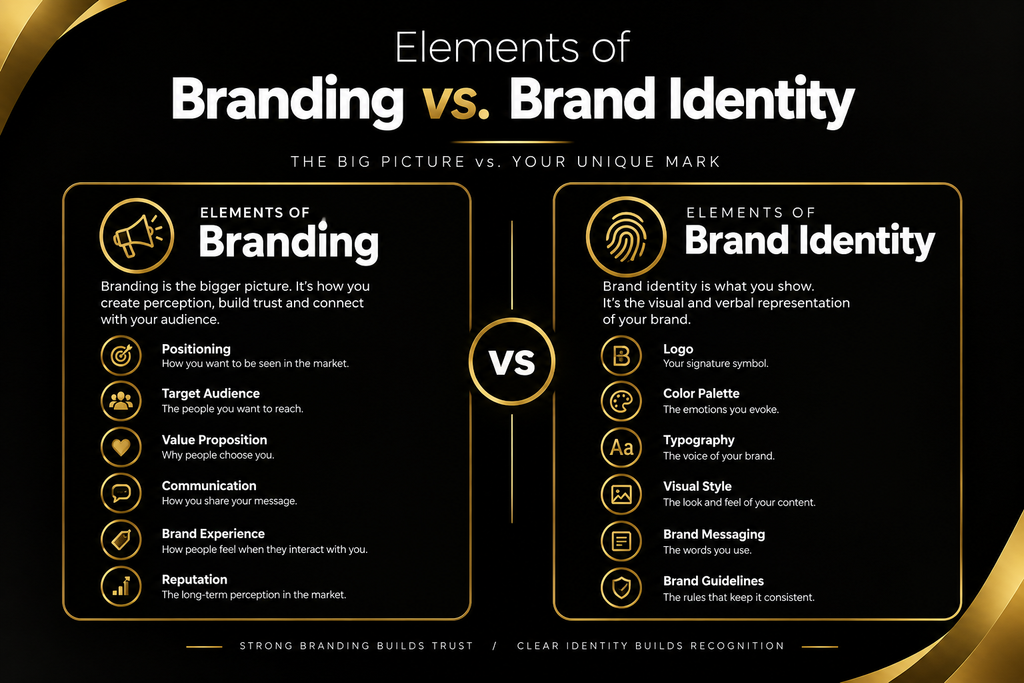
These terms are closely connected, but they are not exactly the same.
Brand identity mainly refers to how a business presents itself visually and verbally. It includes elements such as your logo, colors, typography, imagery, messaging, and brand voice.
On the other hand, elements of branding is a broader concept that includes the different components used to build, communicate, and strengthen a brand.
For example, brand positioning, personality, customer experience, visual identity, and messaging can all contribute to the overall branding process.
So, if you’re wondering about the elements of brand identity, think about the specific visual and verbal characteristics customers associate with your business.
Understanding the difference can help you develop a more complete branding strategy instead of treating branding as simply a design project.
Why Strong Branding Matters for Business Growth

A strong brand can influence much more than how your business looks.
When the different branding components work together, they can help you:
- Become easier to recognize
- Build customer trust
- Differentiate your business from competitors
- Create stronger customer relationships
- Improve brand loyalty
- Support your marketing campaigns
- Increase perceived value
- Create a consistent customer experience
One of the biggest benefits of understanding what are the key elements of branding is that it gives your business a clear framework for creating consistency.
When customers understand your brand and remember it, your marketing can become more effective because people are already familiar with what your business represents.
For example, a customer may first discover your business through social media, visit your website later, and eventually see an advertisement. If the same colors, messaging, personality, and visual style appear across all three touchpoints, the customer is more likely to recognize the business.
That recognition can become a valuable long-term business asset.
Ultimately, the essential elements of a strong brand are not about making your business look good in one place. They are about creating a consistent experience that customers can recognize and trust wherever they interact with your business.
Frequently Asked Questions About Elements of Branding
What are the main elements of branding?
The main elements can include brand name, logo, colors, typography, voice, messaging, personality, imagery, positioning, and customer experience.
What are the 10 key elements of branding?
The 10 elements discussed in this guide are brand name, logo, color palette, typography, brand voice, brand messaging, brand personality, imagery and visual style, brand positioning, and brand consistency/customer experience.
Is a logo the most important element of branding?
A logo is an important part of visual identity, but it is not the entire brand. A strong brand also needs clear messaging, positioning, personality, consistency, and a positive customer experience.
Why is brand consistency important?
Brand consistency helps customers recognize your business across different platforms and interactions. It can also strengthen trust and make your business more memorable.
How do branding elements help a business?
They help communicate what a business stands for, differentiate it from competitors, create recognition, build trust, and provide a consistent experience for customers.
Can small businesses benefit from strong branding?
Absolutely. Small businesses can use clear positioning, consistent visuals, strong messaging, and excellent customer experiences to compete with larger companies and build a memorable presence.
Final Thoughts
The elements of branding are much more than a collection of colors, fonts, logos, and design assets. A strong brand combines strategy, creativity, consistency, and a clear understanding of the people you want to reach.
So, what are the elements of branding that truly make a business memorable? Your brand name gives people something to remember. Your visual identity helps them recognize you. Your voice and messaging tell your story, while your positioning explains why your business is different from competitors.
Understanding what are the key elements of branding can help you build a more consistent and recognizable brand. From your logo and color palette to your brand personality, messaging, and customer experience, every component should support the same overall identity.
The goal is not simply to make your brand look good once. The goal is to create an essential element of a strong brand that customers can recognize, understand, trust, and remember.
Your elements of brand identity should work together across your website, social media, advertising, and other customer touchpoints. When every part of your branding communicates the same message, your business becomes easier to recognize and more memorable.
If you are building or improving your brand, start with the fundamentals and make every element work toward the same goal.
At BSG Digital, we help businesses build stronger online brands through strategic branding, creative design, SEO, and digital marketing solutions.


