Corporate Branding: A Complete Guide to Building a Strong Corporate Brand
Introduction
A business can have great products, professional employees, and a strong marketing budget, but that does not always mean people will remember the company. In a competitive market, businesses need more than good products and services. They also need a clear identity that customers can recognise, understand, and trust.
Customers interact with businesses through websites, social media, advertisements, emails, customer service, packaging, and many other touchpoints. Each interaction shapes how people see the company and influences their overall perception of the brand.
So, what is corporate branding, and why does it matter for modern businesses?
Corporate branding is not simply about creating a logo or choosing a brand colour. It is the process of building a clear and consistent identity for the company and making sure that identity is reflected across every customer and business interaction. It brings together elements such as brand values, messaging, visual identity, positioning, and customer experience.
The importance of corporate branding becomes even clearer when businesses compete for attention across multiple digital channels. A strong corporate brand can help a company become more recognisable, build customer trust, communicate its values, and create a stronger position in the market.
Understanding the benefits of corporate branding can also help businesses make better decisions about how they present themselves and connect with their target audience. From improving brand recognition to supporting long-term growth, effective branding can influence how customers perceive and remember a company.
In this guide, I will explain what is corporate branding, why it matters, the key elements of a strong corporate brand, and how to develop an effective corporate brand strategy that supports business growth.
What Is Corporate Branding?

Corporate branding is the process of building and managing a company’s overall identity, reputation, personality, and public image. It helps shape how customers, employees, investors, and other stakeholders recognise and perceive a business.
So, what is corporate branding really about? It is about creating a clear identity for the company as a whole rather than focusing only on one product or service.
When people think about a company, they may remember its logo, colours, communication style, values, customer experience, reputation, and the way it presents itself. All of these elements work together to create the corporate brand.
A strong corporate brand should answer an important question:
“What do people think and feel when they see or interact with this company?”
The answer should be clear, consistent, and aligned with what the company actually delivers.
This is also where the importance of corporate branding becomes clear. A consistent brand can help businesses build recognition, establish trust, differentiate themselves from competitors, and create stronger relationships with their audience.
Corporate branding can include several important elements, such as:
- Brand purpose
- Mission and vision
- Core values
- Corporate identity
- Logo and visual identity
- Brand positioning
- Brand voice
- Brand messaging
- Customer experience
- Company reputation
- Employee experience
- Digital presence
These elements should work together rather than exist separately. A professional logo may help people recognise your business, but your messaging, customer experience, values, and reputation determine what they actually think about your company.
This is why the benefits of corporate branding go far beyond visual design. A well-planned corporate brand strategy helps create a consistent identity that people can recognise, understand, and trust across every interaction with the business.
Why Is Corporate Branding Important?

Customers have more choices than ever. Before choosing a business, they can compare different companies, read reviews, visit websites, check social media profiles, and research what a brand stands for.
Because of this, having a good product or service is no longer enough. Businesses also need a strong identity that people can recognise, understand, and trust.
This is where corporate branding plays an important role. It helps businesses create a consistent identity, communicate their values, build credibility, and stand out in a competitive market.
Understanding what is corporate branding also means understanding why it matters for long-term business success. Here are some of the key reasons why corporate branding is important.
Builds Stronger Brand Recognition
One of the biggest benefits of corporate branding is stronger brand recognition.
When your logo, colours, messaging, tone, typography, and visual style remain consistent, customers are more likely to connect those elements with your business. Over time, this consistency can make your company easier to remember.
For example, customers may recognise your brand from its colours, design style, or communication tone before they even see the company name.
That level of recognition does not happen overnight. It comes from using a consistent corporate brand strategy across different customer touchpoints.
Builds Customer Trust
Trust is one of the most important factors in any business relationship.
Customers are more likely to feel comfortable choosing a company that appears professional, reliable, and consistent. A strong corporate brand can help create that sense of confidence.
When your website, social media profiles, advertisements, customer service, and other communication channels present a consistent identity, your business can appear more organised and credible.
More importantly, your brand promise should match the experience you provide. When customers see consistency between what your company says and what it delivers, trust becomes stronger.
Creates a Competitive Advantage
Many businesses offer similar products or services, so standing out can be challenging.
So, what makes one company different from another?
Sometimes, the difference is not the product itself. It is the way the company presents itself, communicates its value, and creates an experience for its customers.
A clear corporate brand can help your business communicate what makes it unique and why customers should choose you over competitors.
This is one of the important benefits of corporate branding, especially in crowded markets where businesses are competing for the same audience.
Strengthens Corporate Reputation
Your brand and reputation are closely connected.
A company may say that it values quality, transparency, innovation, or customer service. However, customers ultimately judge those promises through their real experiences with the business.
Effective corporate branding helps businesses communicate what they stand for and create consistency between their brand message and their actions.
When your visual identity, communication, customer experience, and business values all support the same message, you can build a stronger and more trustworthy corporate reputation.
Supports Long-Term Business Growth
The importance of corporate branding goes beyond recognition and visual appeal. A strong corporate brand can support many areas of business growth, including marketing, customer loyalty, partnerships, recruitment, and market expansion.
A clear brand gives your business a strong foundation that can grow with the company.
Your products, services, audience, or marketing channels may change over time. However, a well-defined corporate brand strategy can help those changes feel connected rather than random.
In the long run, consistent branding can help your business build stronger relationships with customers and create a brand that people remember and trust.
What Are the Key Elements of Corporate Branding?
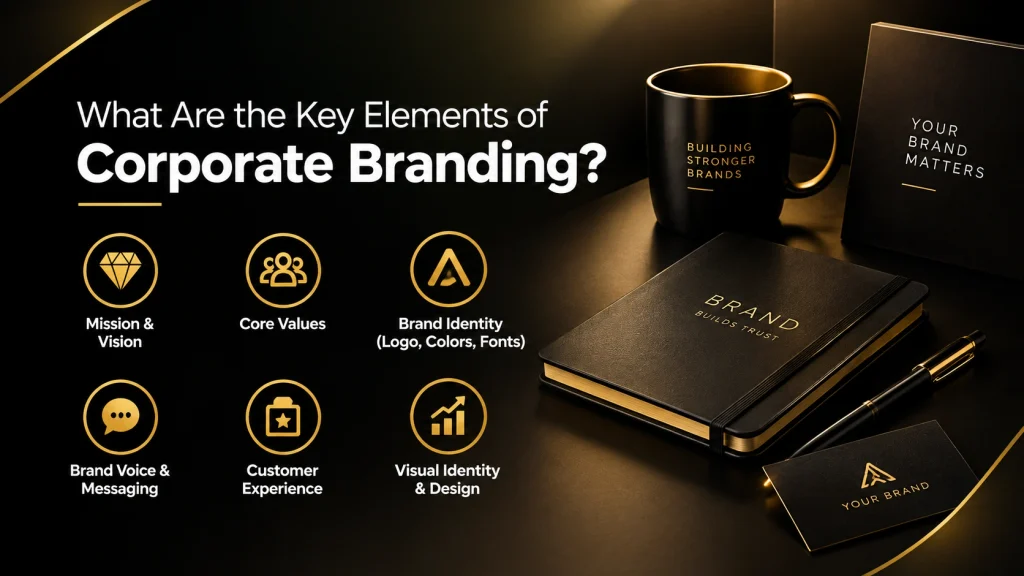
Understanding what is corporate branding starts with looking beyond a logo or visual design. A strong corporate brand is built from several connected elements that shape how customers, employees, and other stakeholders see and experience a company.
Each element plays a different role, but they all work together to create a clear, consistent, and recognisable brand. When these elements are aligned, businesses can build stronger relationships with their audience and create a more memorable corporate identity.
Brand Purpose
Your brand purpose explains why your company exists beyond simply selling products or services. It gives your business a clear sense of direction and helps define what you want to achieve for your customers and the wider market.
A strong purpose can also help people understand what your company stands for and why it matters. When your purpose is clear, it becomes easier to build meaningful connections with your audience and create a stronger corporate brand.
Mission and Vision
Your mission explains what your business does, who it serves, and the value it provides. Your vision describes where you want the company to go in the future.
Together, your mission and vision provide a clear direction for your corporate brand strategy. They also help employees and customers understand the company’s goals and the future it wants to create.
A company without a clear direction can make its branding feel inconsistent. Your mission and vision help keep your brand focused.
Core Values
Core values are the principles that guide how your company operates and makes decisions. They influence your culture, communication, customer service, and overall brand experience.
For example, a business may focus on:
- Innovation
- Quality
- Transparency
- Customer satisfaction
- Sustainability
- Reliability
However, simply listing these values on your website is not enough. Your business should demonstrate them through its decisions, employee behaviour, products or services, and customer experiences.
When your actions match your values, your corporate branding becomes more authentic and trustworthy.
Corporate Brand Identity
Your corporate brand identity includes the visual elements people associate with your business. It helps customers recognise your company and creates a consistent appearance across different marketing channels.
These elements can include:
- Logo
- Colour palette
- Typography
- Photography style
- Graphic design
- Icons
- Website design
- Marketing materials
A strong visual identity should do more than make your business look professional. It should also reflect your brand personality, positioning, and values.
For example, a technology company may use a modern and innovative visual style, while a luxury business may choose a more refined and premium identity.
Consistency is especially important here. When your visual identity remains consistent across your website, social media, advertisements, and other platforms, customers can recognise your brand more easily.
Brand Positioning
Brand positioning explains how you want your company to be perceived in the market. It helps you communicate what makes your business different and why customers should choose you.
Your positioning should answer questions such as:
- Who are you serving?
- What problem do you solve?
- What makes you different?
- Why should customers choose you?
- What do you want your company to be known for?
Clear positioning is an important part of corporate branding because it gives your brand a specific place in the minds of your target audience.
Without clear positioning, a company may struggle to explain why it matters or what makes it different from competitors.
Brand Voice and Messaging
Your brand voice determines how your company communicates with its audience. It influences the words you use, the tone of your content, and the way you communicate across different channels.
A corporate brand may sound:
- Professional
- Friendly
- Expert
- Confident
- Helpful
- Innovative
The key is consistency.
Your website should not sound extremely professional while your social media communication feels completely unrelated. When your tone and messaging remain consistent, customers get a clearer understanding of your brand personality.
Strong messaging should also communicate your value clearly instead of simply describing what your company sells.
Customer Experience
Your corporate brand is not limited to what customers see. It is also shaped by what they experience when they interact with your business.
Website usability, customer service, communication, product quality, response times, and after-sales support can all influence how people perceive your company.
This is one of the most important benefits of corporate branding when done correctly. A consistent brand experience can help create trust, improve customer relationships, and strengthen your reputation over time.
Think of it this way: your branding may promise professionalism, but your customer experience needs to deliver it.
A strong corporate brand creates consistency between what you promise and what you deliver. When customers see that your actions match your message, your brand becomes more credible and memorable.
How to Build a Strong Corporate Brand

Building a strong corporate brand requires more than creating a new logo or choosing a few brand colours. It starts with a clear strategy and a strong understanding of what your company represents.
A successful corporate brand strategy connects your purpose, audience, positioning, visual identity, communication, and customer experience. When these elements work together, your business becomes easier to recognise and more memorable.
Here is a practical process you can follow to build a strong corporate brand.
1. Define Your Brand Purpose
Start by understanding why your company exists.
Your brand purpose should explain more than what you sell. It should communicate the problem you solve, the people you help, and the value you want to create.
Ask yourself:
- What problem does our business solve?
- Who do we help?
- Why was the company created?
- What value do we provide?
- What do we want to be known for?
A clear purpose gives your corporate brand strategy a strong foundation and helps you make more consistent branding decisions.
2. Understand Your Target Audience
You cannot build an effective corporate brand without understanding the people you want to reach.
Research your target audience and learn about their needs, problems, expectations, preferences, and buying behaviour. Go beyond basic demographics and try to understand what really matters to your customers when they choose a company.
For example, some customers may care most about price, while others may value quality, expertise, convenience, or customer service.
When you understand your audience, you can create branding and messaging that feels more relevant to them.
3. Analyse Your Competitors
Your competitors can give you useful insights into how your market communicates with customers.
Look at their:
- Brand positioning
- Visual identity
- Website
- Messaging
- Social media presence
- Customer experience
- Strengths and weaknesses
The goal is not to copy what other companies are doing.
Instead, identify gaps in the market and find opportunities to make your corporate brand different. A strong brand should give customers a clear reason to remember and choose your business.
4. Define Your Brand Positioning
Once you understand your audience and competitors, decide how you want your company to be positioned.
Your positioning should clearly communicate what makes your business valuable and different.
For example, you may want to position your company around:
- Premium quality
- Affordable solutions
- Innovation
- Personal service
- Industry expertise
- Convenience
- Sustainability
A clear position makes your marketing easier because your audience can quickly understand what your company represents and why it is different.
5. Create a Strong Corporate Brand Identity
Once your strategy is clear, it is time to build your visual identity.
Your corporate brand identity can include:
- Logo
- Brand colours
- Typography
- Images
- Graphic elements
- Website design
- Marketing templates
These elements should work together and reflect your company’s personality and positioning.
Good design should not only make your business look professional. It should also help communicate who you are and what your company stands for.
6. Develop Your Brand Voice
Your visual identity is only one part of your brand. The way your company communicates also shapes how people perceive it.
Decide how your business should sound when communicating with customers.
For example, a financial company may need a professional and trustworthy tone, while a creative agency may use a more energetic and conversational voice.
Create simple guidelines for:
- Tone
- Word choice
- Messaging
- Headlines
- Social media communication
- Customer communication
A consistent brand voice makes your communication easier to recognise and helps different people within your company communicate in a similar way.
7. Create Corporate Brand Guidelines
As your business grows, more people may become involved in your branding. Designers, marketers, employees, and external agencies may all create content for your company.
This is why corporate brand guidelines are important.
Your guidelines can include rules for:
- Logo usage
- Brand colours
- Fonts
- Images
- Design elements
- Brand voice
- Messaging
- Social media
- Website content
Clear guidelines help everyone understand how the brand should look and sound.
They also reduce inconsistency and make it easier to maintain a professional corporate identity across different platforms.
8. Make Your Employees Part of the Brand
Your employees represent your company every day.
They communicate with customers, answer questions, deliver services, solve problems, and represent your company’s values. Because of this, your corporate branding should not stop with the marketing team.
Employees should understand:
- What the company stands for
- Who the company serves
- How customers should be treated
- How the brand should communicate
- What values guide the business
When employees understand and reflect the brand values, the experience becomes more consistent for customers.
This is an important part of building a corporate brand that feels authentic rather than simply designed for marketing.
9. Keep Your Brand Consistent Across Digital Channels
Your corporate brand should look and sound consistent wherever customers find your business.
This can include:
- Website
- Google Business Profile
- Online advertisements
- Blog content
- Landing pages
Consistency does not mean every platform needs to look exactly the same.
Instead, customers should be able to recognise that they are interacting with the same company.
Consistent branding can also strengthen recognition and support the importance of corporate branding across your digital presence.
10. Measure and Improve Your Brand
Corporate branding is not a one-time project.
Your market, customers, competitors, and business goals can change over time. Your brand should be reviewed regularly to make sure it still reflects your business and connects with your audience.
You can measure your brand using metrics such as:
- Brand awareness
- Branded search traffic
- Website traffic
- Customer feedback
- Social media engagement
- Online reviews
- Brand mentions
- Lead generation
- Customer retention
- Conversion rates
Use the information you collect to identify what is working and where your branding needs improvement.
A strong corporate brand continues to evolve while keeping its core identity consistent.
Corporate Branding vs Product Branding
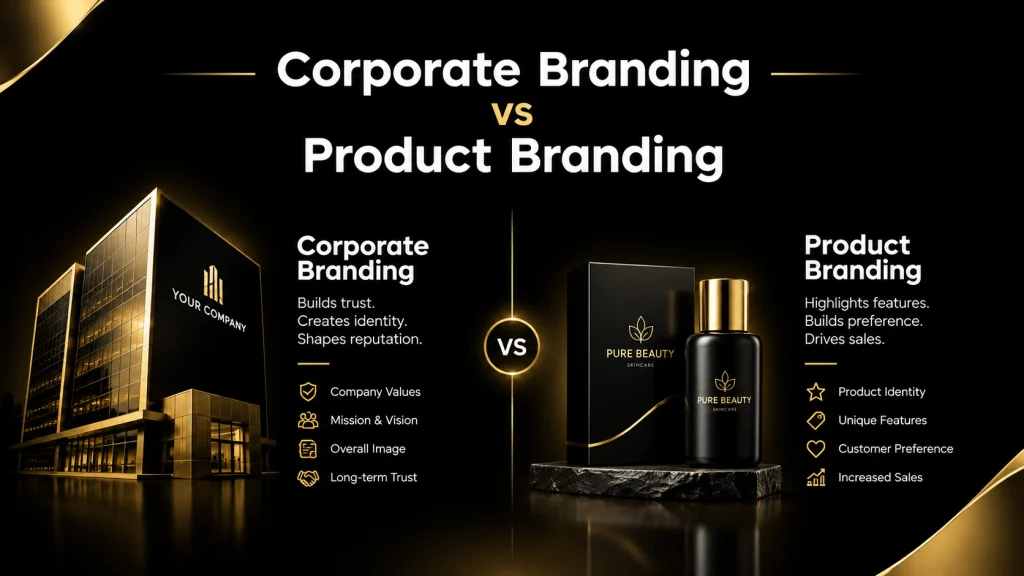
Corporate branding and product branding are closely related, but they focus on different things.
Corporate branding focuses on the company as a whole, including its identity, values, reputation, communication, and overall customer perception.
Product branding focuses on a specific product or product line and usually has its own name, positioning, packaging, messaging, and marketing approach.
For example, a company can have one corporate identity while offering several products, each with a different product brand.
Corporate branding answers a simple question:
“Who is the company?”
Product branding answers:
“What is this particular product, and why should customers choose it?”
Understanding this difference helps businesses create a more organised and effective branding strategy.
What Are the Benefits of Corporate Branding?
The benefits of corporate branding go beyond making a company look professional.
A strong corporate brand can influence how customers recognise, understand, and remember a business. It can also support marketing, customer relationships, employee alignment, and long-term growth.
Here are some of the key benefits.
Better Brand Recognition
Customers can recognise your company more easily when your visual identity, messaging, and communication remain consistent.
Over time, repeated exposure to the same brand elements can make your business easier to remember.
Stronger Customer Trust
Trust is an important part of every successful customer relationship.
Professional and consistent communication can make a company appear more reliable and credible. When your brand promise also matches the actual customer experience, that trust can become even stronger.
Clearer Market Positioning
A defined corporate brand helps customers understand what your company represents.
Instead of trying to appeal to everyone, you can communicate a clearer value proposition to the people who are most likely to need your products or services.
Greater Customer Loyalty
Customers who recognise, trust, and connect with a brand may be more likely to return.
Strong corporate branding can help create a relationship that goes beyond a single purchase.
Stronger Employee Alignment
Your brand is not only for customers.
When employees understand your company’s purpose, values, and positioning, they have a clearer idea of how they should represent the business.
This can create a more consistent experience both internally and externally.
More Effective Marketing
A clear corporate brand gives your marketing activities a stronger foundation.
Your SEO content, social media posts, advertisements, website pages, and email campaigns can all communicate the same core message.
This consistency can make your marketing more recognisable and focused.
Long-Term Brand Equity
One of the most valuable benefits of corporate branding is the long-term value it can create.
A recognised and trusted corporate brand can become an important business asset that supports customer loyalty, partnerships, marketing, and future growth.
Common Corporate Branding Mistakes to Avoid
Even businesses that invest heavily in branding can make simple mistakes.
Knowing what to avoid can help you protect your brand and build a more consistent identity.
Treating Branding as Only a Logo
A logo is important, but it is only one part of your corporate identity.
Your brand also includes your message, values, positioning, reputation, customer experience, and communication.
A great logo cannot fix an unclear brand strategy.
Being Inconsistent
Using different colours, fonts, messages, or tones across platforms can make your company harder to recognise.
Customers should feel that your website, social media, advertisements, and other communication belong to the same company.
Copying Competitors
Your competitors can provide useful insights, but copying them will not create a unique corporate brand.
Study the market, learn from successful companies, and then find your own position.
Your brand should have a reason to stand apart.
Ignoring Customer Experience
A beautiful brand cannot compensate for poor customer service or a disappointing experience.
If your company promises quality, professionalism, or excellent service, customers should experience those qualities when they interact with your business.
Your branding promises should match what you actually deliver.
Changing Your Brand Too Often
Branding should evolve when necessary, but constant changes can create confusion.
If you change your logo, colours, messaging, and positioning too frequently, customers may struggle to recognise your business.
Give your brand enough time to build recognition before making major changes.
Focusing Only on Short-Term Results
Corporate branding is a long-term investment.
You may not see dramatic results immediately, but consistent branding can gradually strengthen recognition, trust, reputation, and customer relationships.
Think beyond the next campaign and focus on building something that can support your business for years.
How Corporate Branding Supports Digital Marketing
Corporate branding and digital marketing work better when they support each other.
Your brand gives your digital marketing a consistent identity, while digital marketing gives your brand opportunities to reach and engage the right audience.
For example, your corporate brand can influence:
- SEO content
- Website design
- Social media marketing
- Paid advertising
- Email marketing
- Content marketing
- Landing pages
- Conversion optimisation
Imagine a potential customer discovers your company through a Google search. They visit your website, check your social media page, see an advertisement, and later receive an email from your business.
If each interaction looks and sounds completely different, the customer may question whether they are dealing with the same company.
A consistent corporate brand creates a more connected experience across these touchpoints.
This is one reason what is corporate branding should not be treated as a question about logos alone. In the digital environment, your brand is experienced through almost every interaction a customer has with your business.
A strong digital presence without a clear brand can attract attention but still fail to create a memorable impression.
How Do You Know If Your Corporate Branding Is Working?

Corporate branding can sometimes feel difficult to measure because not every result appears immediately as a sale.
However, several signs can show that your brand is becoming stronger.
People may start recognising your business without seeing your full company name.
Customers may remember your visual identity, messaging, or brand voice.
Your branded search traffic may increase as more people actively search for your company.
Your audience may also engage more consistently with your content and interact with your business across different channels.
Another important sign is the language customers use to describe your company.
If you want your brand to be known for being professional, trustworthy, innovative, or customer-focused, do customers actually describe it that way?
This is where the importance of corporate branding becomes clear. Your goal is not only to tell people what your company represents. You also want their actual perception to move closer to that intended brand image.
Most importantly, your customer experience should match your brand promise.
When what you say and what you deliver are closely aligned, your corporate brand becomes stronger.
Frequently Asked Questions About Corporate Branding
What is corporate branding in simple terms?
Corporate branding is the process of building a company’s overall identity, reputation, personality, and market perception. It includes visual identity, messaging, values, positioning, communication, and customer experience.
Why is corporate branding important?
Corporate branding helps businesses become more recognisable, build customer trust, differentiate themselves from competitors, and create a consistent experience across different channels.
What are the main elements of corporate branding?
The main elements include brand purpose, mission, vision, values, corporate identity, positioning, brand voice, messaging, customer experience, and reputation.
What is the difference between corporate branding and product branding?
Corporate branding focuses on the company as a whole, while product branding focuses on an individual product or product line.
How do you build a strong corporate brand?
Start by defining your purpose, understanding your audience, researching competitors, developing clear positioning, creating a strong visual identity, establishing a consistent brand voice, and delivering a consistent customer experience.
How long does it take to build a corporate brand?
Building a recognisable corporate brand takes time. The strategy and identity can be developed within months, but recognition, trust, and reputation usually require consistent communication and customer experiences over a longer period.
Can small businesses benefit from corporate branding?
Yes. Corporate branding is not only for large corporations. Small businesses can use clear positioning, consistent visual identity, messaging, and customer experience to build recognition and trust.
Final Thoughts
Corporate branding is much more than a logo, colour palette, or professional website. It is about creating a clear and consistent identity that represents what your company stands for and how you want people to remember your business.
Understanding what is corporate branding helps businesses see that a strong brand goes beyond visual design. It brings together your purpose, values, positioning, visual identity, messaging, employee experience, customer experience, and reputation.
The importance of corporate branding becomes even clearer when customers have many businesses to choose from. A consistent and recognisable brand can help you build trust, stand out from competitors, and create stronger connections with your audience.
The benefits of corporate branding can also extend beyond brand recognition. A strong corporate brand can support customer loyalty, improve marketing consistency, strengthen your reputation, and create a solid foundation for long-term business growth.
However, building a strong brand is not something you complete once and forget. A successful corporate brand strategy should evolve as your business grows, your audience changes, and the market develops. The key is to adapt when necessary while keeping your core brand identity clear and consistent.
At BSG Digital, we help businesses build stronger brands through strategic branding, creative design, digital marketing, SEO, and conversion-focused solutions. If you want to create a corporate brand that looks professional, communicates clearly, and supports long-term growth, BSG Digital can help you turn your brand vision into a stronger digital presence.


