How to Become a Digital Marketing Strategist Businesses Actually Want to Hire
If you’ve spent any time scrolling job boards lately, you’ve probably noticed one title popping up everywhere: digital marketing strategist. Companies aren’t just looking for someone who can post on Instagram or run a few Google ads anymore. They want someone who can look at the whole picture the brand, the budget, the customer journey — and turn it into a plan that actually grows the business.
So what does it really take to become one, and is it a career worth chasing in 2026? Let’s break it down in plain language, without the jargon-heavy fluff you usually find in these guides.
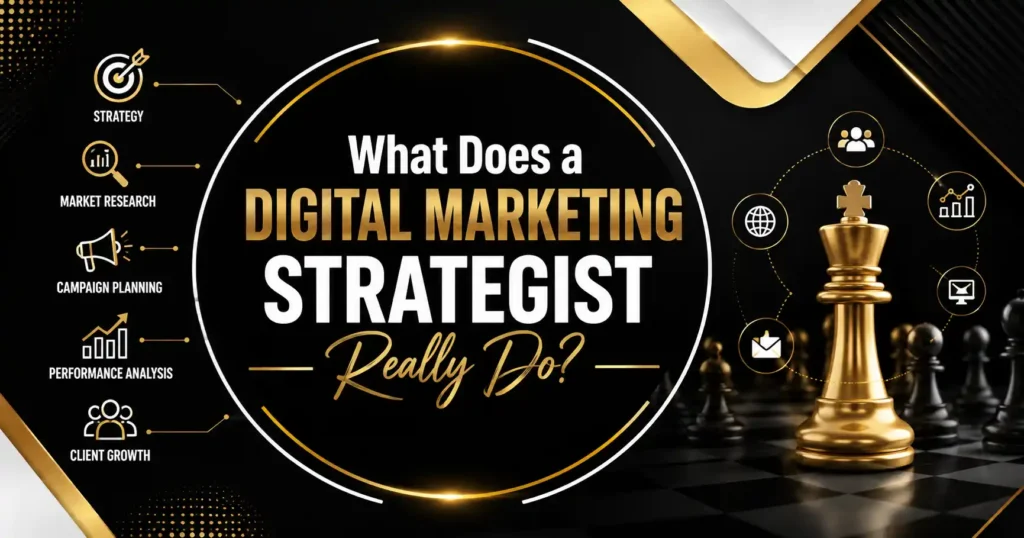
What Does a Digital Marketing Strategist Actually Do?
At its core, a digital marketing strategist is the person who connects the dots between marketing activities and business goals. Anyone can run a Facebook ad or write a blog post. A strategist’s job is different — they decide why that ad exists, who it’s targeting, how it fits into the bigger funnel, and what success actually looks like at the end of the quarter.
Think of it this way: if your marketing team is an orchestra, the strategist is the conductor. They’re not necessarily playing every instrument, but they know how each piece — SEO, paid ads, email, social media, content — should come together so the whole thing sounds right.
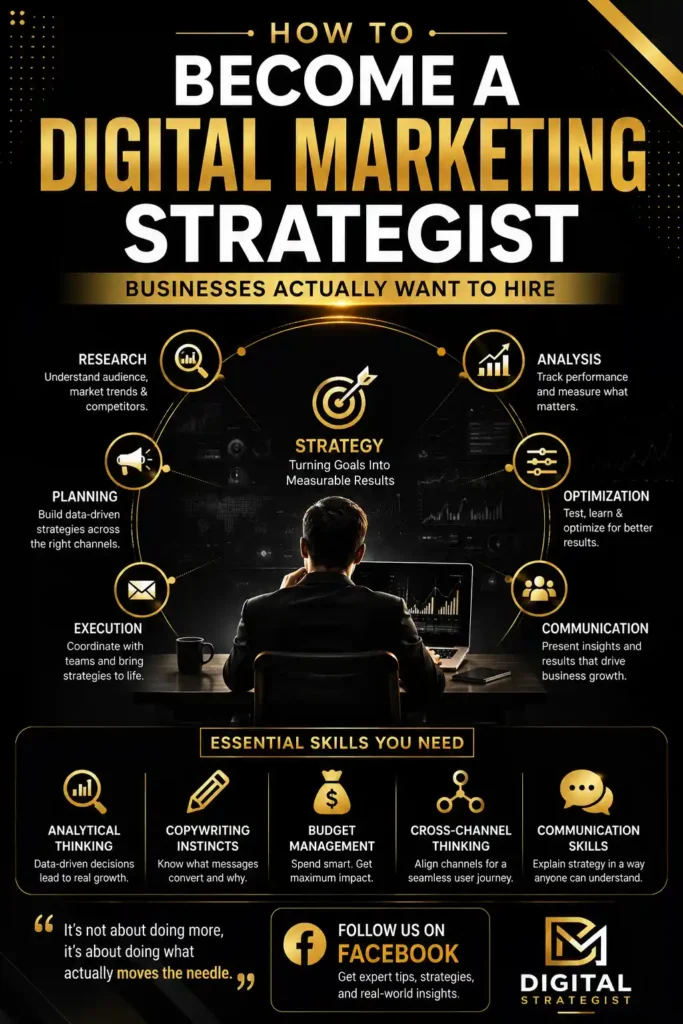
Core Responsibilities of a Digital Marketing Strategist
On a day-to-day basis, most people in this role are juggling a mix of the following:
- Researching the target audience and competitors before any campaign goes live
- Building a channel strategy (which platforms deserve budget and which don’t)
- Setting KPIs that tie back to revenue, not just vanity metrics like likes or impressions
- Coordinating with content writers, designers, and paid media specialists
- Reviewing analytics weekly or monthly and adjusting the plan based on real data
- Presenting results to stakeholders in a way that’s honest, not just flattering
Notice that “posting content” isn’t really on that list. That’s usually the job of a social media manager or content creator. A digital marketing strategist sits one level above execution — they’re planning the “why” and the “how,” while other specialists handle the “what.”
If you’re still figuring out where content creation fits into this picture, it helps to first understand Online Marketing Strategy before layering paid and organic channels on top of it.
How to Become a Digital Marketing Strategist Without Wasting Years
The good news is that this isn’t a role locked behind a fancy degree. Some of the best strategists I’ve come across studied journalism, business, psychology, or nothing marketing-related at all. What actually matters is a mix of hands-on experience and pattern recognition — knowing what’s worked before and being able to test what might work next.
Here’s a realistic path if you’re starting from scratch:
1. Learn one channel deeply before trying to master all of them. Most strategists start as specialists. Maybe you spend a year or two running SEO campaigns, or managing paid ads, or writing content that actually converts. That specialist experience is what gives you credibility later — you can’t strategize a channel you’ve never worked in.
2. Get comfortable with data, not just creativity. A big chunk of this job is reading Google Analytics, ad dashboards, and conversion reports, then translating numbers into decisions. If spreadsheets make you nervous, that’s the first thing to fix.
3. Practice on real (or practice) businesses. Freelance for a local shop, volunteer for a nonprofit, or run a personal project. Nothing teaches strategy faster than watching your own plan succeed or flop with real money on the line.
4. Build a portfolio that shows thinking, not just output. Instead of just showing “I wrote 20 blog posts,” show the reasoning: why that topic, what problem it solved, and what happened to traffic or leads afterward. That’s the kind of proof employers actually care about.
Skills Every Digital Marketing Strategist Needs
If you want a shortlist to focus your learning, these are the skills that show up again and again in job descriptions and in the strategists I respect most:
- Analytical thinking — comfort with tools like Google Analytics, SEMrush, or HubSpot
- Copywriting instincts — you don’t have to write everything, but you should recognize good messaging
- Budget management — knowing where a rupee, dollar, or taka is best spent
- Cross-channel thinking — understanding how SEO, email, and paid ads influence each other instead of working in silos
- Communication — explaining strategy to a CEO who doesn’t care about jargon, only results
None of these are things you learn overnight, and that’s okay. Most people build this skill set over three to five years of hands-on work, not from a single certification course.
Is This Career Still Worth It in 2026?
Honestly, yes arguably more than before. As AI tools take over repetitive tasks like ad copy drafting or basic reporting, the human strategist becomes more valuable, not less. Machines can generate content and optimize bids, but they still need a person deciding what problem is actually worth solving and whether the results align with what the business needs. That judgment call is hard to automate.
If you’re curious about how AI is reshaping the day-to-day tools strategists use, it’s worth reading up on Digital Marketing Specialist before you plan your next career move.
Final Thoughts
Becoming a digital marketing strategist isn’t about collecting certificates or memorizing platform algorithms — those change every few months anyway. It’s about developing judgment: the ability to look at a business problem, a budget, and a set of channels, and figure out the smartest way to connect them. Start as a specialist, stay curious about data, and don’t be afraid to test small ideas before scaling them up.
If you want to see how this kind of strategic thinking looks in action, feel free to follow our page for regular tips and behind-the-scenes breakdowns: Follow us on Facebook. Visit our youtube channel


