Why Digital Marketing Is Important | The Real Reason Your Business Can’t Skip It in 2026
Walk into any small shop owner’s office today and ask them how they get new customers. Ten years ago, the answer was probably a newspaper ad or a flyer stuck on a pole. Ask the same question now, and you’ll hear something different Facebook, Google, Instagram, maybe a WhatsApp broadcast list. That shift didn’t happen by accident. It happened because the customer moved first, and the businesses that survived simply followed.
That’s really the short version of why digital marketing is important. But the long version is worth understanding, because it changes how you spend your money, your time, and your energy as a business owner, freelancer, or marketer.
What Digital Marketing Actually Means (And Why It’s Bigger Than “Running Ads”)
A lot of people hear “digital marketing” and picture a Facebook ad or a boosted post. That’s only a tiny slice of it. Digital marketing covers every way a brand reaches people through the internet search engine optimization (SEO), content marketing, email campaigns, social media, pay-per-click advertising, and increasingly, AI-driven search visibility.
The reason this matters more than ever is simple: people aren’t just browsing online anymore, they’re living there. Globally, well over 6 billion people now use the internet, and almost all of them touch social media at least once a month. Your customer whoever they are, wherever they are is already on a screen, scrolling, searching, comparing prices, reading reviews. If your business isn’t visible in that space, you’re not losing to a competitor who’s better than you. You’re losing to a competitor who simply showed up.
This is the part traditional marketing could never offer: precision. A billboard reaches whoever happens to drive past it. A digital ad reaches a 32-year-old woman in Dhaka who searched “best skincare for oily skin” three days ago. That’s not a small difference it’s the entire reason digital marketing outperforms traditional methods on cost and return.
If you’re new to building a strategy from scratch, our guide on how to create a digital marketing plan for small businesses breaks the process down step-by-step.
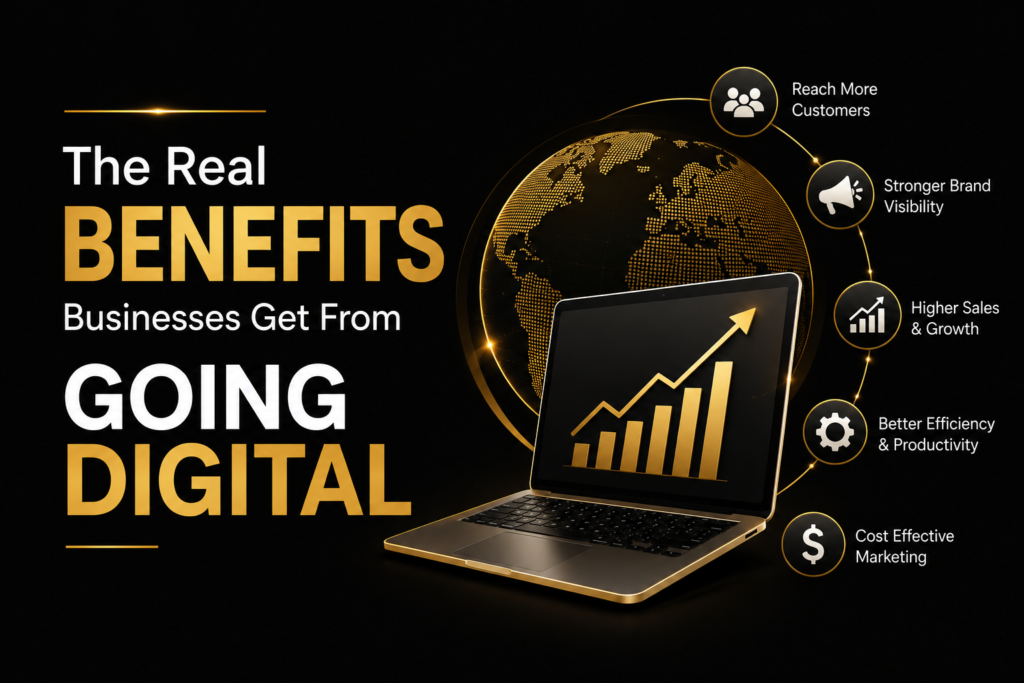
The Real Benefits Businesses Get From Going Digital
Let’s get specific, because vague promises like “it boosts your brand” don’t help anyone make a decision.
It costs less and returns more. Email marketing alone still generates somewhere between $36 and $42 for every $1 spent a return that traditional print or TV advertising has never come close to matching. You don’t need a six-figure budget to start. A consistent content strategy and a well-run social presence can outperform a billboard that cost ten times more.
It’s measurable, down to the click. This is the one traditional marketing genuinely cannot offer. With digital channels, you know exactly how many people saw your ad, how many clicked, how many bought something, and at what point they dropped off. That kind of data lets you fix what’s broken instead of guessing.
It builds trust before the first conversation even happens. Over 90% of people read online reviews before buying anything. Your website, your Google Business profile, your social proof these do the convincing before your sales team ever picks up the phone. This is closely tied to brand awareness and online reputation management, two things that used to take years to build offline but can now be shaped deliberately through consistent digital presence.
It reaches the right person, not just any person. Audience targeting is the backbone of platforms like Google Ads and Meta Ads. You can target by location, interest, age, even browsing behavior. A bakery in Gulshan doesn’t need to advertise to someone in another country and with digital tools, it won’t.
It keeps you visible during search, not just during sales season. Search engine optimization is what makes a business show up when someone types a question into Google at 11 PM. Unlike paid ads, SEO keeps working long after you’ve stopped actively pushing it, which is part of why organic search still drives the largest share of website traffic for most businesses.
How Digital Marketing Has Changed the Competitive Game
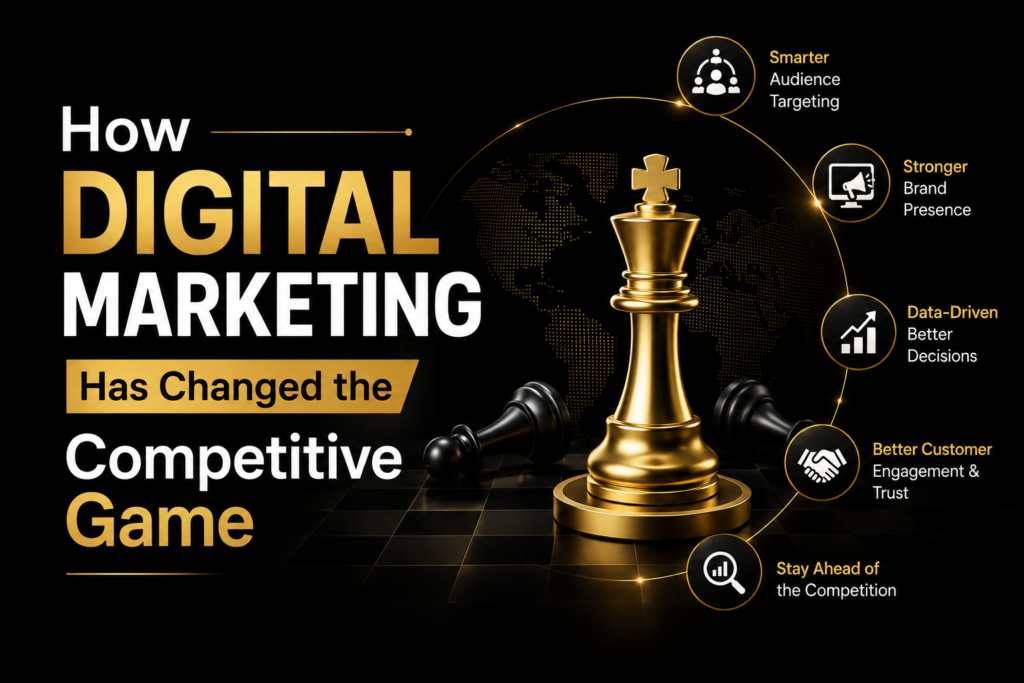
Here’s something most small business owners don’t realize until it’s too late: digital marketing has erased the size advantage big companies used to have. A two-person team with a sharp content strategy and decent SEO can outrank a company twenty times its size because Google doesn’t care about your office size, it cares about relevance and value.
Video content is a good example of this shift. Short-form video now drives the highest engagement of any content format across platforms, and businesses don’t need a film crew to compete just a phone and a clear message. The same goes for content marketing broadly: a genuinely useful blog post or how-to video can quietly bring in customers for years, long after the cost of creating it has been forgotten.
Mobile behavior tells the same story. The overwhelming majority of internet users now go online primarily through their phones, which means a business with a fast, mobile-friendly website has a real edge over one that still looks like it was built for a desktop in 2014. Customer experience, in other words, starts long before a customer ever speaks to you it starts the second your site loads, or fails to.
There’s also a quieter shift happening right now: AI-powered search. Tools like Google’s AI Overviews and AI chatbots are changing how people find information, and early data suggests visitors arriving through AI search tend to have higher buying intent than typical search traffic. Businesses that adapt their content for this writing clearly, answering real questions, structuring information well are positioning themselves for where search is heading, not just where it’s been.
If you’re trying to decide where to put your first dollar, our breakdown on SEO vs paid ads: which should you prioritize first walks through the trade-offs in more detail. Check our blog for more details
So, Is Digital Marketing Actually Important Or Just Trendy?
It’s a fair question, and the honest answer is: it’s not trendy, it’s structural. Trends fade. The fact that your customers research before they buy, compare prices on their phones, and trust reviews from strangers over a salesperson’s pitch that’s not a trend. That’s just how buying decisions are made now, and it’s not reversing.
Businesses that treat digital marketing as optional aren’t really choosing to skip it. They’re choosing to be invisible to the exact moment when a customer is ready to buy. And in a market where a competitor is one search result away, invisibility is the most expensive mistake a business can make.
If you want a deeper external perspective on the data behind these shifts, Statista’s digital marketing overview is a solid, well-sourced reference point worth bookmarking.
Quick takeaway: Digital marketing isn’t about chasing algorithms or jumping on every new platform. It’s about meeting your customer where they already are, with a message that earns their attention instead of demanding it. Start with one channel, do it properly, and build from there that’s how most successful digital strategies actually begin.
properly, and build outward from there that’s genuinely how most strong digital strategies begin.


