Difference Between Branding and Marketing: A Complete Guide
Introduction
If you are building a business, you have probably heard the terms branding and marketing many times. Since they are often used together, it is easy to assume they mean the same thing. However, branding and marketing are two different parts of a successful business strategy.
So, what is the difference between branding and marketing?
Simply put, branding defines who your business is, what it stands for, and how you want customers to perceive it. Marketing, on the other hand, focuses on communicating that identity, reaching your target audience, and promoting your products or services. Understanding how branding is compared to marketing can help you build a stronger and more consistent business strategy.
Whether you are a small business owner, entrepreneur, or marketing professional, knowing the difference between marketing and branding can help you make smarter decisions about where to invest your time and resources. A well-planned marketing and branding strategy can help your business build recognition, attract the right customers, and develop long-term relationships.
In this complete guide, we’ll explain the key differences between branding versus marketing, explore how they work together, and discuss which one should come first when building a successful business.
What Is Branding?
Branding is the process of creating and shaping the identity of a business. It influences how people recognize, remember, and feel about your company. While discussing the difference between branding and marketing, it is important to understand that branding goes beyond simply promoting a product or service.
Many people think branding is just a logo, color palette, or business name. These elements are certainly part of your visual identity, but branding goes much deeper. It represents the overall personality, values, message, and experience that people associate with your business.
Your branding can include:
- Brand name
- Logo and visual identity
- Brand colors and typography
- Brand voice and personality
- Mission and values
- Brand positioning
- Customer experience
- Brand messaging
- Reputation and customer perception
This is also where branding compared to marketing becomes easier to understand. Branding focuses on defining who your business is and how you want customers to perceive it, while marketing focuses more on communicating and promoting that identity to the right audience.
For example, imagine two coffee shops selling almost identical coffee. One has a clear personality, memorable visual identity, friendly communication, and a consistent customer experience. The other simply sells coffee without creating a recognizable identity.
The first business is more likely to stay in customers’ minds because it has created a stronger brand identity.
This shows an important point when looking at the difference between marketing and branding: marketing can help people discover a business, but effective branding can give them a reason to remember it.
A strong marketing and branding strategy should therefore work together. Your branding creates the foundation, while marketing helps communicate that foundation through channels such as SEO, social media, content marketing, email, and advertising.
In other words, branding versus marketing is not really about choosing one over the other. Branding defines who you are, while marketing helps you reach the people who need what you offer.
That’s the power of branding.
Why Is Branding Important?

Strong branding plays an important role in helping a business build a recognizable identity and create lasting relationships with its customers. When you understand the difference between branding and marketing, it becomes clear that branding focuses more on how people see, remember, and connect with your business.
Effective branding can help a business:
- Become easier for customers to recognize
- Build trust and credibility
- Stand out from competitors
- Create stronger emotional connections
- Develop customer loyalty
- Communicate its values and personality
- Create a consistent customer experience
Unlike marketing, which often focuses on promoting products or services, branding shapes the overall perception of a business. This is an important part of understanding the difference between marketing and branding and how the two work together.
When branding is compared to marketing, branding is more focused on building a long-term identity, while marketing uses different channels and campaigns to reach and engage the target audience. A strong marketing and branding strategy should therefore give equal attention to both areas.
Understanding branding versus marketing can help businesses create a more consistent message across their website, social media, advertising, and other customer touchpoints.
In simple terms, branding answers the question: “Who are we, and what do we want people to remember about us?” Marketing then helps communicate that identity to the right audience.
What Is Marketing?

Marketing is the process of promoting your business, products, or services to your target audience. It involves the strategies, channels, and activities a business uses to reach potential customers, generate interest, build brand awareness, and encourage people to take action.
When looking at the difference between branding and marketing, marketing is mainly focused on communicating your products or services to the right audience and achieving specific business goals. In comparison, branding focuses more on building your business identity and shaping how customers perceive your company.
Marketing can include a wide range of strategies, such as:
- Search engine optimization (SEO)
- Content marketing
- Social media marketing
- Email marketing
- Paid advertising
- Pay-per-click (PPC)
- Influencer marketing
- Video marketing
- Local marketing
- Promotional campaigns
For example, if you own a clothing brand, your marketing activities might include publishing helpful blog posts, running Google Ads, posting on Instagram, sending promotional emails, and creating social media campaigns. These activities help your business reach people who are interested in your products and encourage them to take the next step.
Understanding the difference between marketing and branding can also help you create a more effective marketing and branding strategy. While marketing focuses on reaching and converting your target audience, branding helps create a consistent identity that people can recognize and remember.
In other words, when branding is compared to marketing, branding answers “Who are we?”, while marketing answers “How can we reach the right people and encourage them to choose us?”
This is why understanding branding versus marketing is important for businesses that want to build awareness, attract customers, and achieve long-term growth.
What Is the Difference Between Branding and Marketing?
The easiest way to understand the difference between branding and marketing is to look at what each one does for a business. Although branding and marketing are closely connected, they serve different purposes.
Branding establishes who your business is, while marketing communicates that identity to the right audience.
Branding focuses on how people recognize and perceive your business. Marketing, on the other hand, focuses on reaching potential customers, promoting your products or services, and encouraging them to take action.
In other words, branding creates the foundation, while marketing helps put that foundation in front of your audience.
Here’s a quick branding compared to marketing overview:
| Branding | Marketing |
|---|---|
| Builds your business identity | Promotes your business |
| Focuses on perception and reputation | Focuses on communication and promotion |
| Builds recognition and trust | Generates awareness, leads, and sales |
| Usually takes a long-term approach | Can include short-term campaigns |
| Defines your brand personality and values | Uses different channels and tactics to reach customers |
| Helps create customer loyalty | Helps attract and convert customers |
Now, let’s explore the difference between marketing and branding in more detail.
1. Branding Builds Identity, Marketing Promotes It
Your brand represents the identity behind your business. It includes your personality, values, messaging, visual style, and the overall experience you provide to customers.
Marketing is one of the ways you communicate that identity to your target audience.
For example, suppose you own a fitness company. Your branding might communicate that your business is energetic, supportive, and focused on helping beginners feel comfortable.
Your marketing and branding strategy could then use social media videos, SEO content, email campaigns, and paid advertising to communicate those ideas to potential customers.
So, branding defines who you are, while marketing helps distribute your message and connect it with the right people.
2. Branding Focuses on Perception, Marketing Focuses on Action
Another important difference between branding and marketing is what each one is designed to influence.
Branding is closely connected to how customers perceive your business. Do they see your company as trustworthy, affordable, premium, innovative, or friendly?
These perceptions are built gradually through your messaging, visual identity, customer service, products, and overall customer experience.
Marketing, on the other hand, often encourages customers to take a specific action.
That action could include:
- Visiting your website
- Signing up for a newsletter
- Requesting a quote
- Downloading a resource
- Booking a service
- Purchasing a product
This is why both are important. A marketing campaign may bring someone to your website, but your branding can influence whether that person remembers your business, trusts it, and considers choosing it.
3. Branding Is Long-Term, Marketing Can Be Short-Term
When looking at branding versus marketing, the time frame is another important difference.
A marketing campaign may run for a few weeks or months. For example, a business might launch a 30-day advertising campaign to promote a new product or seasonal offer.
Branding doesn’t usually work on the same short-term timeline.
Your brand develops over time through repeated interactions with customers. Your messaging, visual identity, reputation, values, and customer experience all contribute to how people remember your business.
This doesn’t mean a brand can never change. Businesses often update their branding when they grow, enter new markets, or reposition themselves.
The key difference is that marketing campaigns can change frequently, while your core brand identity usually provides greater consistency.
4. Marketing Can Generate Sales, While Branding Builds Long-Term Value
One of the main goals of marketing is to generate measurable business results. Depending on the campaign and marketing channel, those results can include:
- Website traffic
- Leads
- Engagement
- Sales
- Sign-ups
- Conversions
Branding has a broader, long-term role.
A strong brand can help customers recognize your business, remember it when they need your products or services, and develop greater trust over time.
This is an important part of understanding the difference between marketing and branding.
Think of it this way:
Marketing can help someone discover your business. Branding can give them a reason to remember it.
A successful marketing and branding strategy combines both goals instead of focusing only on immediate sales.
5. Branding Helps You Stand Out From Competitors
In many industries, businesses offer similar products or services. When several companies appear to offer the same thing, differentiation becomes extremely important.
Imagine that ten companies in your area provide similar services. If they all use almost identical messaging, visuals, and offers, customers may struggle to understand why they should choose one over another.
This is where branding becomes valuable.
A clear brand identity can communicate what makes your business different. Your positioning, personality, values, messaging, visual identity, and customer experience can all contribute to that distinction.
Marketing then helps communicate those differences to your target audience through the channels they use most.
So, when considering branding compared to marketing, remember that branding helps define what makes your business memorable, while marketing helps make that difference visible to potential customers.
Branding vs. Marketing: Which One Comes First?

If you’re wondering about the difference between branding and marketing and which one you should focus on first, branding generally comes before marketing. A strong brand gives your business a clear identity and direction, making it easier to create effective marketing campaigns later.
Before spending money on promoting your business, you should have a clear understanding of:
- Who your business is
- Who your target audience is
- What makes your business different from competitors
- What you want your business to be known for
- What your brand values are
- How you want to communicate with your audience
Understanding the difference between marketing and branding can also help you build a more focused strategy. While branding establishes your identity, marketing helps communicate that identity to the right people through different channels.
When you look at branding compared to marketing, branding focuses more on building recognition, trust, and a consistent identity, while marketing focuses on reaching potential customers and encouraging them to take action.
Once your brand foundations are clear, you can develop a strong marketing and branding strategy that keeps your messaging consistent across your website, social media, advertising, and other marketing channels.
In simple terms, branding defines who you are, while marketing helps people discover and connect with your business. This is why branding versus marketing shouldn’t be viewed as a choice between two competing strategies. Instead, they should work together to support your business’s long-term growth.
How Do Branding and Marketing Work Together?
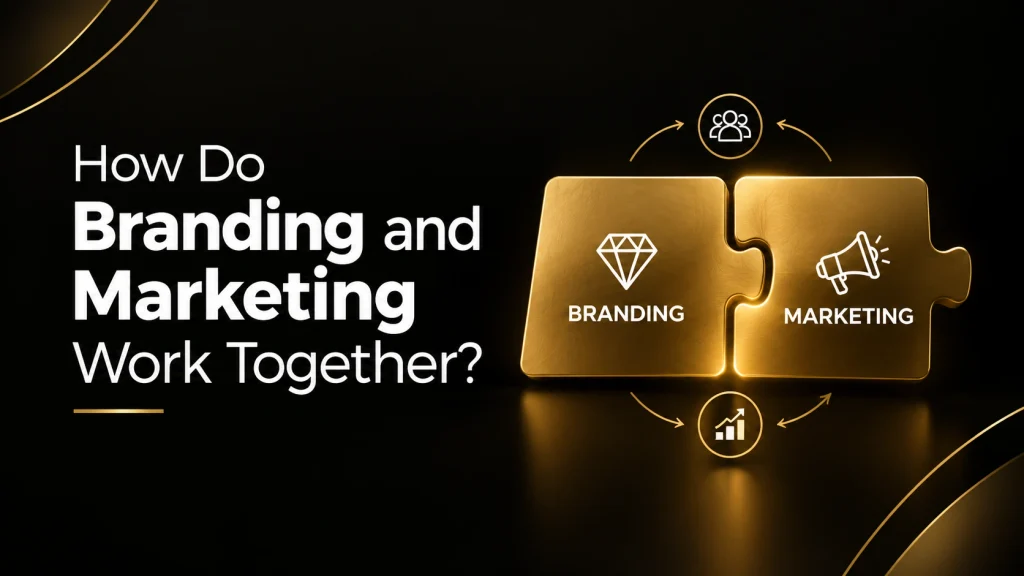
Branding and marketing are not competing strategies. In fact, they work best when they support each other. Understanding the difference between branding and marketing is important, but knowing how they work together is even more valuable for a growing business.
Think of branding as the foundation of your business. It defines who you are, what you stand for, and how you want customers to perceive you. Marketing then takes that identity and communicates it to the right audience through different channels.
The relationship can be understood like this:
Branding → defines your identity → Marketing → communicates your message → Audience → develops awareness and trust → Business → builds relationships and growth
For example, imagine a restaurant that wants to be known for providing a modern and premium dining experience. Its branding may include an elegant visual identity, a sophisticated tone of voice, and a clear focus on quality.
Its marketing could then include:
- High-quality social media content
- SEO-focused local content
- Email marketing campaigns
- Paid search advertising
- Promotional offers
The important thing is that each marketing activity should reflect the same brand identity. When your branding and marketing strategy are aligned, customers receive a consistent message wherever they interact with your business.
This is one of the key points to remember when looking at branding compared to marketing: branding establishes the identity, while marketing helps communicate and promote that identity.
Branding and Marketing Example
Let’s make the difference between marketing and branding easier to understand with a simple example.
Imagine you start a skincare business that sells simple, natural products for customers who prefer a clean and transparent approach to skincare.
Your Branding
Your branding might include:
- A clean and memorable visual identity
- Natural and consistent colors
- Simple product packaging
- A friendly and trustworthy brand voice
- A strong focus on transparency
- A clear commitment to product quality
These elements help communicate what your business represents and create a specific impression in the minds of your customers.
Your Marketing
Your marketing could include:
- SEO blog posts about skincare
- Instagram content and reels
- Google Ads
- Email newsletters
- Influencer collaborations
- Educational skincare videos
These marketing activities help introduce your products to potential customers and encourage them to visit your website, learn more about your products, or make a purchase.
At the same time, your branding helps those customers understand who your business is, what it represents, and why they should remember it.
This example shows how branding versus marketing isn’t really about choosing one over the other. Instead, both have different roles within an effective marketing and branding strategy.
Simply put, marketing can help people discover your business, while branding can give them a reason to remember and trust it.
When both are working together, your business can build immediate visibility while also developing a stronger and more recognizable identity over time.
Common Misconceptions About Branding and Marketing
When discussing the difference between branding and marketing, it’s easy to come across several common misconceptions. Many businesses understand that both are important, but they may not know exactly how branding and marketing differ or how they work together.
Let’s clear up some of the most common misunderstandings.
Branding Is Just a Logo
One of the biggest misconceptions about branding is that it is simply a logo.
Your logo is certainly an important part of your visual identity, but branding goes far beyond a logo. It includes your brand messaging, personality, values, positioning, reputation, and the overall experience customers have with your business.
In other words, branding compared to marketing is more focused on building a recognizable identity and shaping how people perceive your business.
A strong brand should make customers recognize not only what your business looks like, but also what it represents.
Marketing and Advertising Are the Same
Another common misunderstanding is that marketing and advertising are the same thing.
Advertising is actually just one part of marketing. Marketing covers a much broader range of activities, including SEO, content marketing, social media, email marketing, market research, strategy, public relations, and paid advertising.
Understanding the difference between marketing and branding also requires understanding that marketing is not limited to advertisements. It involves choosing the right strategies and channels to reach your target audience, communicate your message, and encourage potential customers to take action.
Branding Is Only for Large Companies
Some small businesses believe that branding is something only large companies need. That’s not true.
Whether you’re running a large corporation, an online store, or a local service business, having a clear brand identity can help you stand out from competitors and become more memorable to customers.
A small business can benefit from consistent messaging, a recognizable visual identity, clear brand values, and a positive customer experience. These elements can become an important part of your marketing and branding strategy as the business grows.
Marketing Can Replace Branding
Marketing can help people discover your business, but it cannot completely replace a strong brand.
You can run advertising campaigns, publish content, use social media, and invest in SEO to attract visitors. However, if customers don’t understand what your business represents or what makes it different, it may be difficult to build a lasting relationship with them.
This is one of the key ideas behind branding versus marketing: marketing helps you reach and attract your audience, while branding helps shape what they remember and feel about your business.
When you understand the difference between branding and marketing, it becomes clear that you don’t have to choose one over the other. Instead, your branding should provide the foundation, while your marketing helps communicate that brand to the right people.
How to Create a Strong Branding and Marketing Strategy
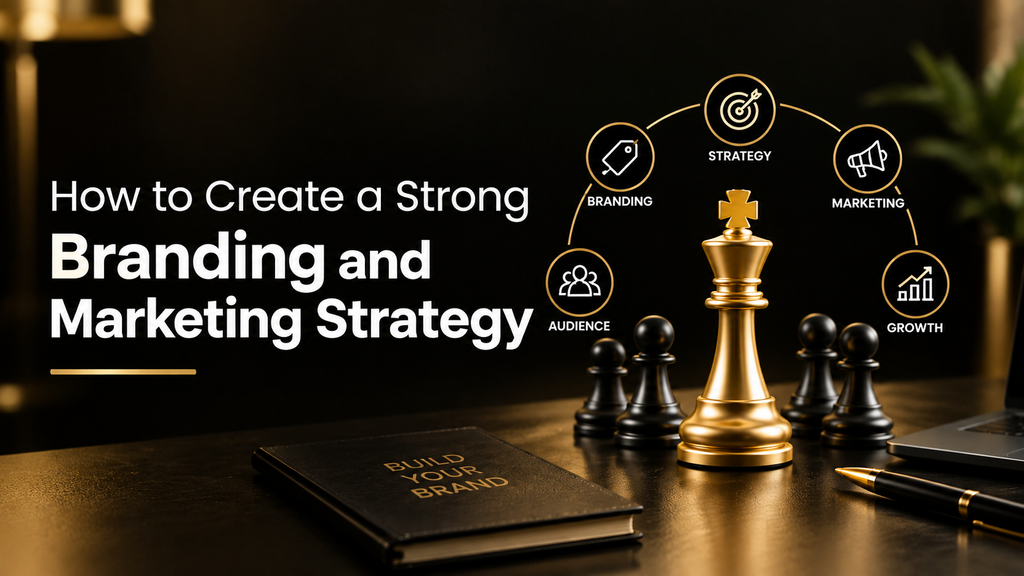
Understanding the difference between branding and marketing is only the first step. To build a successful business, you need a strategy that brings both together. Branding helps define your identity, while marketing helps communicate that identity to the right audience.
A strong marketing and branding strategy should be consistent, audience-focused, and flexible enough to adapt as your business grows. Here are seven practical steps to get started.
Define Your Brand
Start by establishing what your business stands for. Define your mission, core values, personality, positioning, and unique selling proposition (USP).
Ask yourself: What makes your business different from competitors, and what do you want customers to remember about you?
A clear brand foundation makes it easier to understand your branding compared to marketing because branding establishes the identity that your marketing activities will communicate.
Understand Your Target Audience
Your branding and marketing efforts will be much more effective when you understand the people you want to reach.
Research your ideal customers, their needs, challenges, preferences, and buying behavior. Understanding your audience can help you create messages and offers that feel relevant rather than generic.
This is an important part of any marketing and branding strategy because both branding and marketing should ultimately connect with the same target audience.
Create Consistent Brand Messaging
Once you know your audience and brand identity, develop a clear and consistent brand message.
Your tone of voice, key messages, and visual identity should feel connected across your website, social media profiles, advertisements, email campaigns, and other marketing channels.
This consistency also helps explain the difference between marketing and branding in practice. Your brand provides the identity and message, while marketing delivers that message through different channels.
Choose the Right Marketing Channels
You don’t need to use every available marketing channel to grow your business. Instead, focus on the platforms where your target audience is most active.
Depending on your business and goals, you might use SEO, content marketing, social media, email marketing, paid advertising, or other digital channels.
When considering branding versus marketing, remember that marketing tactics can change based on your goals and audience, while your core brand identity should remain relatively consistent.
Create Useful and Relevant Content
Content gives you an opportunity to communicate your expertise while building trust with your audience.
Create blog posts, videos, social media content, guides, case studies, or other resources that answer your customers’ questions and solve their problems.
When your content reflects your brand’s personality and values, your marketing becomes more recognizable and consistent. This is where the connection between branding and marketing becomes especially clear.
Measure Your Marketing Results
A strong strategy should be based on both creativity and data. Track the metrics that matter most to your business, such as website traffic, leads, conversions, engagement, customer acquisition, and revenue.
Analyzing these results can help you identify which marketing activities are working and where you need to make improvements.
However, don’t focus only on immediate results. Branding can also influence long-term metrics such as brand awareness, recognition, customer trust, and loyalty.
Strengthen Your Brand Over Time
Your business will change as you gain new customers, enter new markets, and respond to changing customer expectations. Your brand should be able to grow with it.
Pay attention to customer feedback, market trends, and your competitors. Look for opportunities to improve your messaging and customer experience without losing the core identity that makes your business unique.
Ultimately, successful branding versus marketing isn’t about choosing one over the other. Branding gives your business a clear identity, while marketing helps put that identity in front of the right people.
When both work together, you can create a stronger presence, build lasting customer relationships, and support sustainable business growth.
Frequently Asked Questions
What is the difference between branding and marketing?
Branding focuses on creating and shaping a business’s identity and how customers perceive it. Marketing focuses on promoting that business and connecting its products or services with the target audience.
Is branding part of marketing?
Branding and marketing are closely connected, but branding is not simply another marketing campaign. Branding establishes the identity and foundation that marketing activities communicate to the audience.
Which is more important, branding or marketing?
Both are important, but they serve different purposes. Branding helps build recognition, trust, and loyalty, while marketing helps attract attention, generate leads, and drive business results.
What comes first, branding or marketing?
Branding generally comes first. A clear brand identity gives your marketing strategy direction and helps ensure that your campaigns communicate a consistent message.
Can a business succeed without branding?
A business can attract customers through marketing without having a clearly developed brand, but building a recognizable and trusted identity can make it easier to create long-term customer relationships.
How do branding and marketing work together?
Branding defines what a business represents, while marketing communicates that identity to the target audience through channels such as SEO, content, social media, email, and advertising.
Final Thoughts
Understanding the difference between branding and marketing becomes much easier when you look at the unique role each one plays in a business. In simple terms, branding is about who you are, while marketing is about how you reach and connect with your audience.
The difference between marketing and branding is that branding focuses on building your business identity, reputation, and customer perception, while marketing focuses on promoting your products or services and attracting potential customers. When branding is compared to marketing, branding creates the foundation of your business, while marketing helps communicate that identity to the right people.
You don’t have to choose between branding and marketing. A successful marketing and branding strategy brings both together to create a consistent and memorable customer experience. Your branding helps people recognize and trust your business, while your marketing efforts help you reach new audiences, generate leads, and achieve measurable results.
When you understand branding versus marketing, you can use each strategically instead of treating them as the same thing. Start by building a strong and recognizable brand, then use the right marketing channels to communicate your message and reach the people who matter most.
Ultimately, strong branding and effective marketing work hand in hand. When both are aligned, your business can attract attention, build trust, create customer loyalty, and give people a reason to remember and choose your brand.


