Digital Marketing Manager | The Ultimate Career Guide for 2026
If you’ve ever wondered who’s behind a brand’s viral campaign, its steady stream of leads, or its growing social media following, the answer is usually the same person a digital marketing manager. This role has quietly become one of the most in-demand jobs in the online economy, blending creativity, data, and strategy into a single job title.
Whether you’re a student exploring career options, a marketer looking to move up, or a business owner trying to understand what you should be hiring for, this guide breaks down everything you need to know about becoming, hiring, or working with a digital marketing manager.
What Does a Digital Marketing Manager Actually Do?
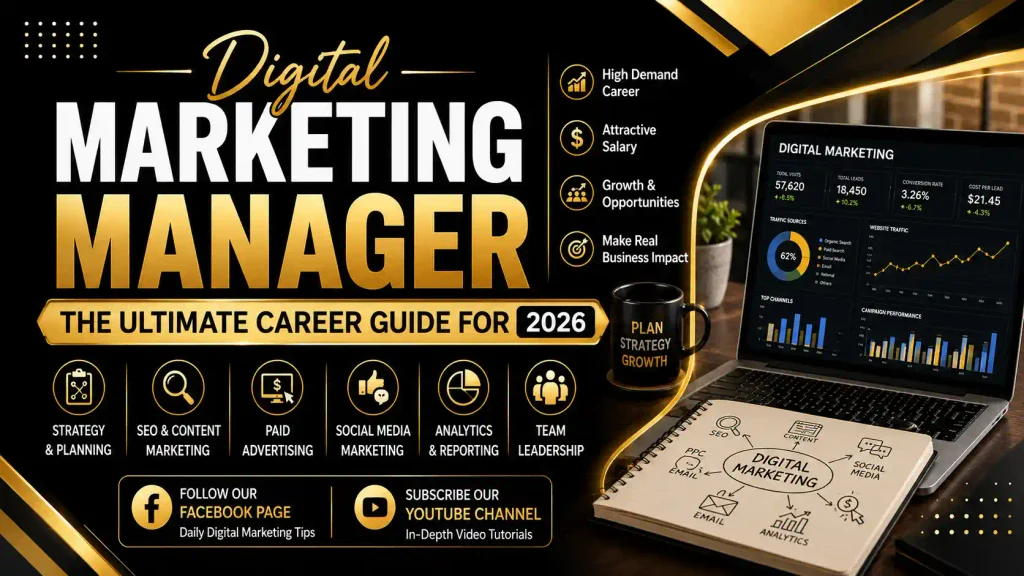
At its core, a digital marketing manager is responsible for planning, executing, and measuring a company’s online marketing efforts. That sounds simple on paper, but the day-to-day reality is far more layered. A skilled digital marketing manager typically handles:
- Strategy and planning : setting goals, budgets, and timelines for campaigns across channels like search, social, and email
- SEO and content marketing : working with writers and designers to make sure content ranks and converts
- Paid advertising (PPC) : managing ad spend on Google Ads, Meta Ads, and other platforms to maximize ROI
- Social media marketing : overseeing brand presence, community engagement, and influencer partnerships
- Analytics and reporting : tracking KPIs like traffic, conversion rate, and customer acquisition cost, then adjusting strategy based on the data
- Team leadership : managing in-house marketers, freelancers, or agencies to keep everything moving in sync
Unlike a specialist who focuses on one channel, a digital marketing manager is expected to understand the full marketing funnel from the first impression a potential customer has of a brand to the moment they finally convert. This is why the role sits at the intersection of creative thinking and analytical decision-making.
If you’re trying to sharpen the SEO side of this skill set, our guide on on-page and technical SEO strategies is a good next step it covers exactly what a digital marketing manager needs to know to keep organic traffic growing.
Skills, Salary, and How to Become a Digital Marketing Manager
Breaking into this career doesn’t require one fixed path, but certain skills consistently separate strong candidates from the rest.
Core Skills Every Digital Marketing Manager Needs
- Data literacy : comfort with tools like Google Analytics, Google Search Console, and various CRM dashboards
- Content strategy : knowing how to plan a content calendar that supports both SEO and brand storytelling
- Paid media management : hands-on experience running and optimizing PPC campaigns
- Communication and leadership : the ability to brief creative teams, report to executives, and manage vendors
- Adaptability : digital marketing tools and algorithms change constantly, so staying current isn’t optional
Most digital marketing managers come from a marketing, communications, or business background, though a growing number transition from adjacent fields like journalism, graphic design, or even customer support roles that build transferable skills in writing, empathy, and problem-solving.
Typical Career Path
A common route looks like this:
- Start as a marketing coordinator, SEO specialist, or social media executive
- Move into a mid-level role such as digital marketing executive or content marketing manager
- Advance into the digital marketing manager position, usually after 3–5 years of hands-on experience
- Progress further into roles like Head of Marketing or Chief Marketing Officer (CMO)
Salary Expectations
Compensation varies widely by country, company size, and industry, but digital marketing managers generally earn more than single-channel specialists because of the breadth of responsibility they carry. In most markets, this role sits comfortably in the mid-to-senior salary band for marketing professions, with additional bonuses tied to campaign performance in many organizations.
If you’re building out a team and want to understand how a digital marketing manager should collaborate with your social media staff, this internal resource on building an effective Online Marketing Strategy walks through how the two roles typically divide responsibilities.
Tools a Digital Marketing Manager Should Know
Beyond strategy, day-to-day execution depends heavily on tools. Some of the most widely used ones include:
- SEO tools : Google Search Console, Ahrefs, SEMrush
- Analytics platforms : Google Analytics 4, HubSpot, Looker Studio
- Advertising platforms : Google Ads, Meta Ads Manager, LinkedIn Campaign Manager
- Project management : Asana, Trello, or Monday.com to keep campaigns organized
- Email marketing : Mailchimp, Klaviyo, or ActiveCampaign
Familiarity with AI-assisted marketing tools is also becoming a baseline expectation, since many digital marketing managers now use AI for content ideation, ad copy testing, and campaign optimization.
Why This Role Matters More Than Ever
As more purchasing decisions move online, the digital marketing manager has become the person a business trusts to connect its budget with real, measurable growth. It’s not just about running ads or posting on social media anymore it’s about understanding customer behavior across every digital touchpoint and turning that understanding into revenue.
For anyone considering this path, the good news is that the skills are learnable, the demand is real, and the career ceiling is high. Whether you’re aiming to land your first marketing role or grow into a leadership position, understanding what a digital marketing manager truly does is the first step toward getting there.
Want to see real campaigns in action? Follow our Facebook Page for daily digitmal arketing tips, and subscribe to our YouTube Channel for in-depth video tutorials on SEO, PPC, and social media strategy.
1. What does a digital marketing manager do?
A digital marketing manager plans, executes, and measures online campaigns, overseeing SEO, PPC, social media, content, and email marketing while leading teams and reporting on performance.
2. What skills does a digital marketing manager need?
Key skills include data analysis, content strategy, SEO, paid advertising, social media management, communication, and leadership to guide teams and adapt to changing marketing trends.
3. How do I become a digital marketing manager?
Start in entry-level roles like SEO specialist or social media executive, gain 3-5 years of experience, build data and leadership skills, then move into a managerial position.
4. Which tools does a digital marketing manager use?
Common tools include Google Analytics, Google Search Console, Ahrefs, Google Ads, Meta Ads Manager, HubSpot, and project management platforms like Asana or Trello.
5. Is digital marketing manager a good career?
Yes, demand is high as businesses shift budgets online. The role offers strong growth potential, competitive pay, and a clear path toward senior marketing leadership.
6. Can a digital marketing manager work remotely?
Yes, many digital marketing manager roles are remote or hybrid since the job relies on digital tools, cloud-based analytics, and online collaboration platforms.


