10 Essential Elements of a Great Branding Style Guide
Introduction
A strong brand is more than just a memorable logo or an attractive color palette. Every visual and verbal element of your brand should work together to create a consistent experience for your audience. This is where branding style guides become important.
A branding style guide provides clear rules for how a brand should look, sound, and communicate across different platforms. From your website and social media to advertisements and printed materials, it helps ensure that every brand interaction feels consistent and professional. A well-structured brand guideline template can make it easier to organize these essential elements in one place.
Whether you are launching a new business or improving an existing brand, having clear guidelines can make your marketing more effective and easier to manage. If you are looking for a branding guide template or brand style guide template, understanding the key elements of a successful guide can help you create guidelines that fit your brand.
In this guide, we will explore the 10 essential elements of a great branding style guide, along with practical insights into how to create a brand style guide and how to create brand guidelines that support a consistent and recognizable brand identity.
What Is a Branding Style Guide?
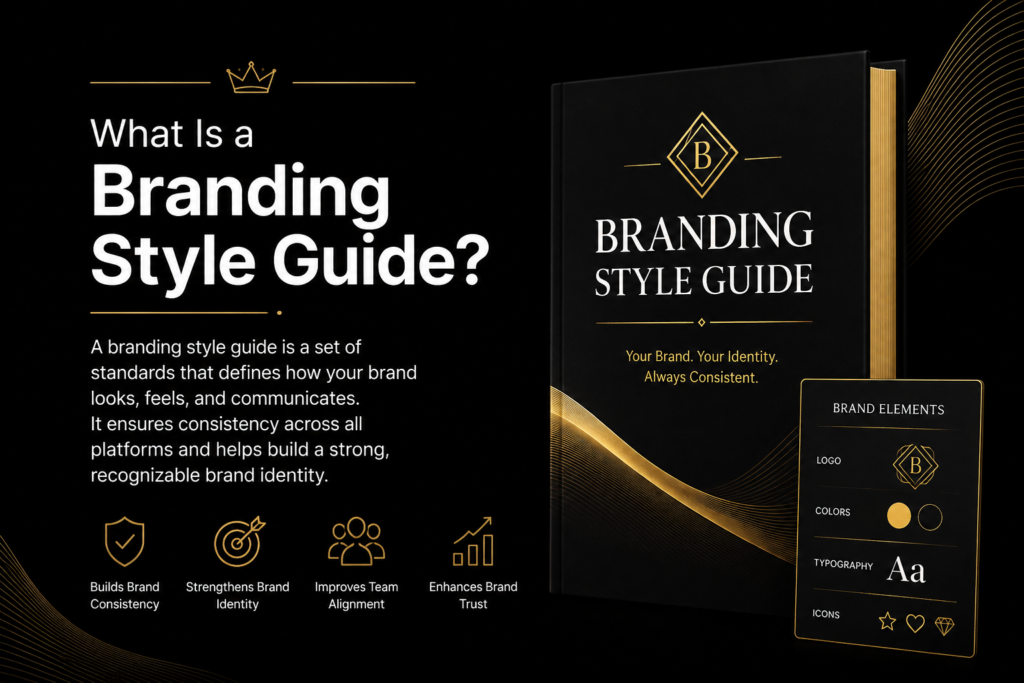
A branding style guide is a document that explains how a brand should be presented visually and verbally. It brings important brand elements together in one place so designers, marketers, content creators, and other team members can maintain a consistent brand identity.
A typical brand style guide template may include logo usage, brand colors, typography, imagery, messaging, and tone of voice. A well-structured brand guideline template makes it easier for businesses to establish clear standards and apply them consistently across websites, social media, advertisements, packaging, and other marketing materials.
If you’re wondering how to create a brand style guide, start by defining your brand’s core identity, including its mission, values, personality, and target audience. Then establish guidelines for your logo, color palette, fonts, imagery, and written communication. Learning how to create brand guidelines can help ensure that everyone working on your brand follows the same visual and communication standards.
Without clear brand guidelines, different teams may use different fonts, colors, logos, or messaging. Over time, these inconsistencies can make a brand look less professional and harder for customers to recognize. A clear branding guide template provides a practical reference that helps keep every brand touchpoint consistent, recognizable, and professional.
10 Essential Elements of a Great Branding Style Guide
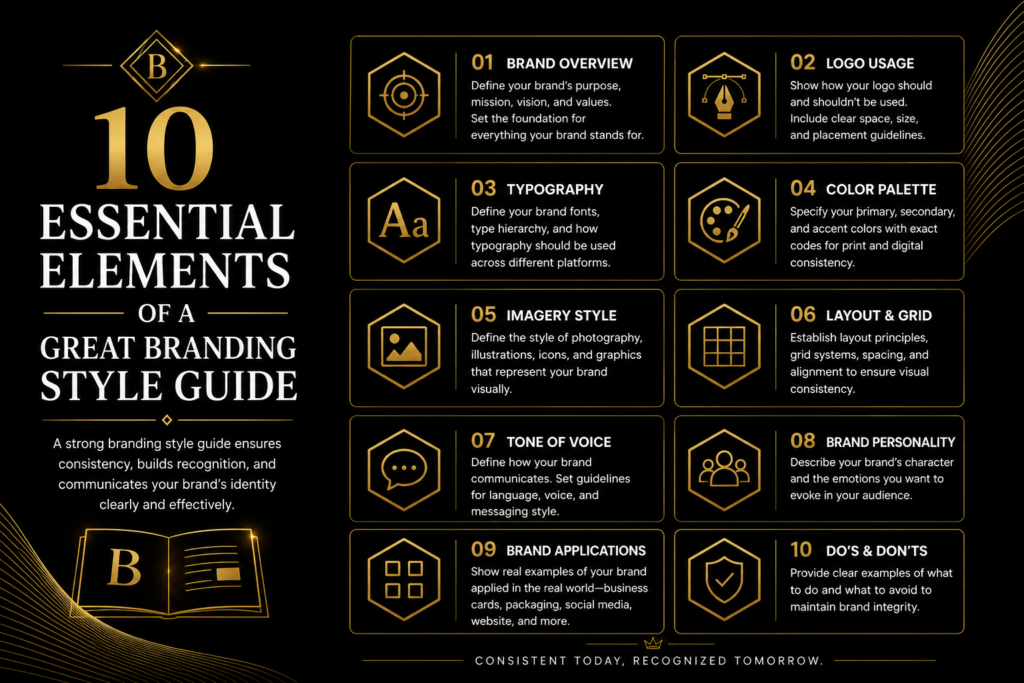
A useful branding style guide should be detailed enough to provide direction but simple enough for your team to use. Here are the key elements every effective guide should include.
1. Brand Mission and Values
Your brand mission and values provide the foundation for your entire brand identity.
The mission explains what your business aims to achieve and the value it provides to customers. Your core values explain the principles that guide your business and influence how you communicate with your audience.
Including these details in your style guide helps everyone understand what the brand represents before making visual or messaging decisions.
For example, a company that focuses on simplicity and accessibility should ensure that its website design, content, and marketing materials reflect those values.
2. Brand Voice and Tone
Your brand needs a consistent way of communicating with its audience. This is why brand voice and tone are important parts of branding guidelines.
Brand voice describes the personality of your communication. Your brand might sound professional, friendly, confident, educational, or conversational.
Tone can change depending on the situation while keeping the same overall voice. For example, a brand may use a friendly tone on social media but a more professional tone in a business proposal.
Your style guide should include:
- Preferred words and phrases
- Words to avoid
- Writing style
- Communication principles
- Examples of appropriate messaging
Clear voice and tone guidelines make it easier for different writers to create content that still sounds like the same brand.
3. Logo Guidelines
Your logo is one of the most recognizable parts of your visual identity. A branding style guide should clearly explain how it can and cannot be used.
Logo guidelines can include:
- Primary logo
- Secondary logo variations
- Minimum logo size
- Clear space requirements
- Approved backgrounds
- Logo placement
- Incorrect logo usage
You can also include visual examples showing correct and incorrect applications.
For instance, stretching the logo, changing its colors, adding unnecessary effects, or placing it on a difficult-to-read background can weaken your visual identity. Clear logo rules help prevent these mistakes.
4. Brand Color Palette
Colors can have a strong influence on how people recognize and perceive a brand. Your style guide should define the exact colors that represent your business.
A complete color palette usually includes primary and secondary colors along with their technical color codes, such as:
- HEX
- RGB
- CMYK
- Pantone, when required
Your guide should also explain where different colors should be used.
For example, primary colors may be used for major brand elements, while secondary colors can support designs, backgrounds, buttons, or promotional materials.
Using the same color specifications across platforms helps maintain visual consistency.
5. Typography and Fonts
Typography is another important part of a strong visual identity. The fonts you choose can influence how professional, modern, traditional, or approachable your brand appears.
Your branding style guide should identify:
- Primary typeface
- Secondary typeface
- Heading styles
- Body text styles
- Font sizes
- Font weights
- Line spacing
- Text hierarchy
It is also useful to provide examples of how typography should appear in real designs.
Consistent typography makes your website, social media graphics, presentations, and marketing materials feel like they belong to the same brand.
6. Imagery and Photography Style
Images play an important role in communicating a brand’s personality. Using completely different photography styles across your marketing channels can make your brand feel inconsistent.
Your visual identity guidelines should explain what types of images fit your brand.
Consider documenting:
- Photography style
- Lighting
- Composition
- Subject matter
- Image quality
- Color treatment
- Image filters or editing style
For example, a luxury brand may prefer clean, high-quality photography with minimal backgrounds, while an outdoor brand may use natural lighting and active lifestyle images.
Including examples of suitable and unsuitable imagery can make these guidelines easier to follow.
7. Graphic and Design Elements
A strong brand identity often includes more than logos, colors, and fonts. Graphic elements can help create a recognizable visual system across different platforms.
These elements may include:
- Icons
- Illustrations
- Patterns
- Shapes
- Textures
- Borders
- Background styles
- Decorative elements
Your style guide should explain how these elements should be used and how they should support the overall brand identity.
When these visual details follow a consistent system, even simple marketing materials can become more recognizable.
8. Brand Messaging Guidelines
Your brand needs consistent messaging just as much as it needs consistent visual design.
Brand messaging guidelines explain what your business communicates, how it communicates it, and what key ideas should remain consistent across different channels.
This section can include:
- Brand tagline
- Value proposition
- Key messages
- Messaging hierarchy
- Preferred terminology
- Words and phrases to use
- Words and phrases to avoid
For example, if your brand focuses on helping businesses achieve measurable growth, your messaging should consistently communicate expertise, value, and results.
Clear messaging guidelines also help different departments communicate the same core message.
9. Social Media and Digital Guidelines
Today, a brand appears across many digital platforms. Your website, social media profiles, email campaigns, online advertisements, and other digital channels should all maintain a consistent identity.
Your branding style guide can provide rules for:
- Social media profile images
- Cover images
- Post designs
- Caption style
- Hashtag usage
- Website design
- Email signatures
- Digital advertisements
These guidelines do not need to make every platform look identical. Instead, they should ensure that the same brand identity is recognizable across each platform.
Consistency is especially important on social media because customers may interact with your brand several times before making a purchase decision.
10. Brand Examples and Usage Rules
One of the most useful parts of a brand style guide is showing people how the guidelines work in practice.
Instead of only explaining rules, include real examples of how your brand should appear across different materials.
For example, you could include:
- Website examples
- Social media posts
- Business cards
- Advertisements
- Email designs
- Presentations
- Packaging
- Printed materials
You can also show correct and incorrect examples.
This makes your guidelines easier to understand and reduces the chance of mistakes. A designer or marketer should be able to open your style guide and quickly understand how to apply your brand identity to a new project.
Why Are Branding Style Guides Important?
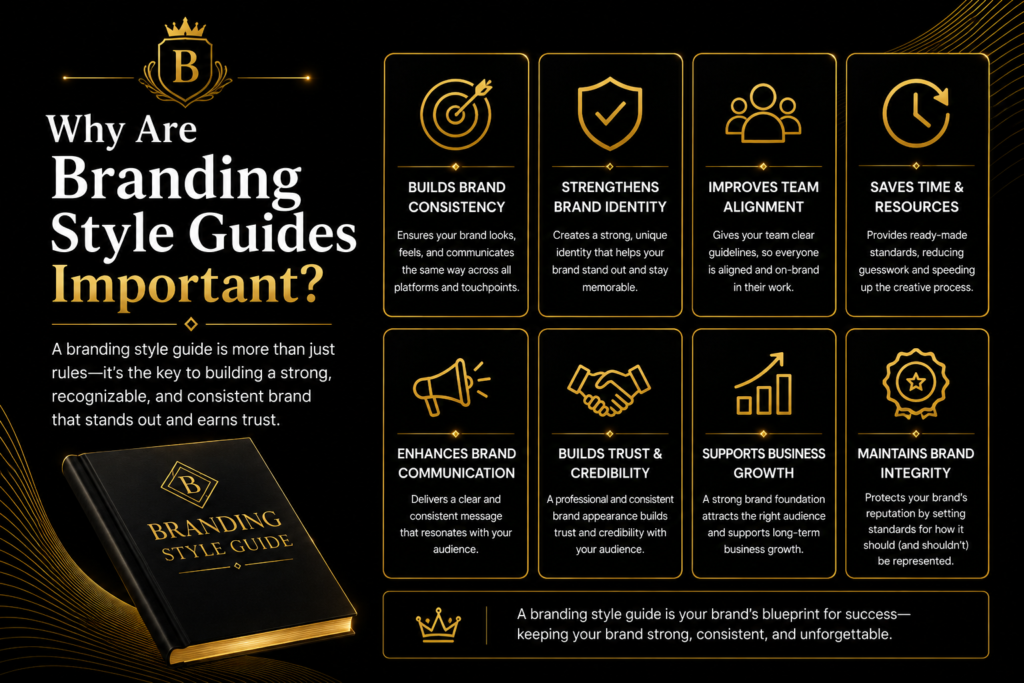
Branding style guides help businesses create a consistent experience across every customer touchpoint. They provide clear rules for how a brand should look, sound, and communicate across different channels. This consistency can have a direct impact on how customers recognize and perceive a brand.
A well-organized brand guideline template or branding guide template can make these standards easier for designers, marketers, and content creators to follow.
Here are some of the main benefits.
Build Brand Recognition
When customers repeatedly see the same colors, typography, imagery, messaging, and design style, they become more familiar with your brand. Consistent branding style guides help ensure these elements are used correctly across different platforms.
Improve Professionalism
Consistent branding creates a more organized and professional appearance. It shows that your business pays attention to detail and has clear standards for its visual and verbal identity.
A well-designed brand style guide template can provide a simple reference for maintaining this professional appearance across marketing materials.
Make Marketing Easier
When your team already knows which fonts, colors, images, logos, and messaging to use, creating new marketing materials becomes faster and more efficient. A practical branding guide template can give team members a clear starting point whenever they create new content.
Maintain Brand Consistency
As your business grows, more people may become involved in marketing and design. Clear branding style guides help everyone follow the same standards, even when different people or teams are creating brand materials.
Strengthen Customer Trust
Consistency helps customers know what to expect from your business. Over time, a recognizable and reliable brand experience can support stronger customer relationships and increase trust.
How to Create a Branding Style Guide
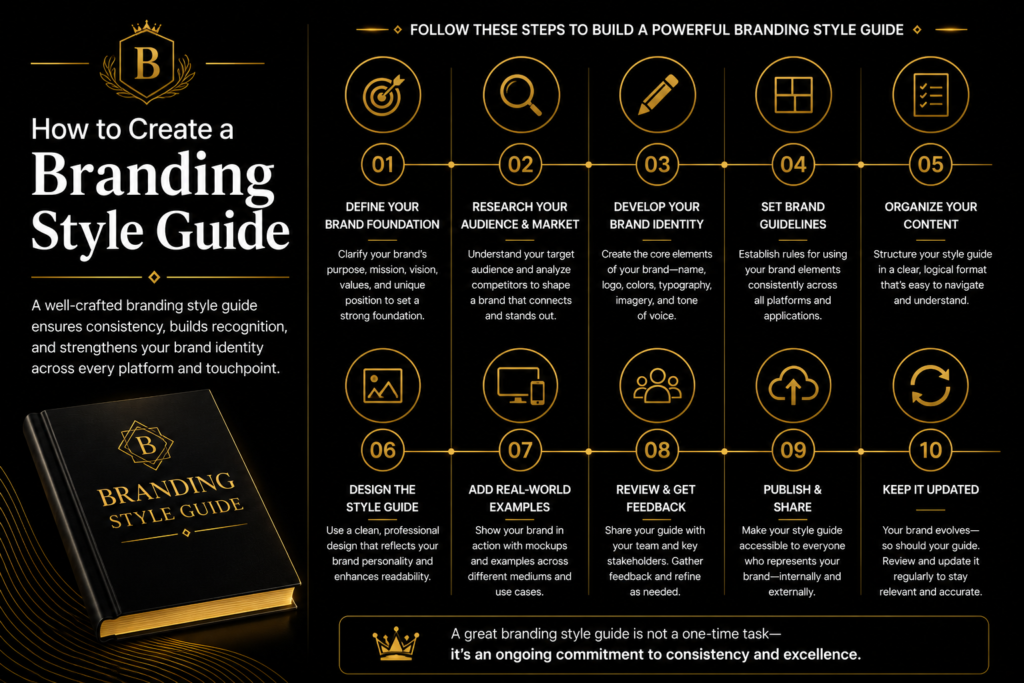
Learning how to create a brand style guide does not have to be complicated. Start with the essential elements and expand your guide as your business grows. A good brand style guide template can also help you organize the most important sections in one place.
Define Your Brand Identity
Start by documenting your mission, values, personality, and target audience. These elements provide the foundation for the rest of your branding style guides and help ensure that your visual and verbal identity reflects what your business stands for.
Establish Your Visual Identity
Choose your logo, colors, typography, imagery, and other visual elements. Make sure they work together and represent your brand effectively. You can use a brand guideline template to organize these elements and explain how each one should be used.
Define Your Brand Voice
Decide how your business should communicate with customers. Document the tone, vocabulary, and messaging principles your team should follow. This section is an important part of learning how to create brand guidelines that are useful across different marketing channels.
Document Usage Rules
Explain how each brand element should be used. Include examples wherever possible, such as correct and incorrect logo usage, color combinations, typography choices, imagery styles, and tone of voice.
A detailed branding guide template can make it easier to document these rules in a clear and organized way.
Add Real-World Examples
Show how your branding should appear across websites, social media, advertisements, presentations, email campaigns, packaging, and other marketing materials. Real-world examples make your branding style guides easier for team members to understand and apply.
Make the Guide Accessible
Your team should be able to find and use the guide easily. Keep the information organized and make important rules simple to understand. Whether you create your own guide or start with a brand style guide template, make sure the final document is practical and easy to reference.
Review It Regularly
Brands can evolve over time. Review your branding style guides regularly to ensure they still reflect your business, audience, and marketing goals. Update your brand guideline template whenever important visual or messaging elements change.
Common Branding Style Guide Mistakes to Avoid
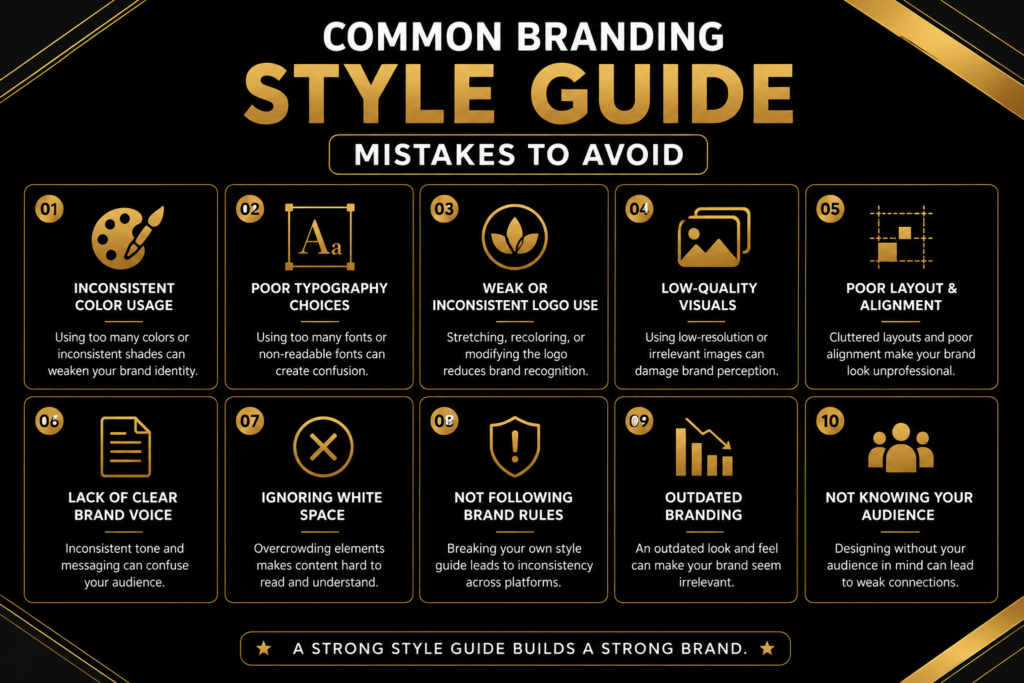
Even detailed branding style guides can become ineffective if they are difficult to understand or use. A good brand guideline template should provide clear, practical instructions that team members can easily follow.
Avoid these common mistakes:
- Making the guide unnecessarily complicated
- Focusing only on the logo
- Forgetting brand voice and messaging
- Providing rules without practical examples
- Using unclear or inconsistent terminology
- Ignoring digital platforms
- Failing to update outdated guidelines
When creating a guide, focus on usefulness rather than simply making the document longer. A well-organized branding guide template should give your team quick access to the information they need to maintain a consistent brand identity.
If you’re learning how to create a brand style guide, make sure the document is easy to navigate and includes both clear rules and real-world examples. A practical brand style guide template can also help you organize essential sections such as logo usage, colors, typography, imagery, and brand voice.
The goal is not to create the longest possible document. The goal is to create a useful reference that helps your team maintain a consistent brand across every customer touchpoint.
Branding Style Guide vs. Brand Guidelines: What’s the Difference?
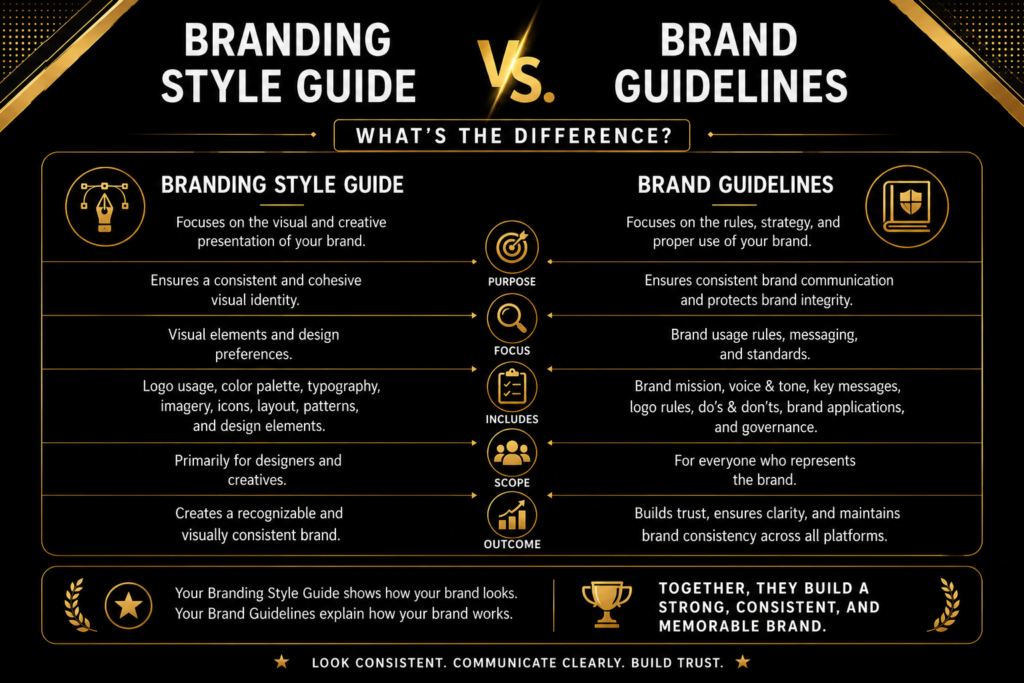
The terms branding style guide, brand style guide, and brand guidelines are often used interchangeably. In many cases, they refer to a document that explains how a business should present its visual identity and communicate with its audience.
However, some businesses use these terms differently. A branding style guide may focus more heavily on visual elements such as logos, colors, typography, imagery, and design rules. A broader set of brand guidelines may also include brand strategy, positioning, messaging, personality, and communication principles.
Understanding the difference can be especially useful when learning how to create brand guidelines for a growing business. You can use a brand guideline template to organize both visual and verbal elements, depending on what your team needs.
Whether you call it a branding style guide, brand style guide, or brand guidelines, the exact terminology is less important than creating a clear and practical resource. The most effective branding style guides are easy to understand, regularly updated, and detailed enough to help everyone represent the brand consistently.
Frequently Asked Questions
What should a branding style guide include?
A branding style guide should typically include your brand mission and values, logo guidelines, color palette, typography, imagery, graphic elements, brand voice, messaging, digital guidelines, and practical examples.
Why is a brand style guide important?
A brand style guide helps maintain consistency across your marketing channels. It can improve brand recognition, strengthen professionalism, make content production easier, and create a more consistent customer experience.
How long should a branding style guide be?
There is no fixed length. A small business may only need a concise guide covering its core visual and communication elements, while a larger organization may require a more detailed document.
How often should a brand style guide be updated?
Review your guidelines whenever your brand identity, products, target audience, or communication strategy changes. Even when there are no major changes, reviewing the guide periodically can help keep it relevant.
Can small businesses benefit from a brand style guide?
Yes. Small businesses can benefit from branding guidelines because consistent branding helps them create a professional and recognizable identity from the beginning.
Final Thoughts
A great branding style guide gives your business a clear framework for presenting itself consistently. It brings together everything from your logo and color palette to typography, imagery, messaging, and brand voice, helping your team maintain a recognizable identity across different channels.
The most effective branding style guides are not simply documents filled with rules. They are practical resources that help everyone understand how to represent the brand consistently. Using a well-organized brand guideline template or brand style guide template can make it easier to document important visual and verbal elements in one place.
Whether you are building a new brand or improving an established one, learning how to create a brand style guide can help make your marketing more consistent, efficient, and recognizable. A practical branding guide template can also give you a useful starting point for organizing your brand assets and usage rules.
If you’re wondering how to create brand guidelines, start with the essential elements, provide practical examples, and make the document easy for your team to use. Review and update your branding style guides regularly as your brand, audience, and marketing needs evolve.
Ultimately, the goal is to create clear guidelines that make your brand easier to recognize and represent—wherever your audience encounters it.


